
Jinnah Memorial Mosque in St. Joseph, Trinidad and Tobago
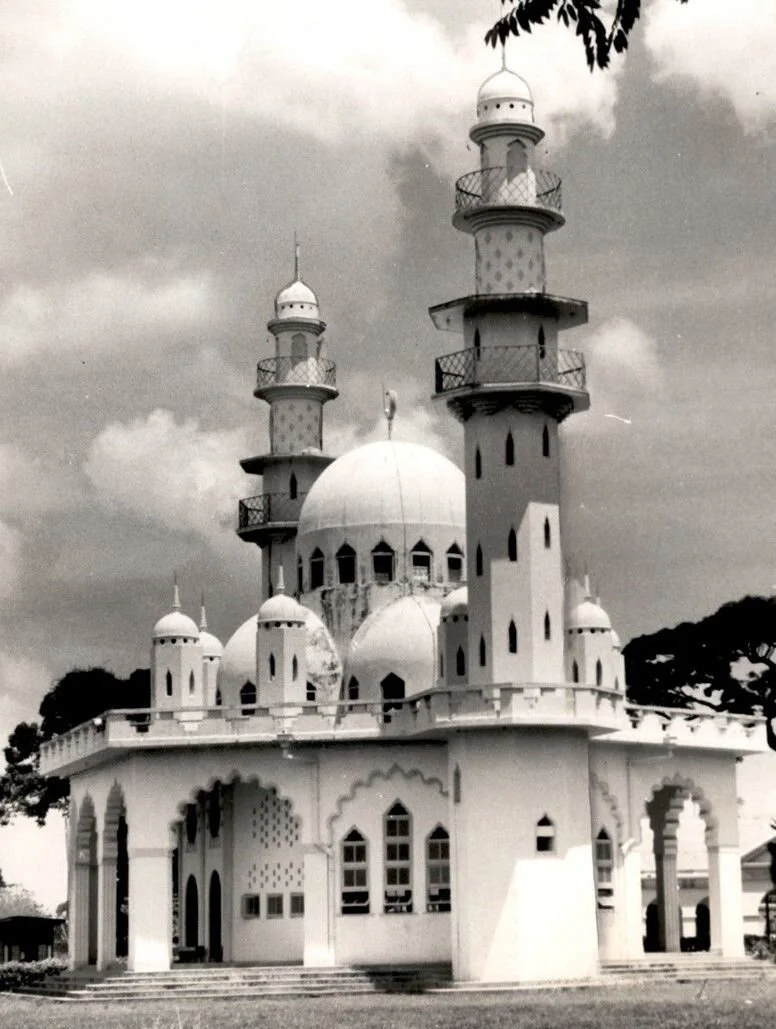
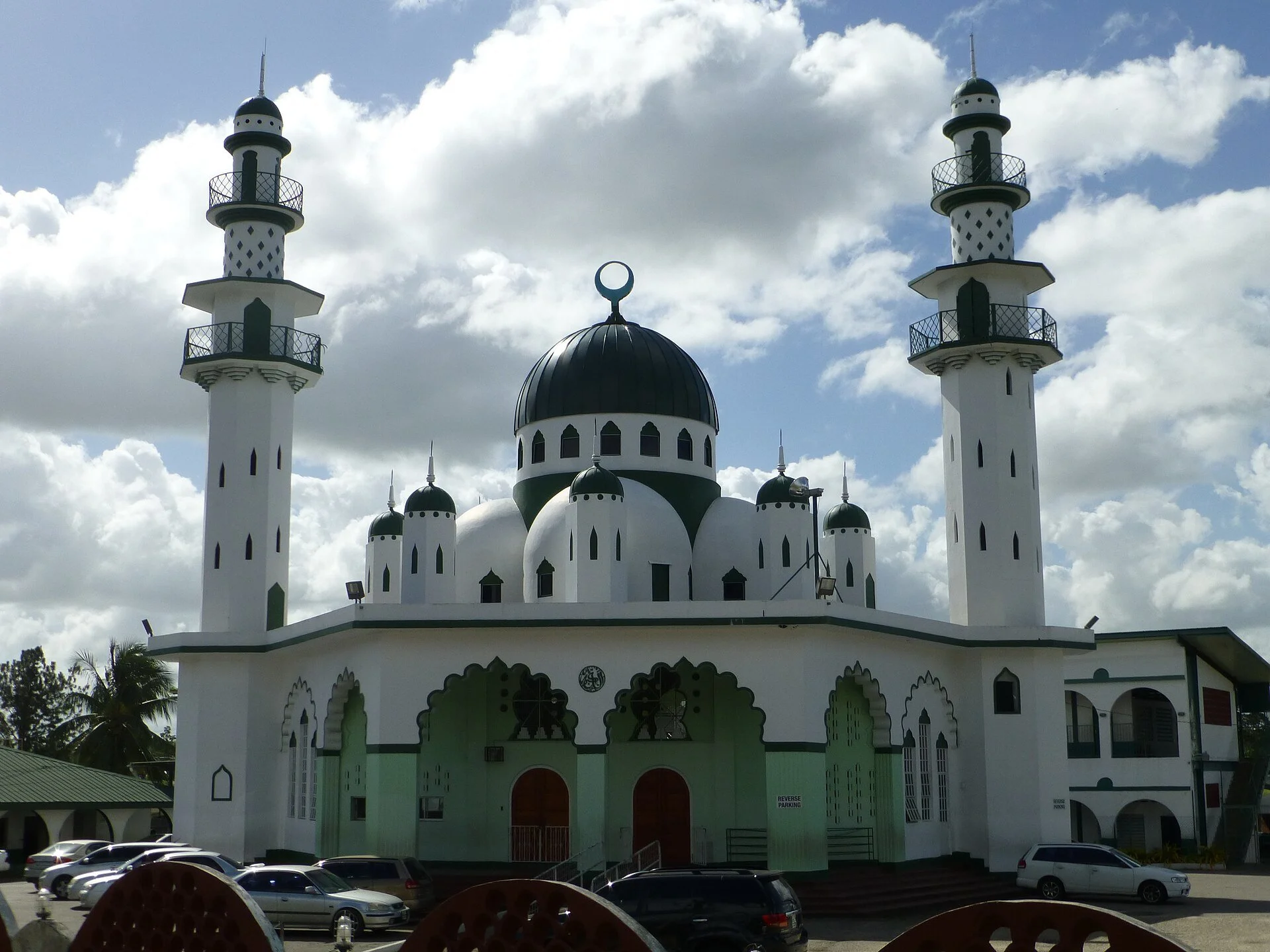
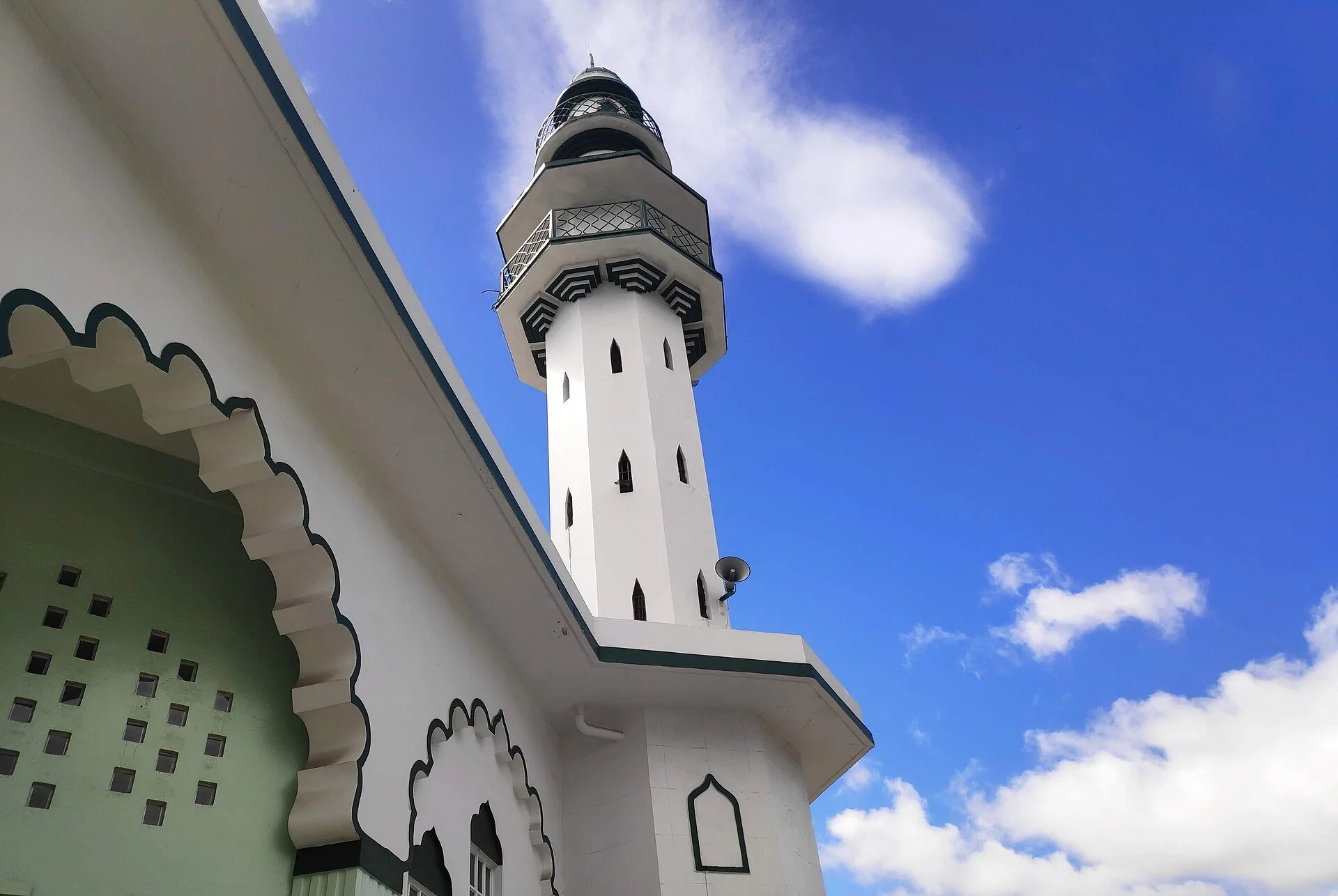
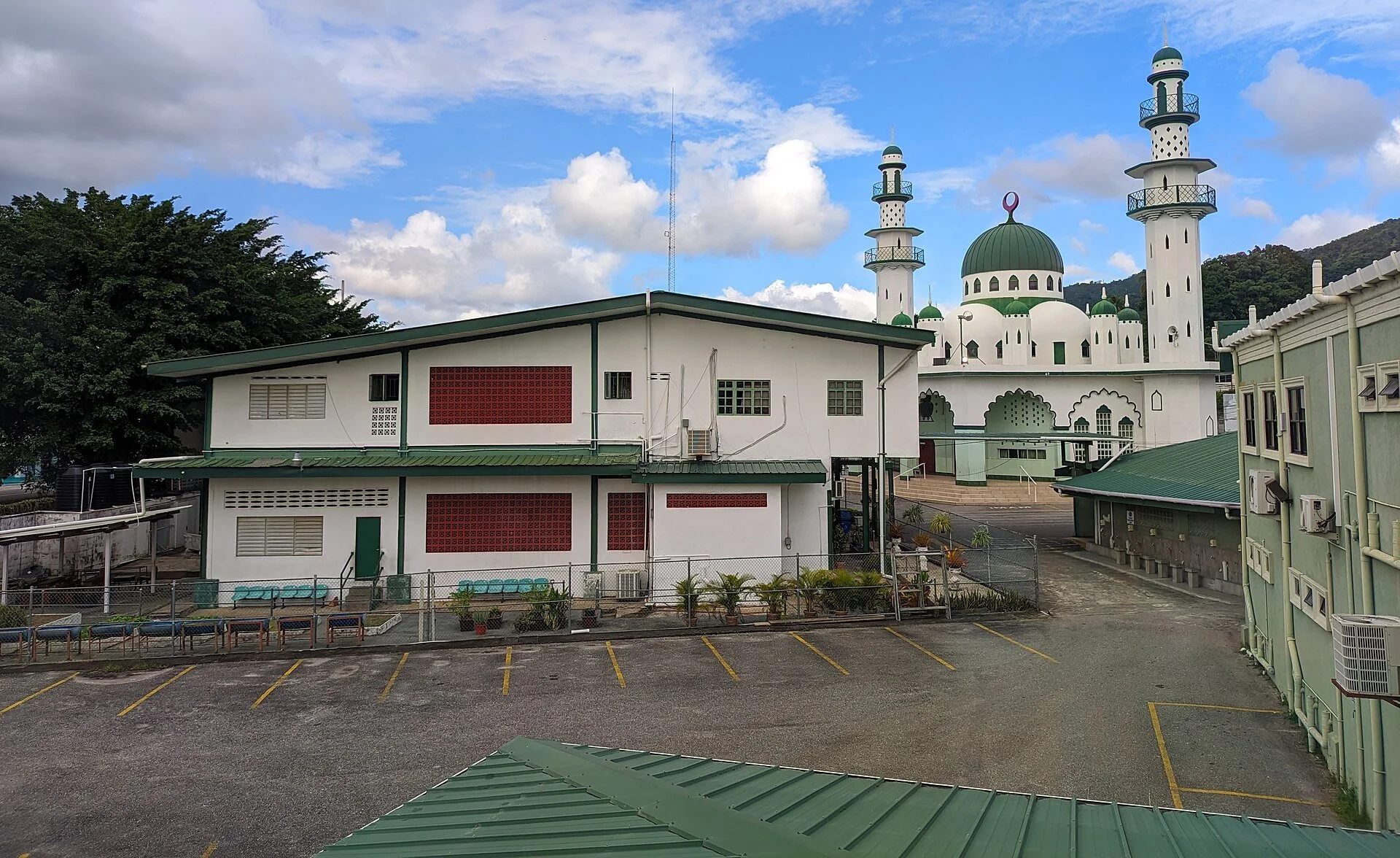

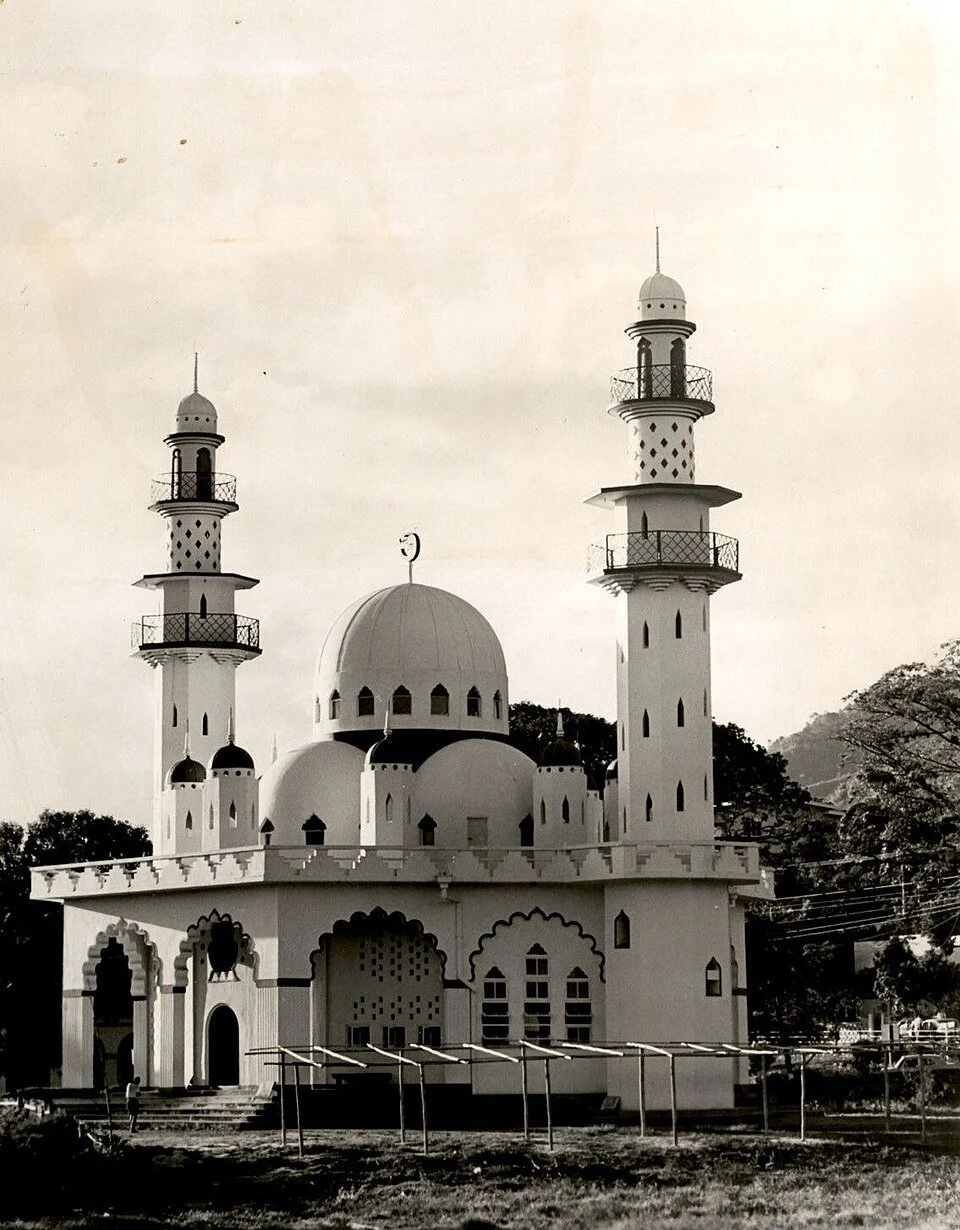
The Jinnah Memorial Mosque in St. Joseph, Trinidad, is one of the most architecturally unusual mosques in the Caribbean. Completed in 1954 and built by the Trinidad Muslim League (TML) through community donations, the mosque departs from the rectangular prayer halls and colonnaded courtyards common to the region's older mosques. Its hexagonal plan, clustered dome composition, and glass-louvered drum set it apart as a building where community faith, architectural ambition, and the particular history of Indo-Trinidadian Muslims all meet in one structure.
Who Built the Jinnah Memorial Mosque and Why?
Between 1845 and 1917, approximately 144,000 Indians migrated to Trinidad under the system of Indian indenture. Most were drawn from the agricultural and laboring classes of the Uttar Pradesh and Bihar regions of north India, with approximately 14 percent being Muslim. These workers arrived to replace enslaved labor on sugar plantations after emancipation, and they built communities largely from scratch. Over generations, they established mosques, organized religious associations, and secured legal recognition for Muslim marriage rites.
By the 1940s, that community-building work was well established. Moulvi Ameer Ali (1898-1973), Mohammed Hakeem Khan (1902-1957), and Mohammed Rafeeq (1904-1962) founded the Trinidad Muslim League on August 15, 1947. Moulvi Ameer Ali was the driving intellectual force. Born in Pointe-a-Pierre, Trinidad, he had studied Islamic theology in Lahore, at Al-Azhar, and at Cairo University, returning in 1930 as a scholar of Arabic, English, and Urdu. He advocated for English-language Quranic education, women's participation in religious life, and Muslim denominational schools eligible for government funding.
The land for the mosque came through an exchange. When the TML founders parted ways from the Tackveeyatul Islamic Association, the earlier Muslim organization in Trinidad, they were given a parcel of land in Curepe. That land was subsequently exchanged with the Riverside Hindu School, which needed a riverside site for religious purposes, and the TML received the St. Joseph plot in return.
The TML Council conceived the design in 1948. The architects were Mence and Moore. The foundation stone was laid by Al-Haj Mirza Abdul Hassan Ispahani, then Ambassador of Pakistan to the United States, in November 1948. The mosque opened on April 25, 1954.
What Makes the Jinnah Memorial Mosque's Architecture Distinctive?
The hexagonal plan is the building's most unusual feature. Standard mosque typologies, from the Umayyad hypostyle courtyard to the Ottoman centralized dome, organize space within rectangular or square geometries. The hexagonal footprint at St. Joseph creates a different kind of spatial logic: the main dome sits at the geometric center, with subsidiary domes radiating outward to each angle of the polygon.
The main dome measures forty feet in diameter and twenty-four feet in height. It is crowned by a crescent and star, and rests on a band of glass louvers rather than a solid masonry drum. This glazed transition between dome and wall is the building's most distinctive architectural detail. It fills the prayer space below with diffuse natural light while softening the visual weight of the dome's base. The technique has precedents in Ottoman architecture, where semi-translucent materials occasionally appeared in dome construction, but here it also reflects a mid-20th-century concern with light as an architectural material in its own right. In Trinidad's tropical climate, where direct sunlight is intense year-round, the louvers balance illumination against heat, a practical consideration folded into an aesthetic one.
Four half-domes cluster around the main dome, each with its own entrance door, allowing worshippers to move between the outer ring and the central domed interior. Six narrower domes capped in green with needle-like spires mark the angles of the hexagonal structure. Two minarets rise from the building, with metal staircases inside each tower. The mosque accommodates up to 1,000 worshippers.
The overall composition draws from the Mughal architectural tradition, which organized monumental buildings around a central dominant dome flanked by smaller domes and vertical minarets. The Taj Mahal established this hierarchical cluster as a recognizable architectural language, and it became the basis for Mughal Revival mosques built across South Asia and the diaspora from the 19th century onward. The Indo-Trinidadian community at St. Joseph commissioned a building that referenced the architecture of the subcontinent their ancestors had left, translating those forms into a hexagonal variation suited to a Caribbean context.
How Does the Design Fit the Mosque's Function as a Worship Space?
The spatial sequence at the Jinnah Memorial Mosque reflects a design priority common to dome-centered Islamic architecture: directing the worshipper's attention upward and inward. Entering through one of the four half-domed portals, a worshipper moves through a transitional bay before encountering the full height of the central dome above the prayer floor. The glass louver band catches changing light through the day, making the dome's interior luminosity shift with the position of the sun. This connection between natural light cycles and the experience of worship is a recurring concern in Islamic architecture, from the windows of Ottoman mosques to the perforated screens of Mughal buildings.
The prayer hall, oriented toward the qibla (the direction of Mecca), has a mihrab marking the direction of prayer and a minbar (pulpit) from which the imam delivers the Friday sermon. Published documentation of the interior's decorative program is limited, but photographic records show a modest interior consistent with the mosque's community-built, subscription-funded origins. The building was not a royal commission or a government project. It was funded by ordinary members of a diaspora community who pooled resources over years of construction, a fact that gives its architectural ambition particular weight.
What Is the Mosque's Place in Caribbean Islamic Architecture?
The Jinnah Memorial Mosque was completed during a period of active mosque-building and Islamic organizing across the Caribbean. A regional Muslim conference held in Trinidad in 1950 brought together organizations from Trinidad, British Guiana, Suriname, and Barbados. The mosque under construction in St. Joseph during these years was the most architecturally prominent expression of that momentum.
The architects Mence and Moore were not Muslim, and detailed records of their design reasoning are not available in published sources. Their execution of a Mughal-derived design for an Indo-Trinidadian Muslim community mirrors a pattern visible elsewhere in colonial-era mosque construction. At the Baiturrahman Grand Mosque in Banda Aceh, for example, a Dutch architect produced a Mughal Revival structure following the destruction of the original mosque during the colonial Aceh War. In St. Joseph, the direction reversed: the community that commissioned the building conceived its design parameters before bringing in architects to execute them. The TML Council held the architectural vision; Mence and Moore gave it form.
Published scholarly documentation of the mosque's architectural details remains limited. Citizens for Conservation Trinidad and Tobago recognizes it as a significant site of built heritage, and it continues to serve its community as an active place of worship. What the building demonstrates clearly, even from the available record, is that the Indo-Trinidadian Muslim community built something genuinely uncommon: a hexagonal, multi-domed mosque with a glass-louvered central dome, sitting on the Eastern Main Road in St. Joseph, drawing from architectural traditions that traveled a long way to reach this particular patch of Caribbean ground.
Glossary:
Qibla: The direction of prayer toward the Kaaba in Mecca.
Mihrab: A niche in the qibla wall indicating the direction of Mecca.
Minbar: An elevated pulpit from which the imam delivers the Friday sermon.
Mughal Revival: A 19th and 20th-century architectural style drawing on the monumental domed buildings of the Mughal Empire, particularly the dome-and-minaret cluster associated with buildings like the Taj Mahal.
