
Sultan Qaboos Grand Mosque in Muscat, Oman
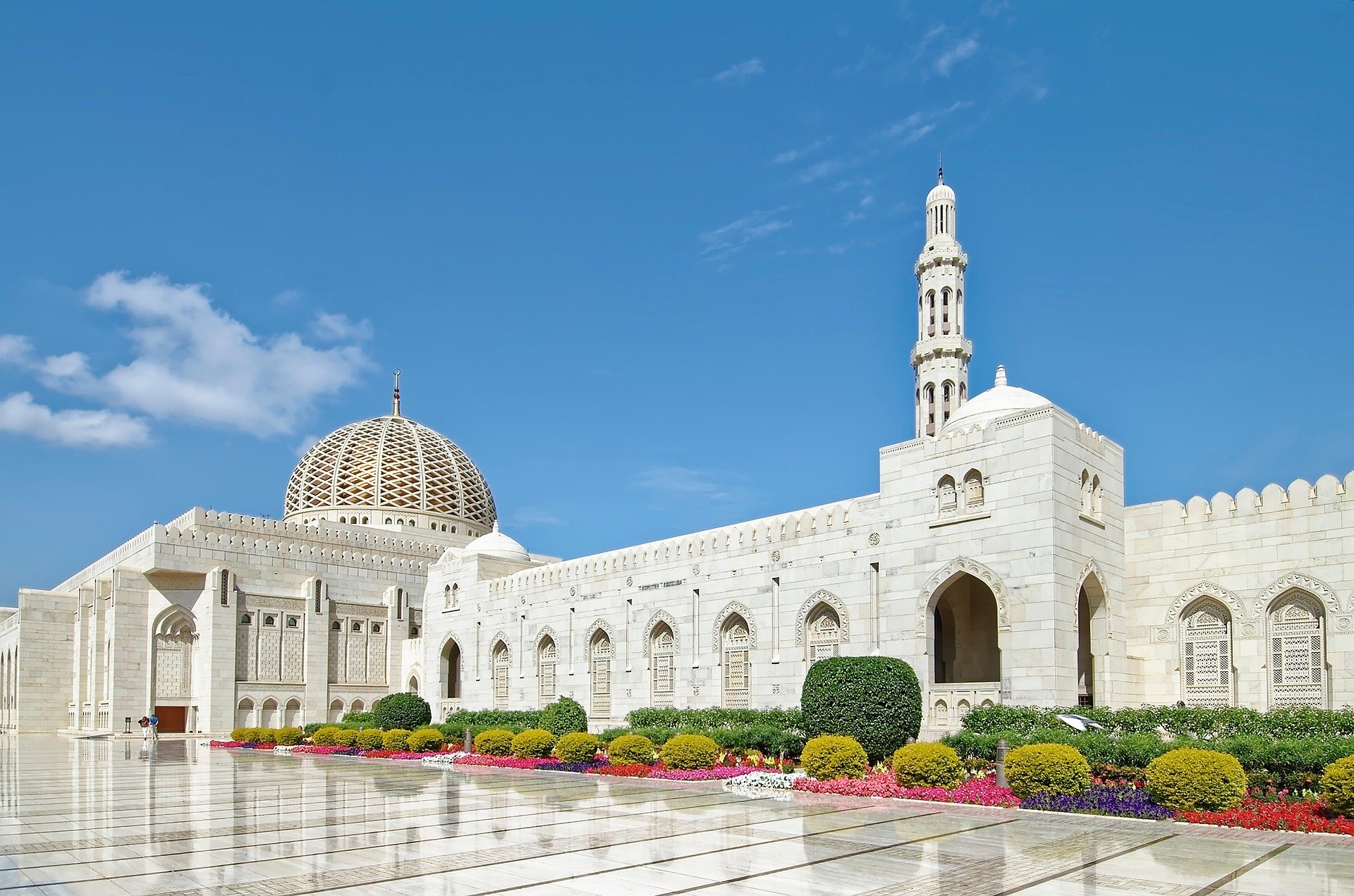
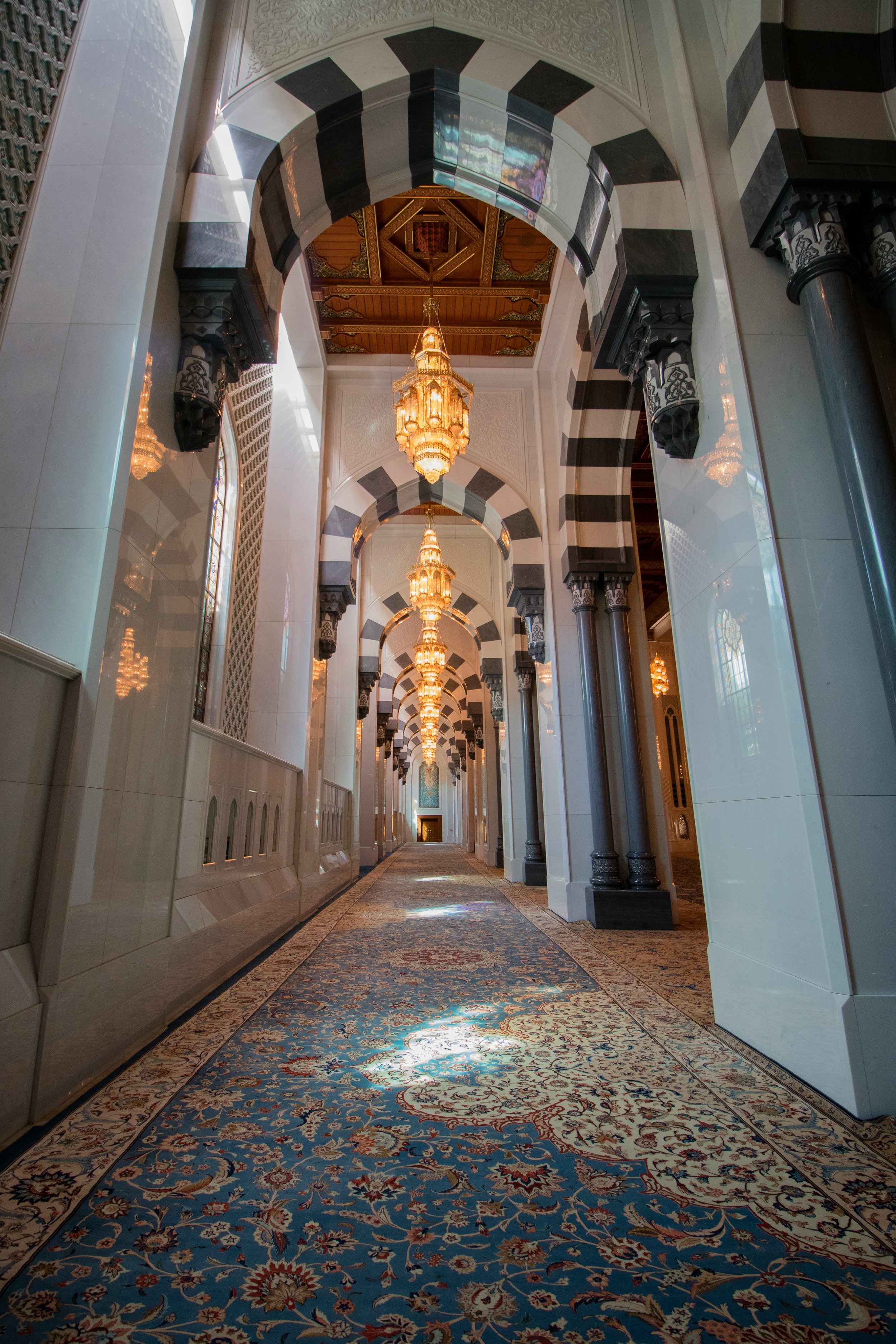
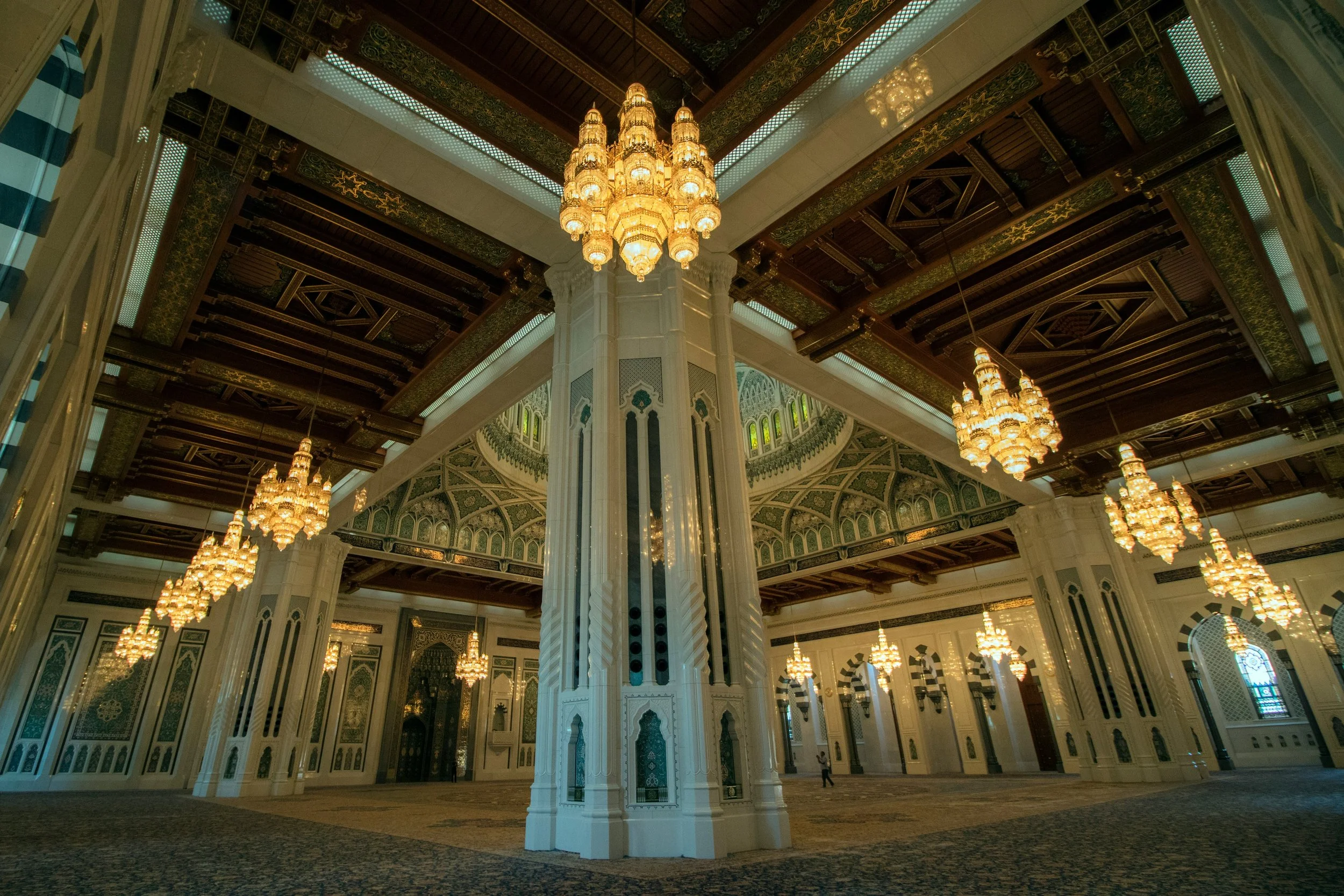
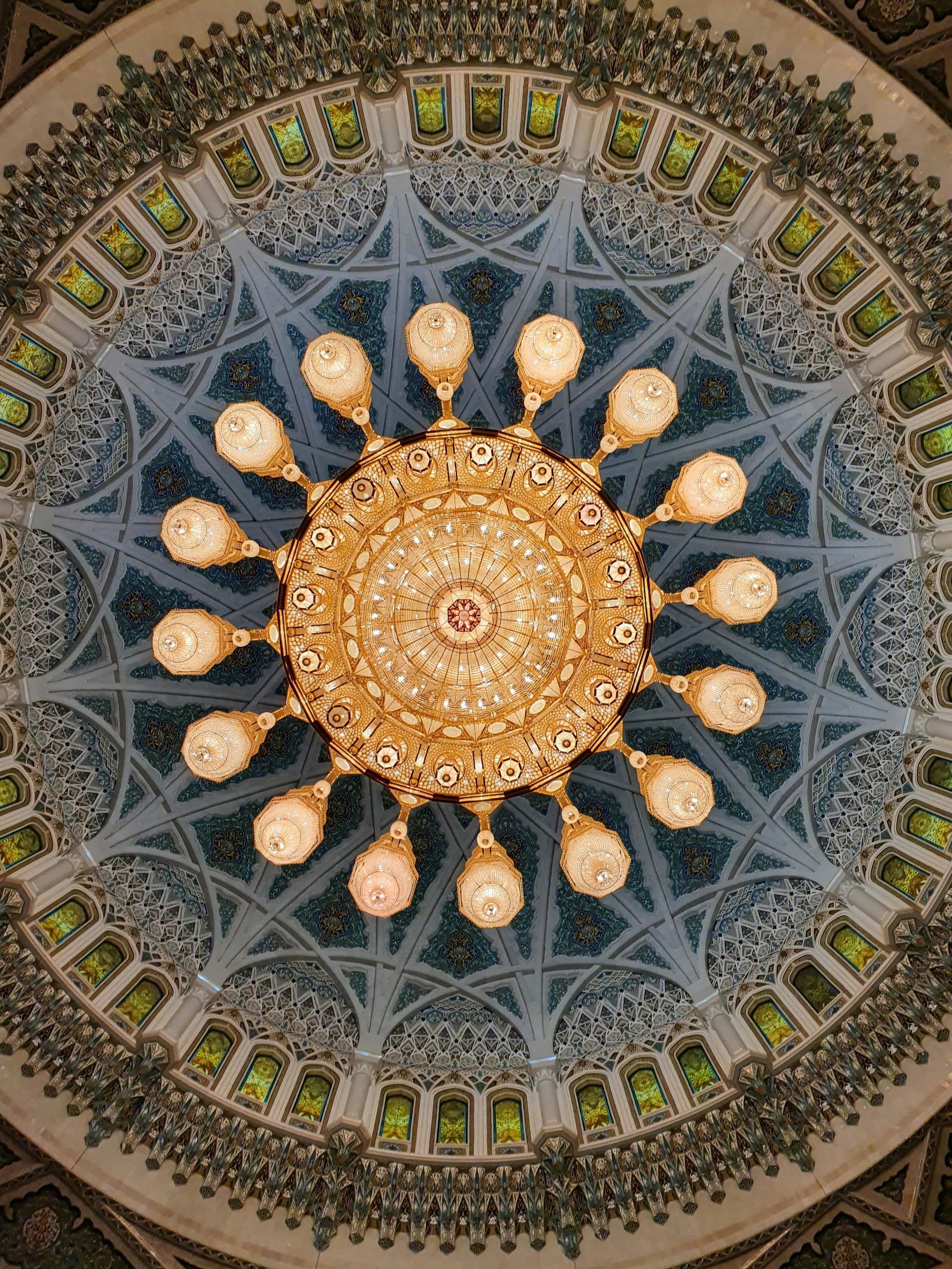
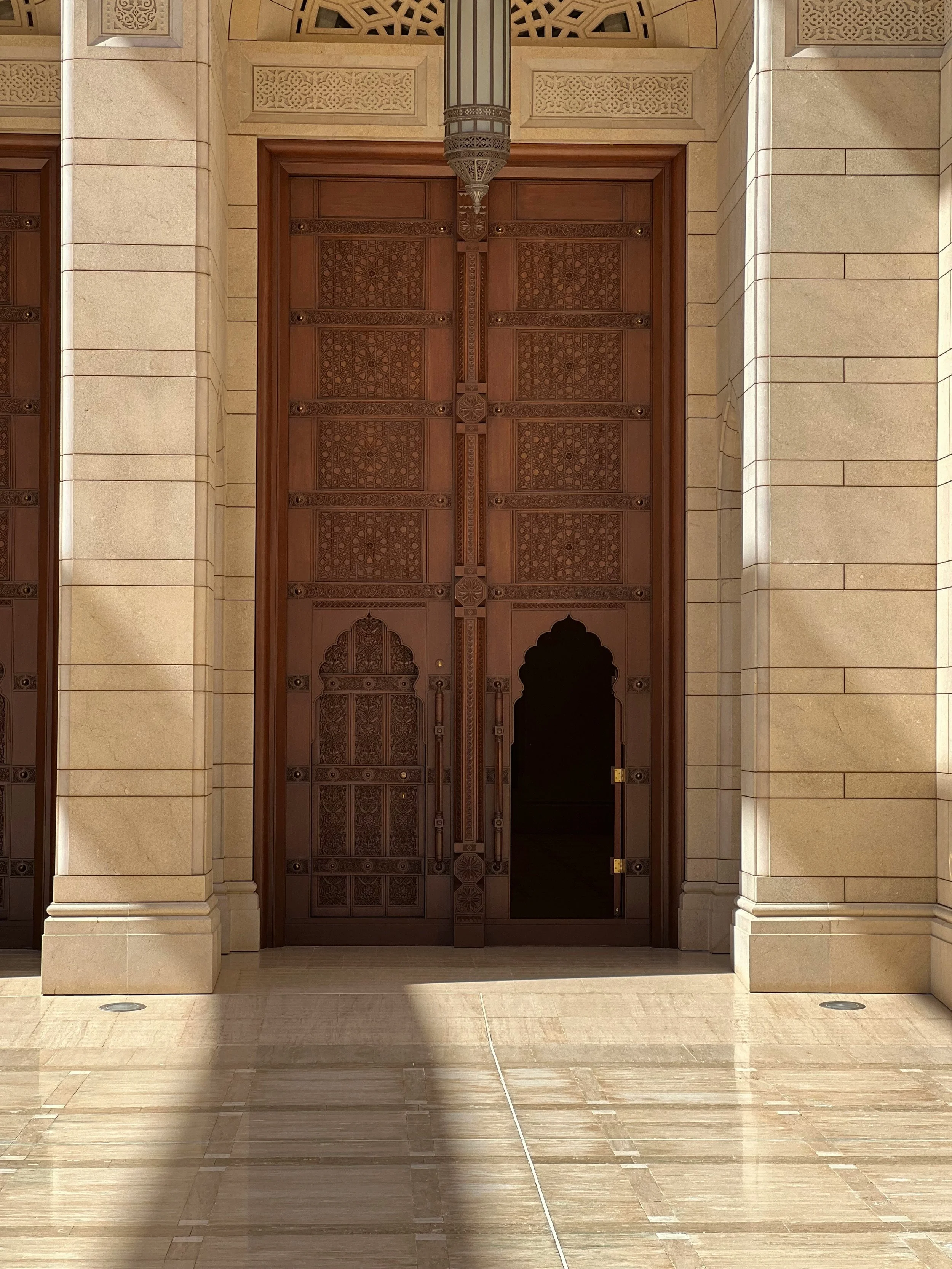
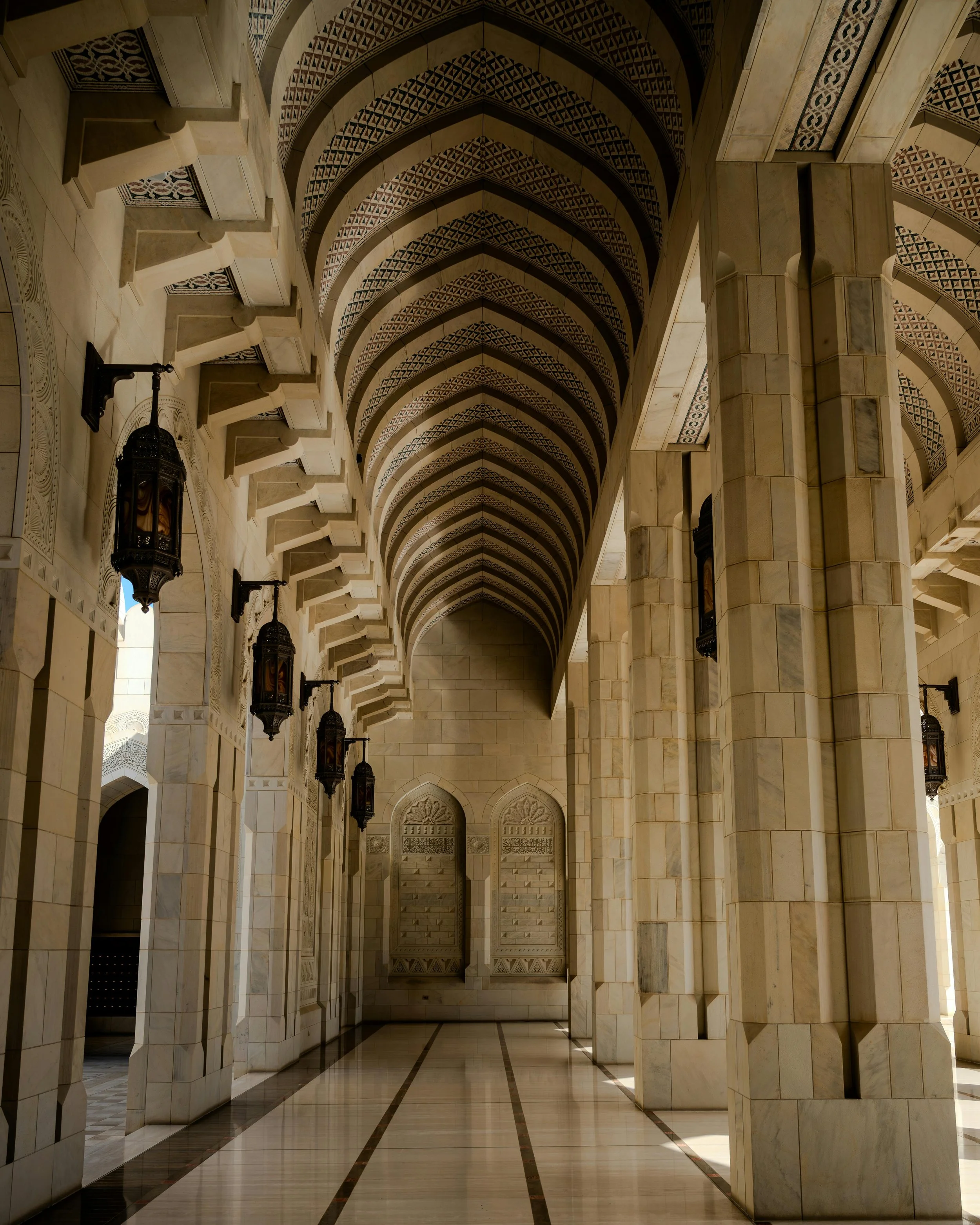
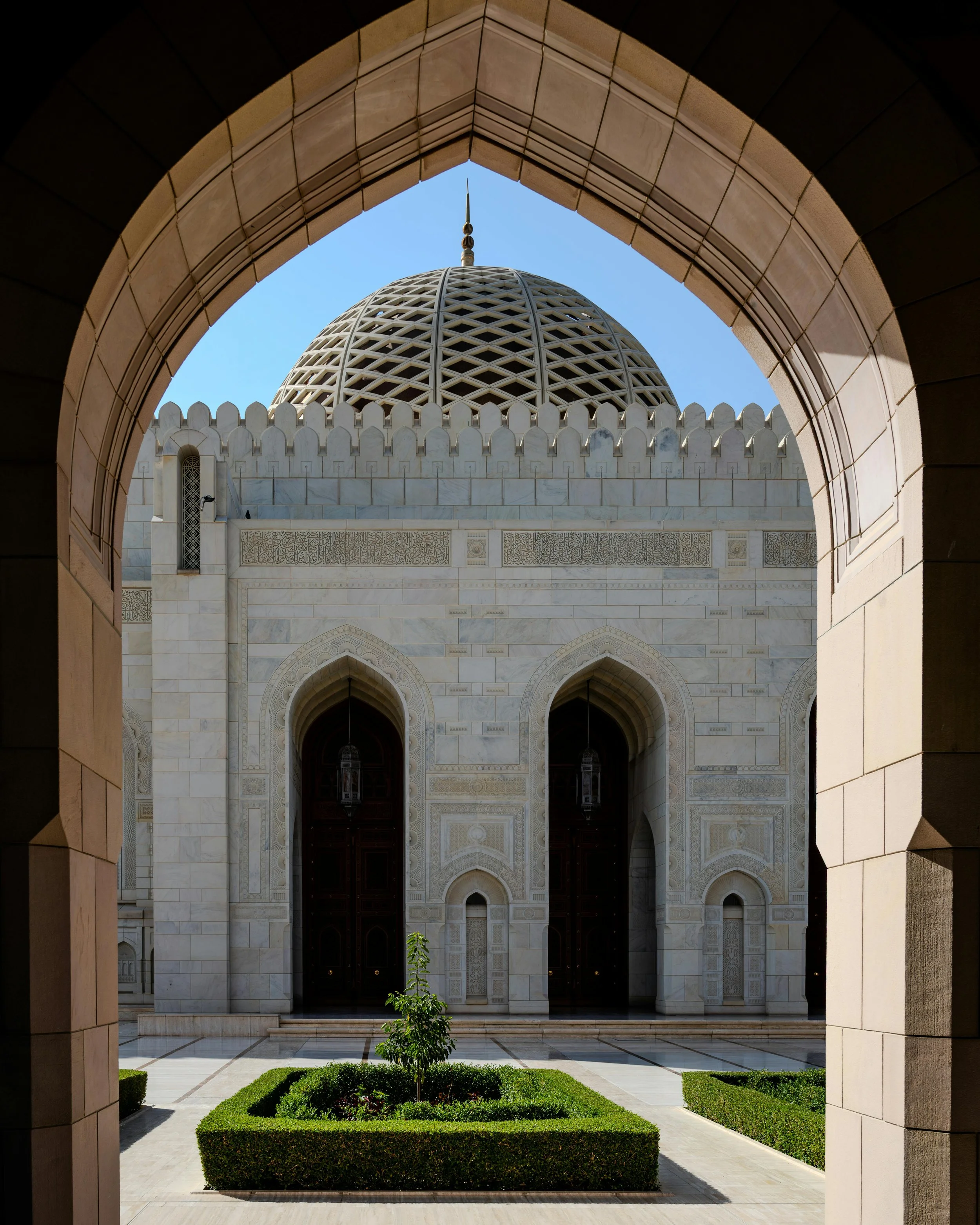
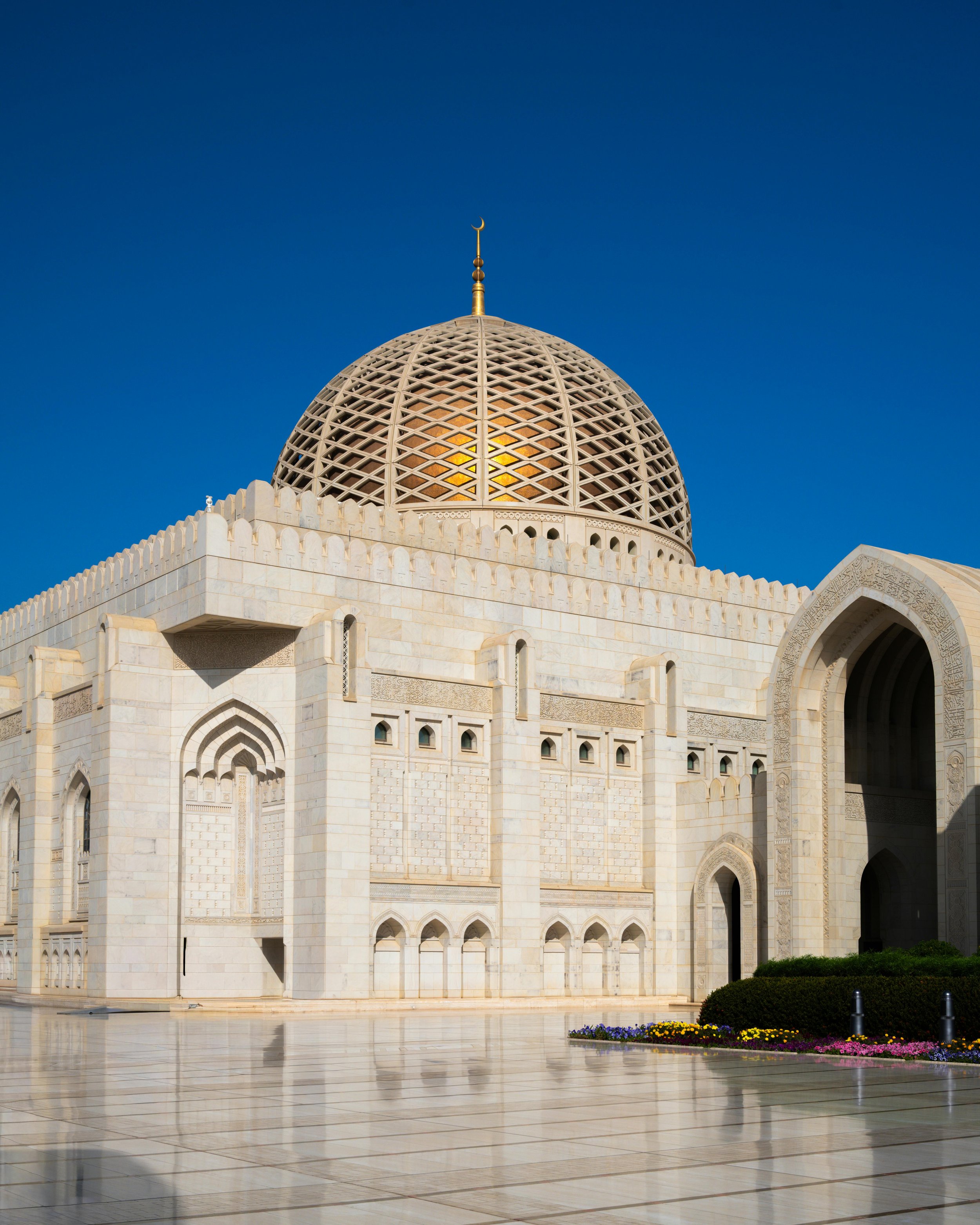
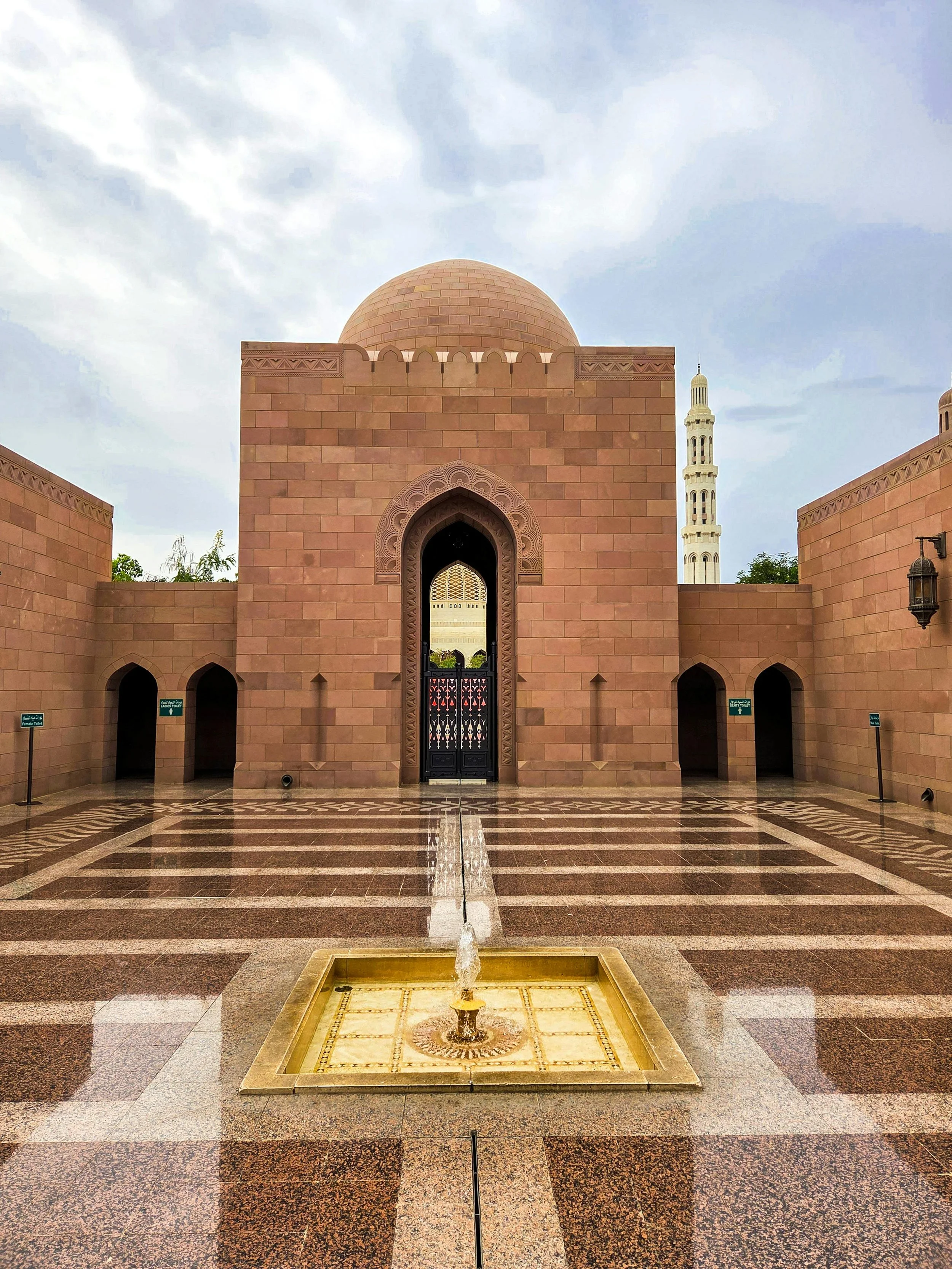
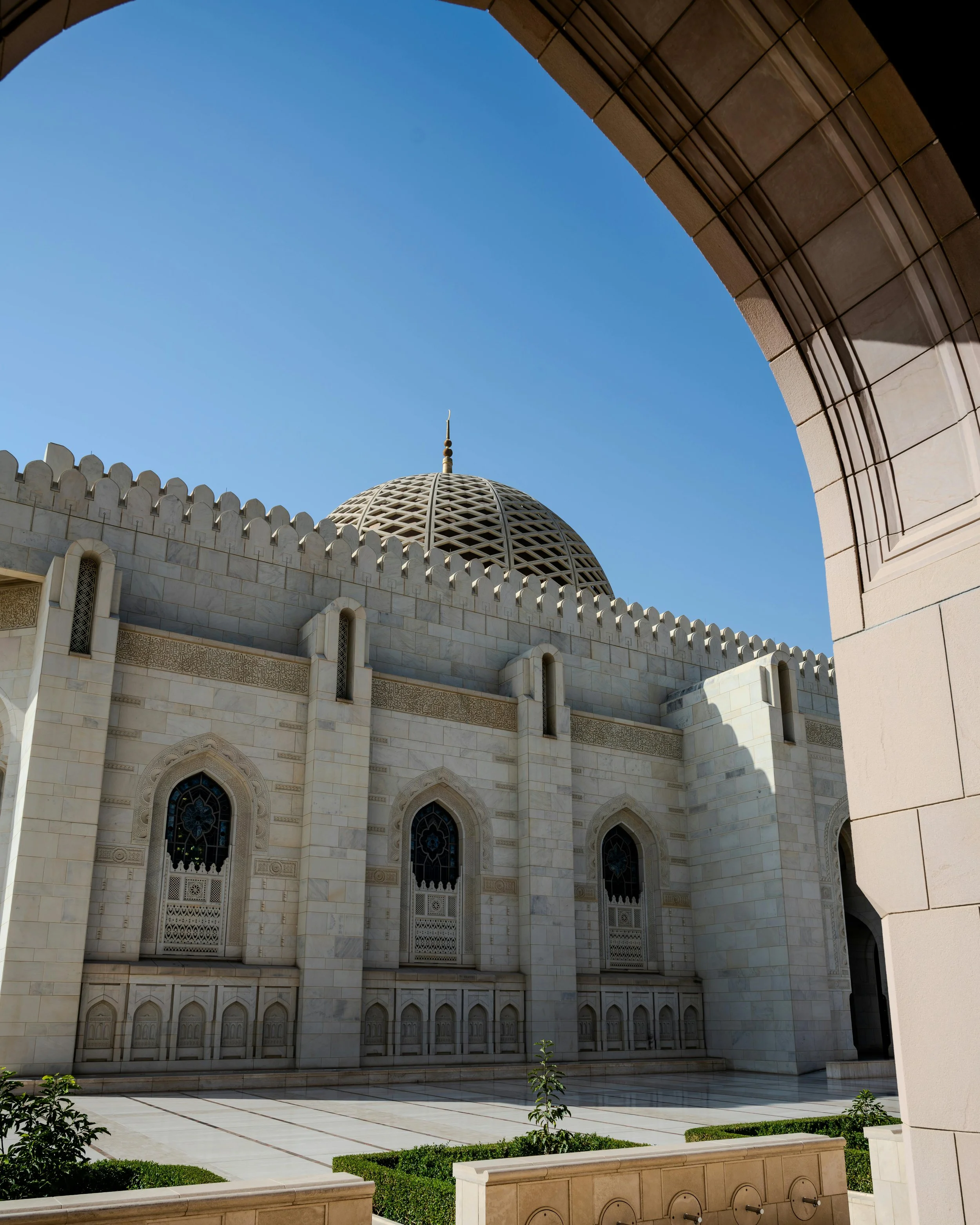
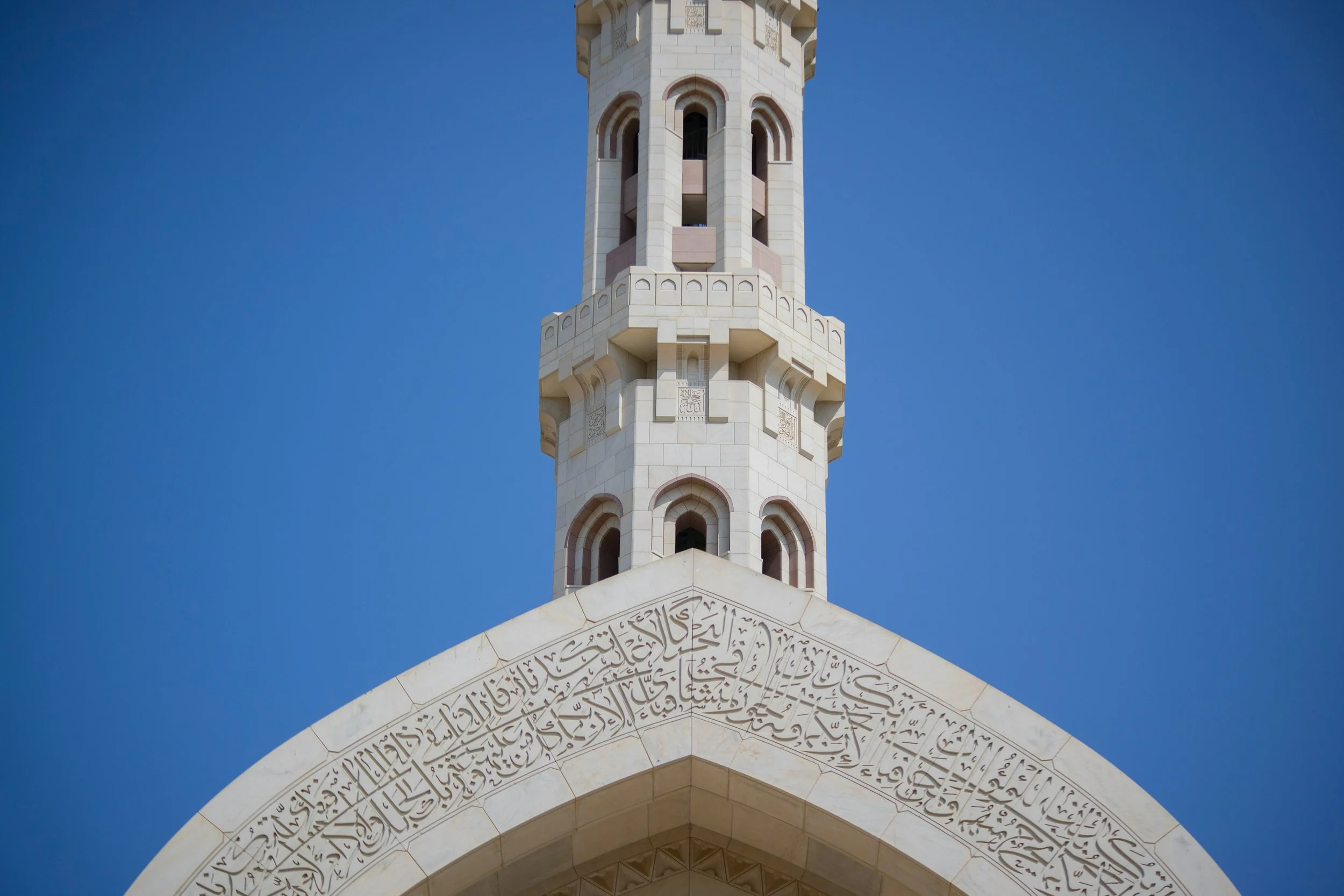
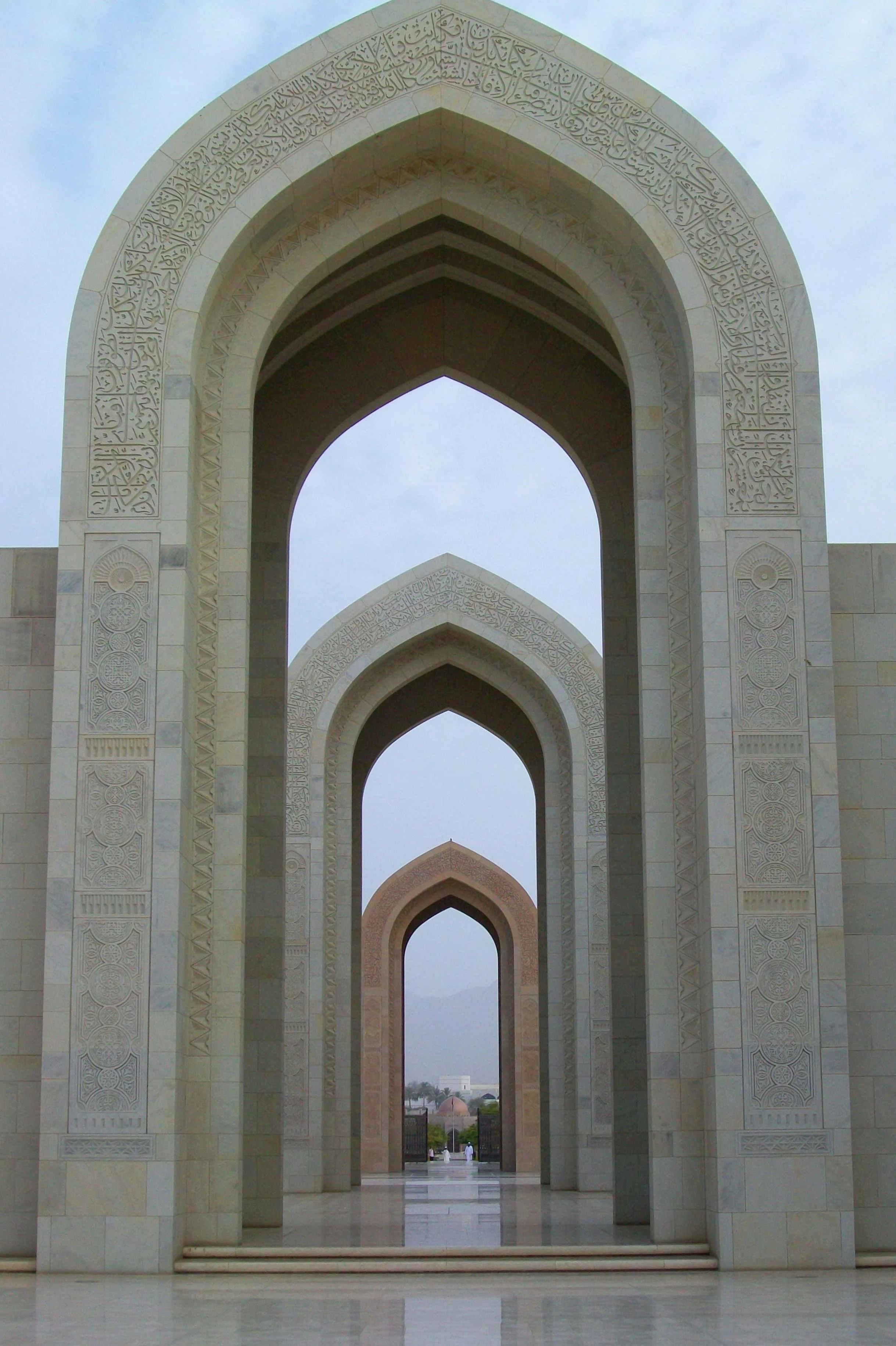
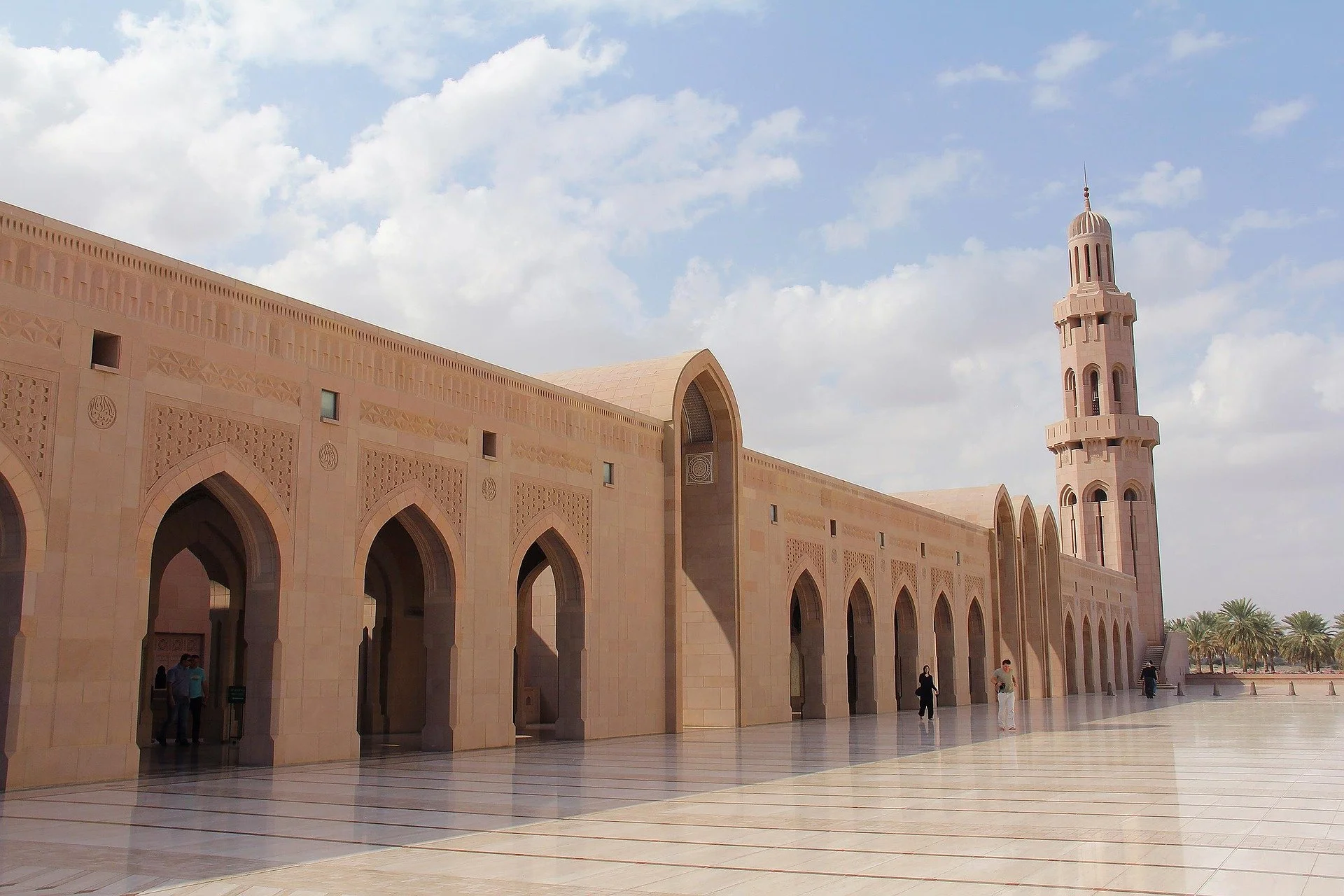
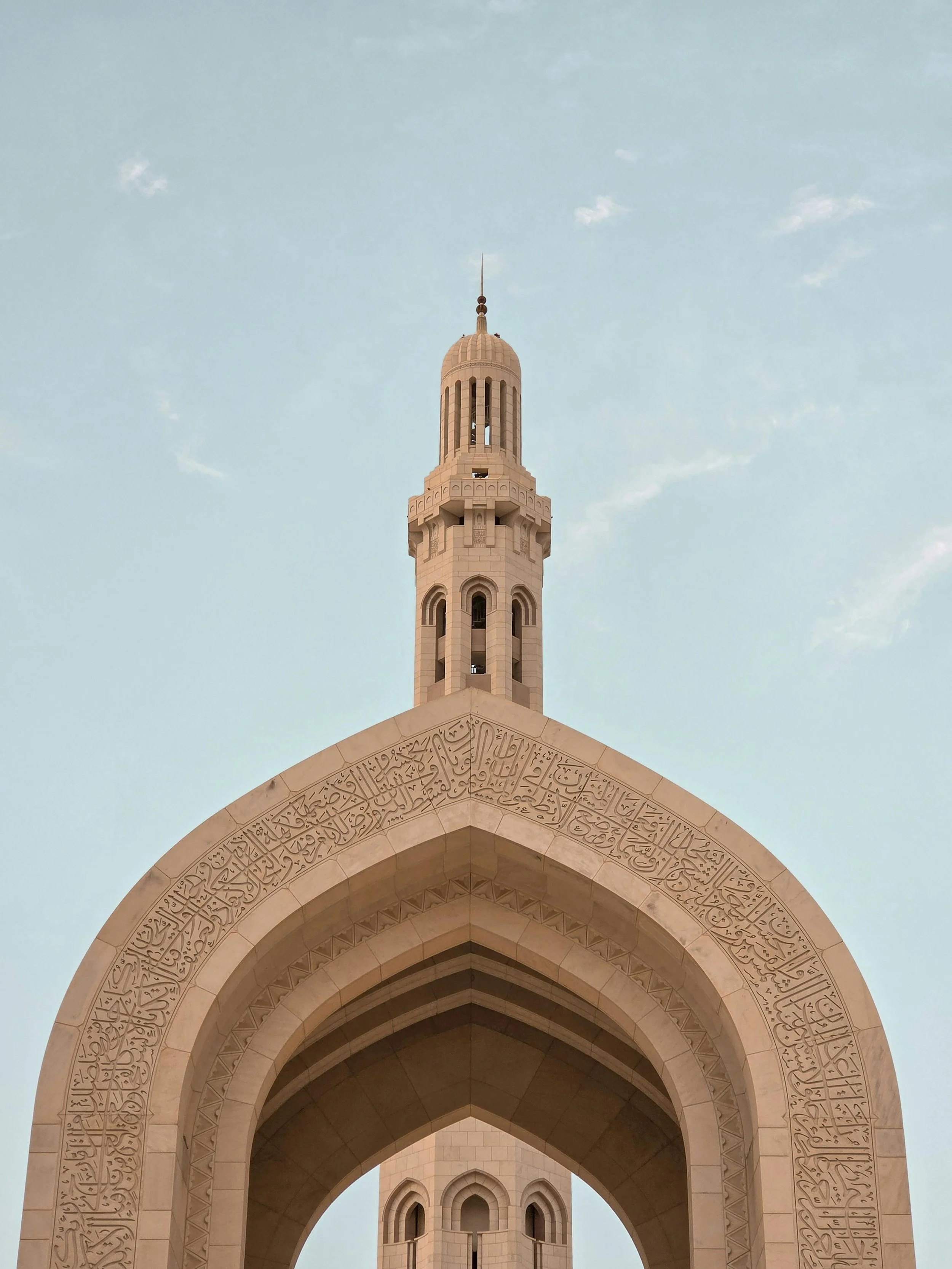
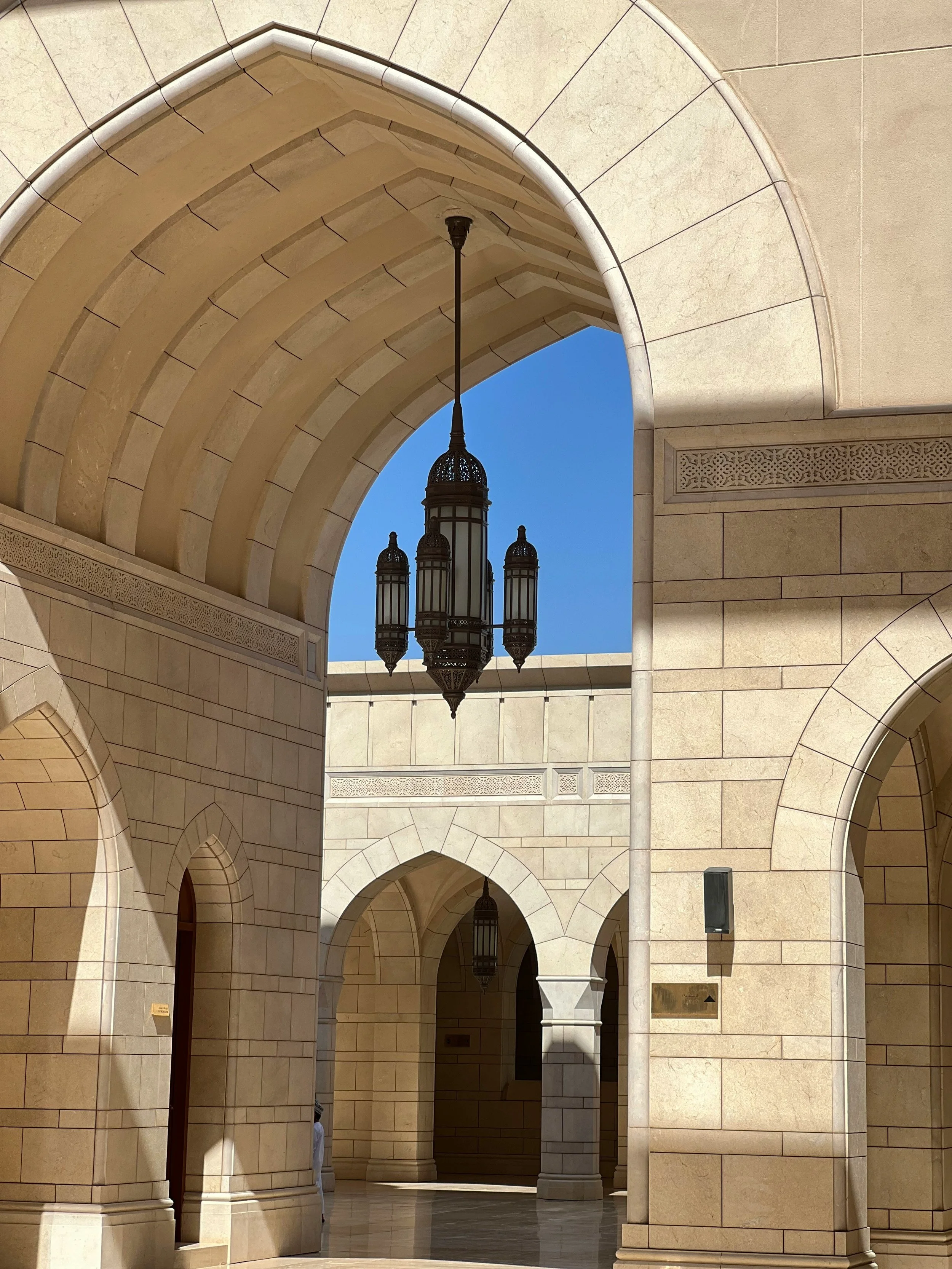
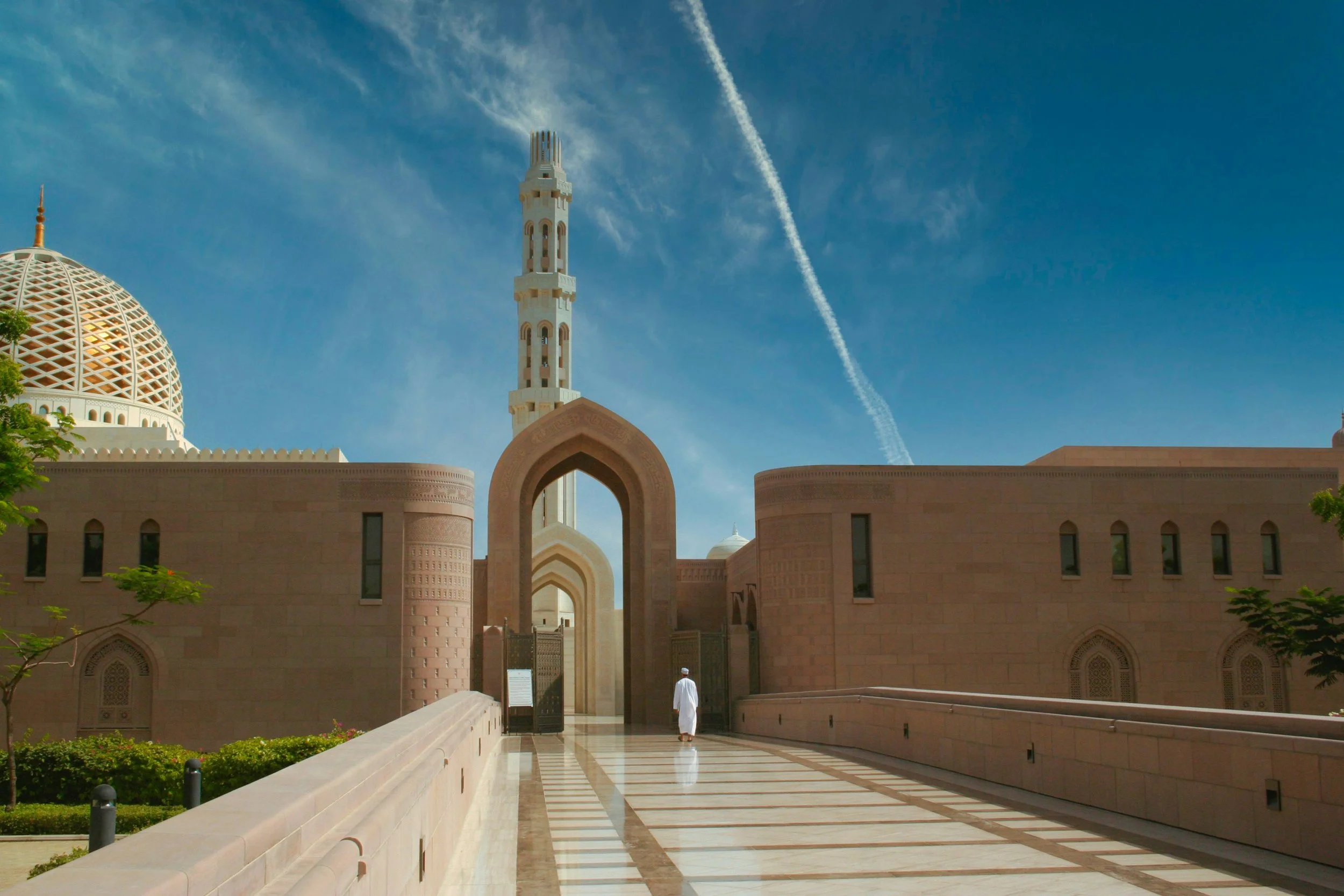
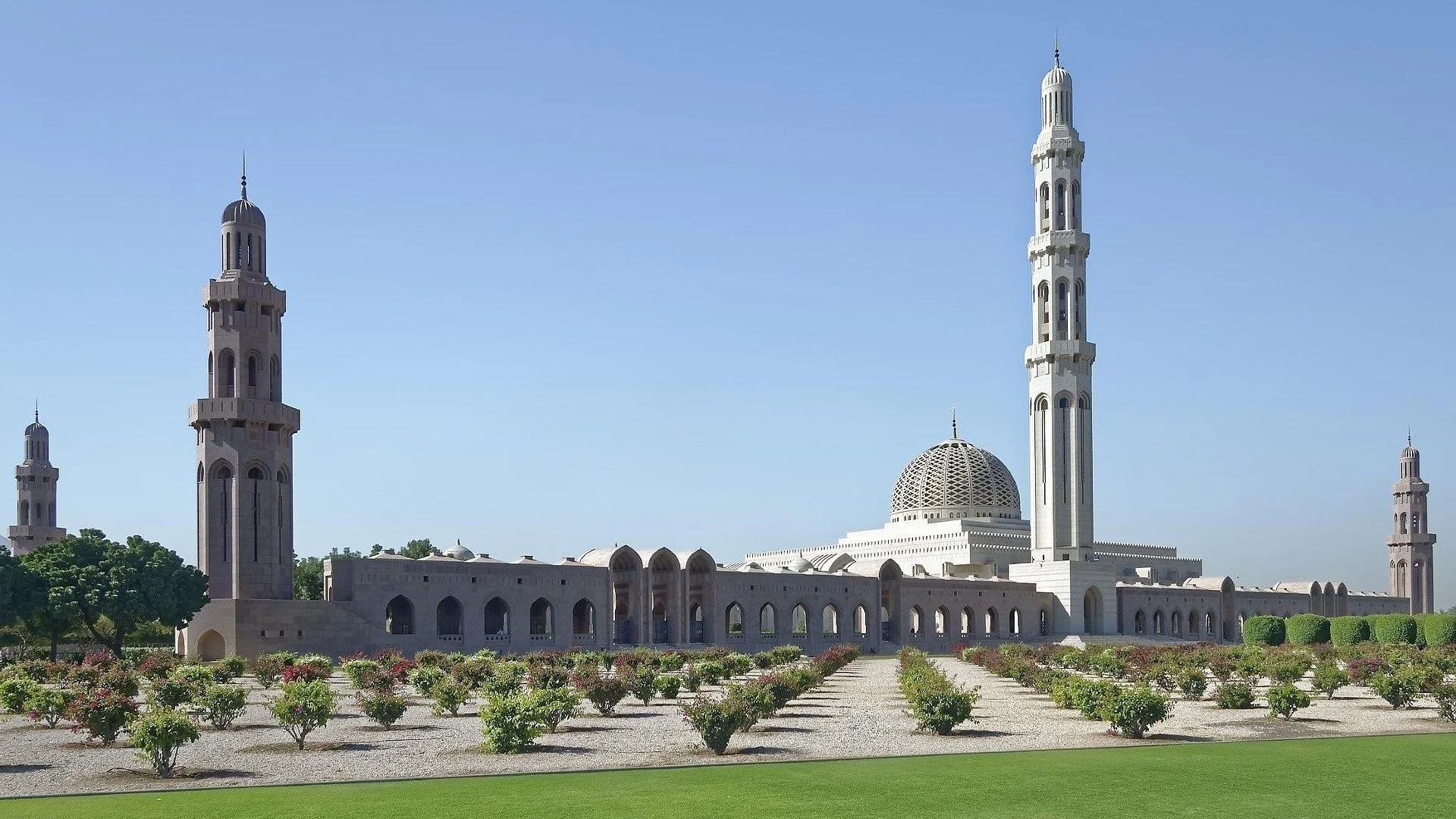
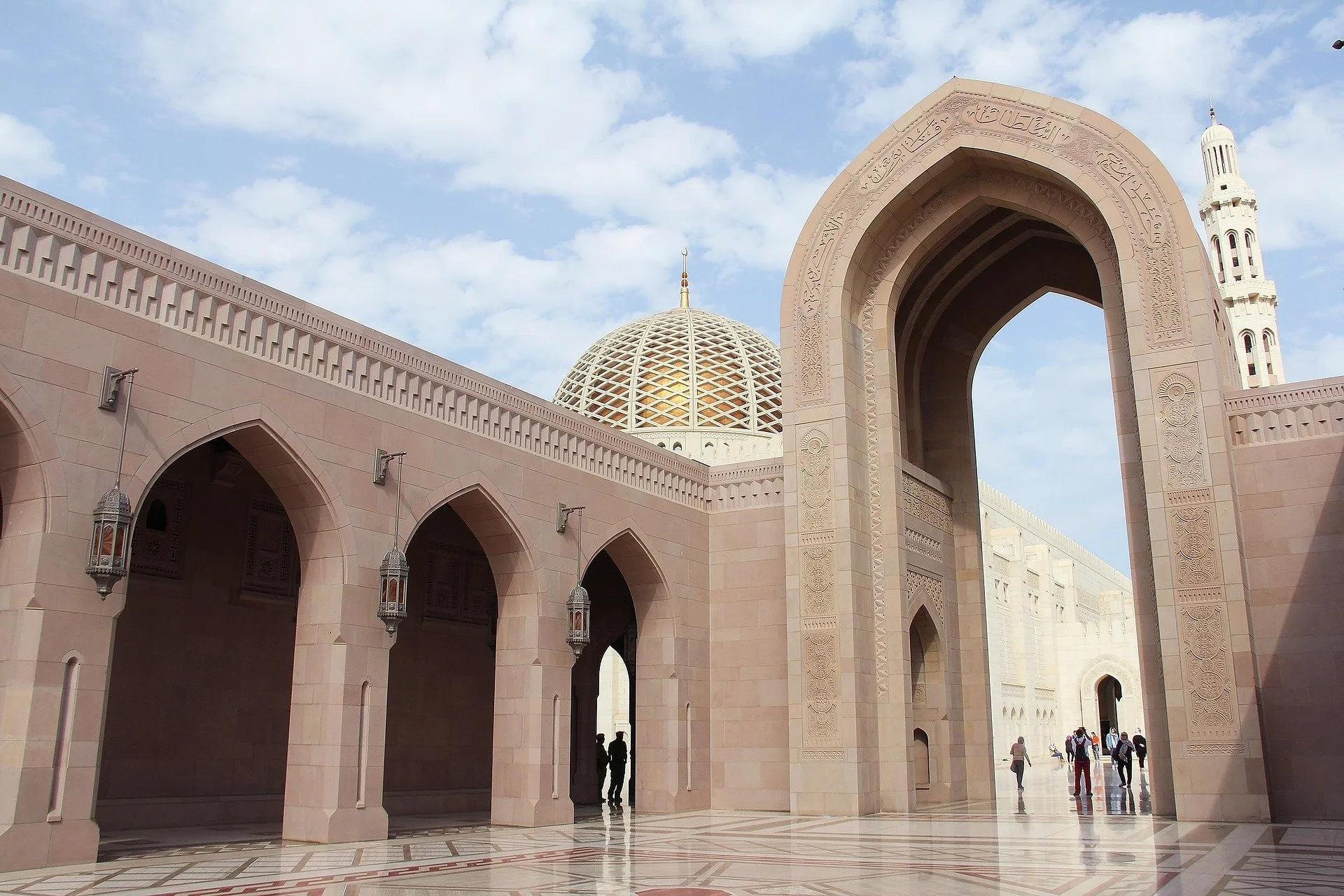
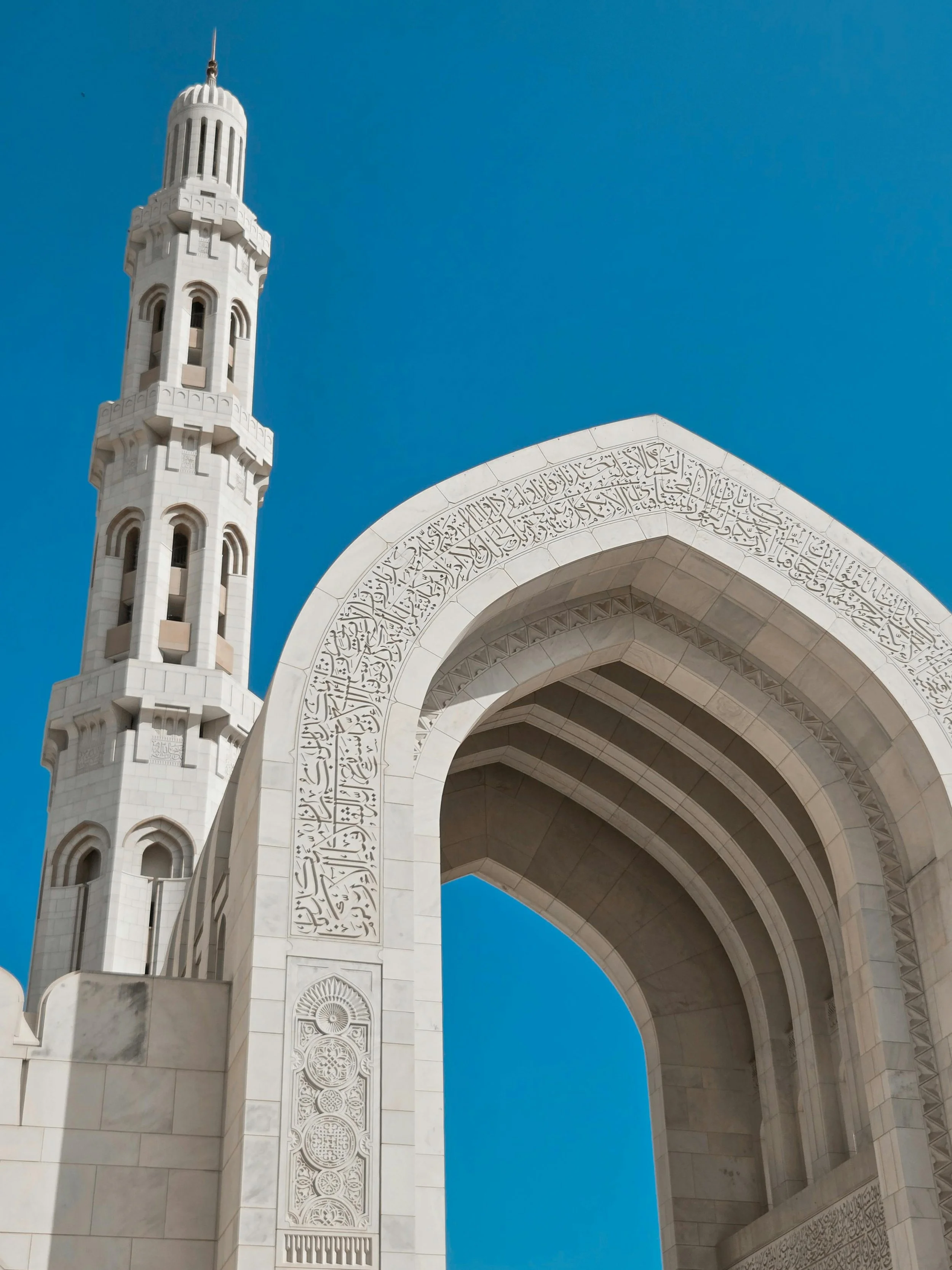
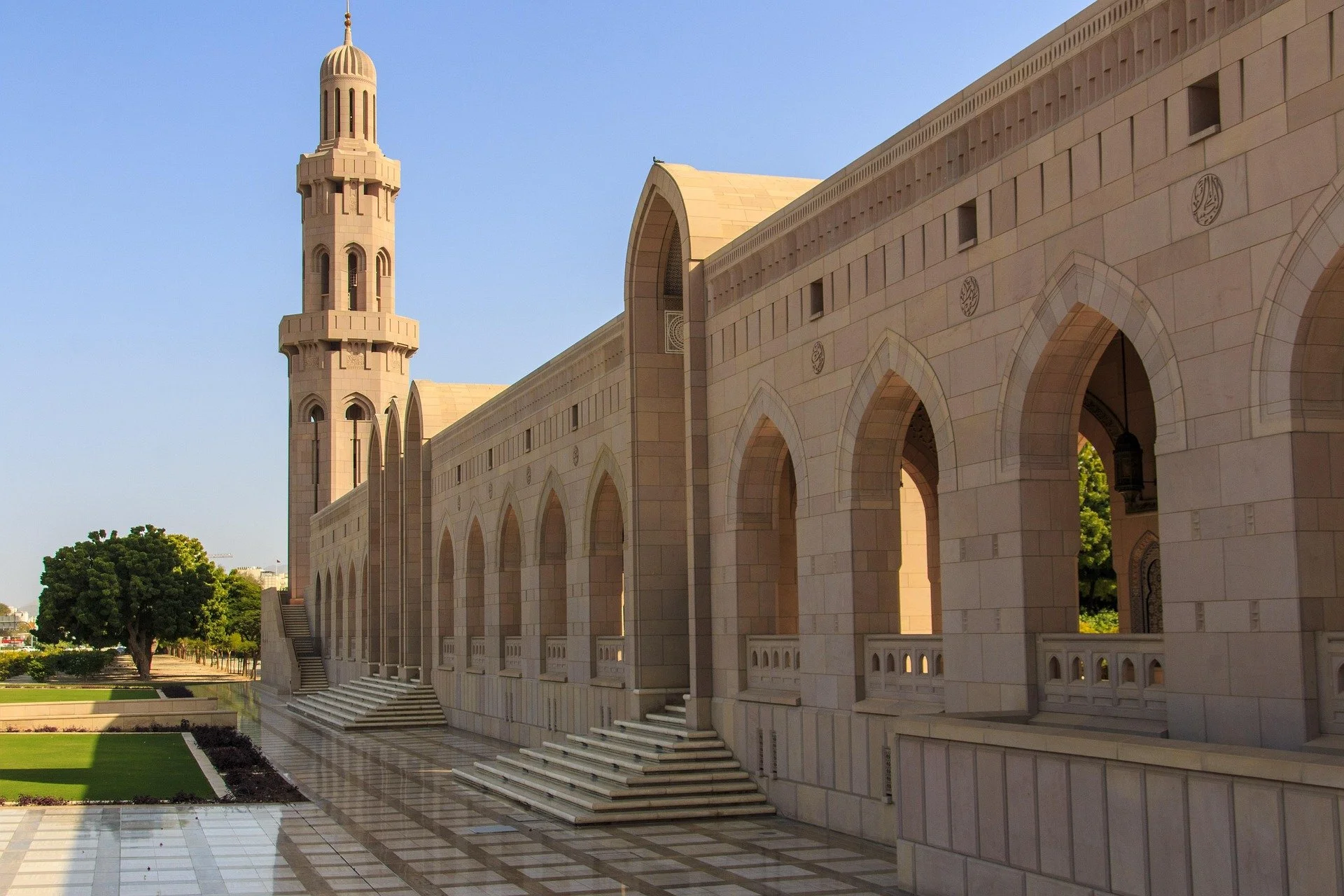
Sultan Qaboos Grand Mosque rises from Muscat's Bausher district with luminous white Indian sandstone walls and five minarets symbolizing Islam's core pillars. Completed in 2001 after six years of construction, this mosque accommodates 20,000 worshippers and serves as Oman's principal Friday mosque (jami). The building synthesizes Persian, Ottoman, and Omani architectural traditions while functioning as an educational center promoting Ibadi Islam, the moderate branch that defines Omani religious identity. Iraqi architect Mohammed Saleh Makiya designed the complex to balance monumentality with the restrained aesthetics characteristic of Ibadi tradition, which emphasizes functionality over ostentation.
The mosque occupies 416,000 square meters, establishing it among the world's largest Islamic worship spaces. Its distinctive features include one of the largest single-piece hand-woven carpets globally and a chandelier containing over 600,000 Swarovski crystals. Beyond worship functions, the complex houses a 20,000-volume library, the Institute of Islamic Sciences, and an Islamic Information Center, positioning the mosque as both spiritual hub and knowledge institution.
Who Built Sultan Qaboos Grand Mosque and Why?
In 1992, Sultan Qaboos bin Said Al Said announced his intention to commission a grand mosque marking Oman's modern identity. The sultan directed that his country should possess a mosque reflecting national cultural heritage while serving as the ceremonial center for Omani Islam. This decision responded to several motivations: commemorating three decades of his rule, providing adequate space for Muscat's growing Muslim population, and establishing an architectural symbol representing Oman's particular Islamic tradition.
Sultan Qaboos launched an international design competition in 1993. Mohammed Saleh Makiya, an Iraqi architect educated in England who established his practice in Baghdad in 1946, won the commission in collaboration with Quad Design of London. Makiya brought extensive experience designing mosques across the Middle East, including Baghdad's Khulafa Mosque. His architectural philosophy emphasized integrating traditional Islamic forms with modern construction techniques while respecting local cultural contexts. Egyptian designer Edgard Bali handled interior decoration.
Construction began in December 1994 on the chosen Bausher site. British contractor Carillion Alawi executed the building work, employing thousands of workers and artisans from multiple countries. The project took six years and seven months, finishing in time for the May 4, 2001 inauguration celebrating Sultan Qaboos's thirtieth year as ruler. The construction timeline reflected the extensive handcrafted elements, particularly the carpet requiring four years alone and the chandelier taking a similar amount of time.
The mosque's purpose extended beyond providing worship space. Sultan Qaboos envisioned it as an educational institution spreading Islamic knowledge, particularly Ibadi teachings. Ibadi Islam represents roughly 45 percent of Oman's Muslim population and distinguishes itself from Sunni and Shia traditions through specific theological positions and prayer practices. The mosque would serve as the primary center for Ibadi scholarship while promoting interfaith dialogue through its unprecedented openness to non-Muslim visitors.
What Makes Sultan Qaboos Grand Mosque's Architecture Distinctive?
The mosque employs a square plan centered on a massive dome rising 50 meters above the prayer hall floor. This central dome, constructed from 14,000 tons of marble, establishes the building's vertical emphasis while the horizontal spread of the complex creates balanced proportions. The architectural strategy prioritizes clear geometric relationships rather than elaborate ornamentation, reflecting Ibadi preferences for functional beauty over decorative excess.
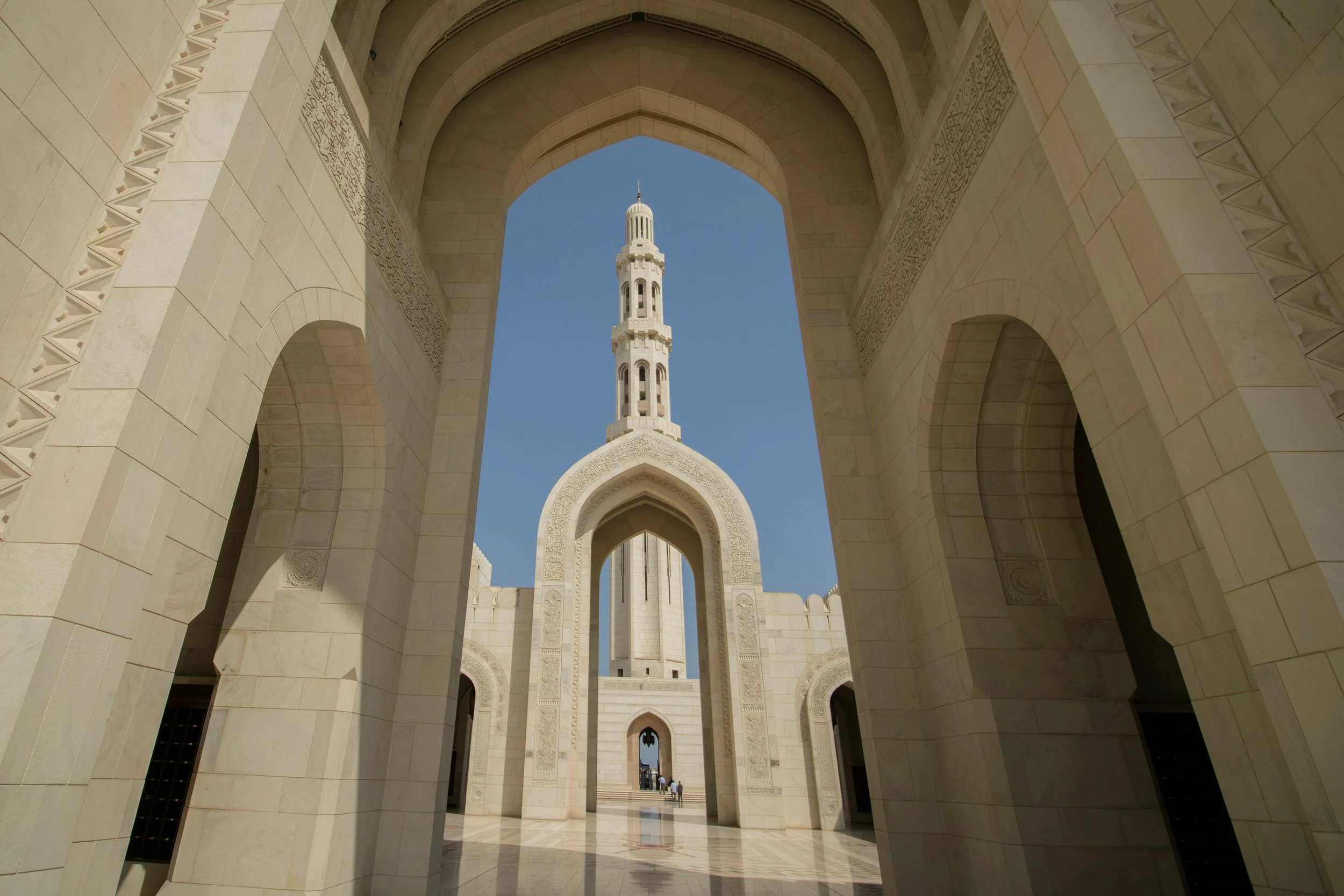
Five minarets define the mosque's boundaries and symbolic program. The principal minaret is 91.5 meters tall, making it Oman's tallest structure and a visible landmark across Muscat. Four corner minarets stand at 45 meters each, positioned at the rectangular base's corners. This five-minaret configuration explicitly references Islam's Five Pillars (shahada, salat, zakat, sawm, hajj), translating theological concepts into architectural form. The main minaret's placement at the entrance creates a processional axis reinforced by three high arches and marble pavement lines converging on the tower.
The building materials establish the mosque's distinctive appearance. Approximately 300,000 tons of Indian sandstone create the exterior walls, selected for uniformity in color and weather resistance. This limestone gives the mosque its characteristic white luminosity, particularly striking against Muscat's desert landscape and blue sky. Interior surfaces combine marble from India, Oman, Italy, and Egypt with intricate mosaic work incorporating green, beige, brown, orange, and mahogany tones. Carved wooden elements use imported Burmese teak for doors and panels.
Makiya's design synthesizes multiple Islamic architectural traditions rather than replicating a single historical style. Persian influences appear in extensive tilework and the carpet's design vocabulary. Ottoman elements include the five-minaret configuration and natural light deployment through strategic window placement. Traditional Omani architecture contributes timber ceiling panels reflecting regional construction techniques and simplified entrance arches contrasting with the elaborate tilework typical of Persian mosques.
How Does the Prayer Hall Function as Worship Space?
The main prayer hall accommodates 6,500 male worshippers under an open plan supported by four massive pillars carrying the central dome. Corridors extend along north and south walls, opening into the prayer space through decorated arches. The qibla wall faces Mecca, marked by a mihrab (prayer niche) featuring detailed stonework with geometric patterns and calligraphic inscriptions. Adjacent stands the minbar (pulpit) from which the imam delivers Friday sermons (khutbah).
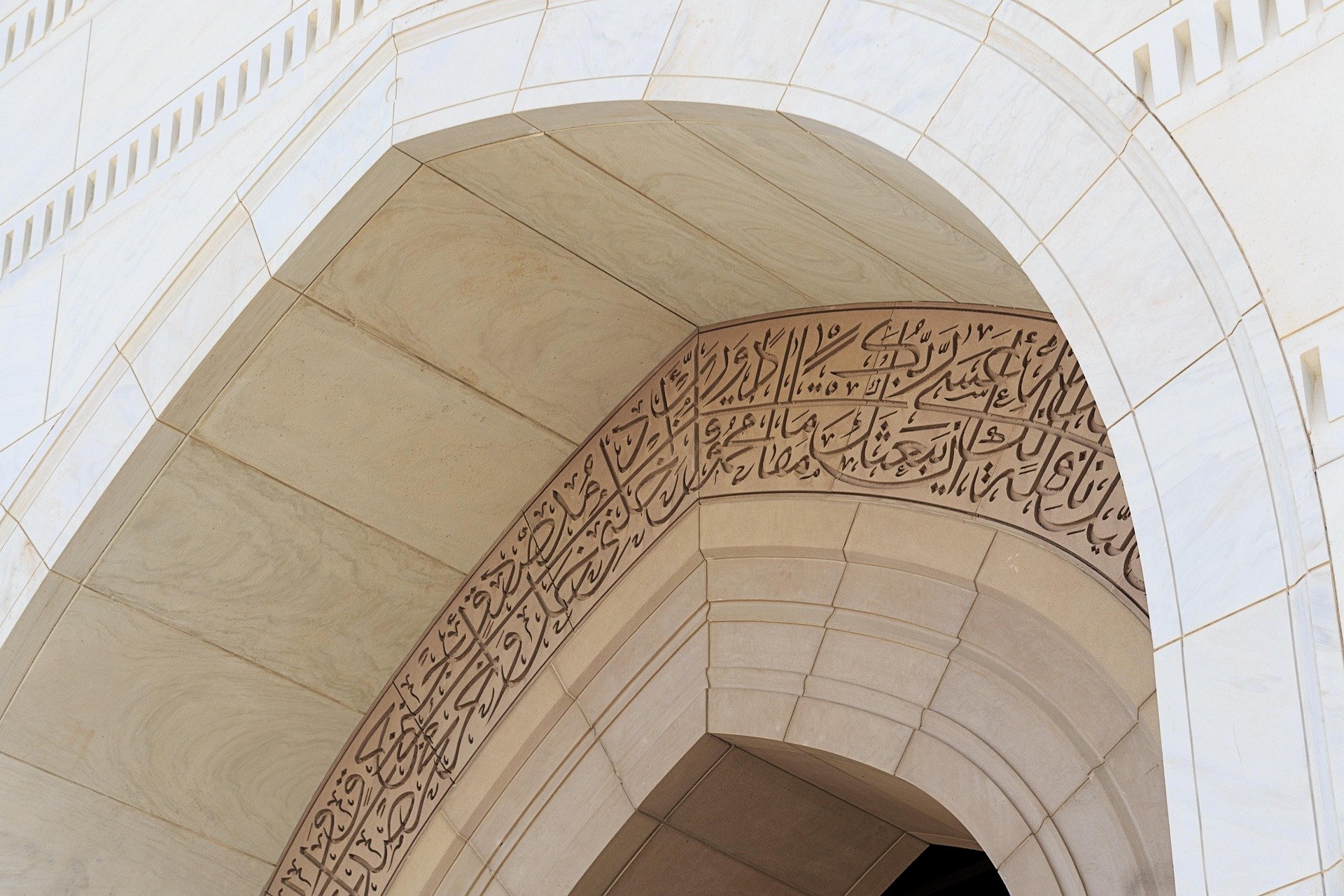
White and dark gray marble covers interior walls, decorated with murals depicting leafy patterns and geometric designs. The dome's construction employs spherical triangles within a structural framework of marble columns crossed by pointed arches. Porcelain panels provide decorative surfaces while timber panels stretch across ceiling sections, maintaining connection to Omani building traditions. Doors bear Islamic embellishments topped by Quranic verses rendered in Thuluth script, an elegant calligraphic style developed during the Abbasid period.
The carpet covering the prayer hall floor represents extraordinary material achievement. Weighing 21 tons and measuring approximately 70 by 60 meters (4,343 square meters total), this single-piece Persian carpet required 600 Iranian weavers working for four years. The design integrates classical traditions from Tabriz, Kashan, and Isfahan, three Persian cities renowned for carpet production. Workers used 28 colors in varying shades, obtaining most through traditional vegetable dyes. The carpet contains 1.7 billion knots, making it the world's second-largest single-piece carpet after its 2018 displacement by Abu Dhabi's Sheikh Zayed Grand Mosque.
Suspended from the central dome's apex hangs the chandelier that dominated world rankings when the mosque opened. This fixture measures 14 meters tall and weighs 8,500 kilograms. Over 600,000 Swarovski crystals set in 24-carat gold plating create the chandelier's reflective surfaces. Its construction required four years, with 1,122 halogen bulbs providing illumination. The chandelier functions as both lighting and architectural focal point, drawing worshippers' attention upward while symbolizing divine light.
The women's prayer hall, separated from the main space, holds 750 worshippers. This section mirrors the main hall's design quality, ensuring equivalent architectural experience. Additional prayer capacity exists in paved exterior grounds (8,000 worshippers) and interior courtyards with surrounding passageways, bringing total capacity to approximately 20,000 during major gatherings and festivals.
What Educational and Cultural Facilities Form the Mosque Complex?
The mosque complex extends beyond prayer halls to encompass comprehensive educational infrastructure. The southern corridor houses these facilities, creating functional separation between worship spaces and institutional programs while maintaining architectural integration.
The library occupies 97 square meters and contains between 20,000 and 30,000 reference volumes. Collections cover Islamic culture and sciences, world history, literature, and general sciences. The library serves students, researchers, and visitors, operating as a public knowledge resource. Holdings include Islamic jurisprudence texts, Quranic studies, hadith collections, historical accounts, and scholarly works representing diverse Islamic intellectual traditions. The library specifically emphasizes Ibadi theological and legal texts, supporting the mosque's educational mission.
The Institute of Islamic Sciences trains young Muslims in religious disciplines. Curriculum covers Quranic recitation and interpretation, Islamic jurisprudence (fiqh), hadith studies, Islamic history, and Arabic language. The institute particularly promotes Ibadi learning, addressing the tradition's relative obscurity globally (Ibadis represent roughly one percent of Muslims worldwide) while educating Omani Muslims in their heritage. Teaching staff provides instruction grounded in both traditional Islamic scholarship and contemporary pedagogical methods.
The Islamic Information Center facilitates interfaith dialogue and education for non-Muslims. Staff members explain Islamic principles, architectural symbolism, and Omani cultural practices to visitors. The center offers resources for new Muslims learning prayer, fasting, and other religious practices. This educational accessibility reflects Ibadi emphasis on spreading knowledge and the mosque's unusual openness, as most Omani mosques restrict non-Muslim entry.
A seminar hall accommodating 300 people hosts lectures, conferences, and cultural events. This multipurpose space enables the mosque to function as a venue for Islamic scholarship beyond regular educational programs, supporting academic conferences, community gatherings, and official events.
How Do the Corridors Showcase Islamic Architectural Diversity?
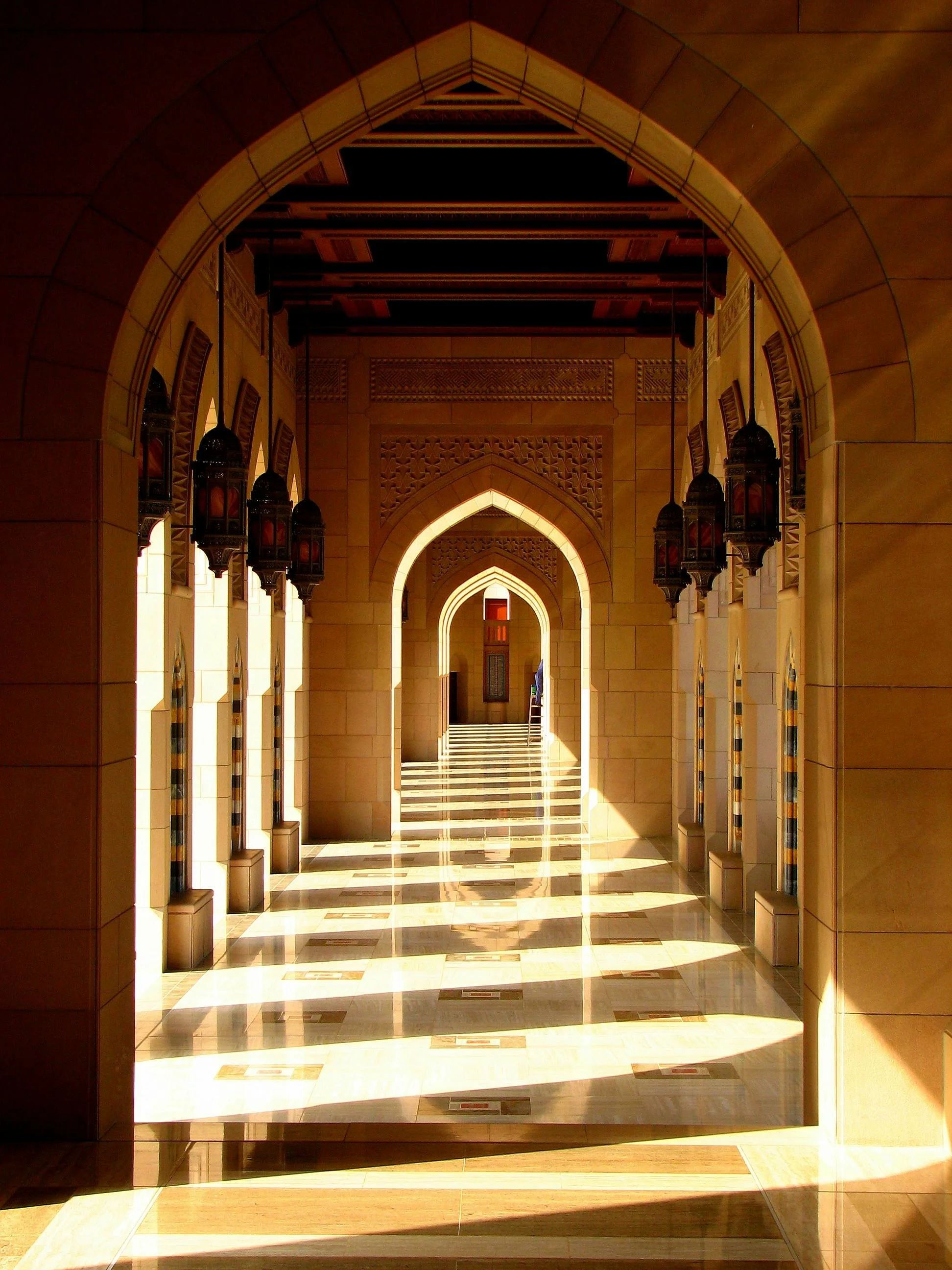
North and south corridors stretch 240 meters each, forming protective boundaries between worship spaces and the mosque's institutional facilities. These long galleries were deliberately divided into distinct halls, each displaying decorative traditions from different Islamic cultural regions. This curatorial approach transforms the corridors into an architectural museum demonstrating Islam's geographic reach and aesthetic diversity.
Individual corridor sections feature decoration representing specific traditions: Andalusian geometric patterns and arabesques, Persian tilework and calligraphy, Egyptian Mamluk stone carving techniques, Syrian ablaq (alternating light and dark stone courses), and distinctly Omani timber ceiling designs. This selection spans Islamic architecture from Andalusia to China, illustrating how shared religious principles generated diverse regional expressions.
The corridor ceilings employ dome canopies referencing the Bilad Bani Bu Ali mosque in Oman's eastern region (A'Sharqiyah). This architectural quotation connects the modern grand mosque to historical Omani building traditions, particularly the modest multi-domed structures characteristic of Ibadi mosques. Traditional Ibadi mosques featured simple construction without minarets, emphasizing function over display. The Sultan Qaboos Grand Mosque's corridor domes acknowledge this heritage while operating within a monumental architectural program.
Stained glass windows punctuate the corridors, filtering natural light through colored panes decorated with Islamic geometric patterns. The interplay between solid carved surfaces and translucent glass creates shifting light conditions throughout the day. Mosaic work covers walls and arches, employing stone fragments arranged in intricate patterns representing botanical forms and abstract compositions.
The corridors serve practical circulation functions while providing educational content. Visitors walking these galleries encounter direct material evidence of Islamic architectural achievement across centuries and continents. Explanatory displays identify the cultural origins of different decorative styles, transforming architectural appreciation into cultural education.
How Does Sultan Qaboos Grand Mosque Reflect Ibadi Values?
Ibadi Islam emerged in Basra during the 8th century as a moderate branch of the Kharijite movement. While Ibadis share historical origins with more extreme Kharijite groups, the tradition rejected violence and developed distinctive theological and legal positions. Ibadis emphasize consultation in leadership selection, learned scholarship over hereditary authority, and restrained religious practice avoiding saint veneration or elaborate ritual.
Traditional Ibadi mosques in Oman reflected these values through architectural simplicity. Historical structures featured no minarets, modest scale, plain interiors with occasional decoration limited to the mihrab and wooden ceilings, and construction near water sources for ablution. This aesthetic prioritized communal worship function over architectural display, considering excessive ornamentation inappropriate allocation of community resources.
Sultan Qaboos Grand Mosque operates within this value system while acknowledging contemporary requirements for a national ceremonial mosque. The building's restrained decoration compared to many large mosques (particularly those in Gulf states) reflects Ibadi preference for understated elegance. Geometric patterns and calligraphy dominate decorative programs rather than figural imagery or excessive gilding. The architectural emphasis falls on spatial quality, material excellence, and craftsmanship rather than proliferating ornamental motifs.
The mosque's educational infrastructure directly manifests Ibadi values emphasizing knowledge transmission. The library, Islamic sciences institute, and information center position religious learning as central to the mosque's mission. This educational commitment distinguishes Ibadi practice from traditions prioritizing ritual or mystical devotion. The openness to non-Muslim visitors, unusual among Omani mosques, demonstrates Ibadi confidence in education and dialogue over exclusion.
The mosque's functional program accommodates Ibadi prayer practices, which differ from Sunni methods in specific postures and movement sequences. During congregational prayers attended by Sultan Qaboos and government officials, worshippers stand in varying positions reflecting their different traditions (Omani officials include both Ibadi and Sunni Muslims). The mosque's spatial arrangements facilitate this religious coexistence.
What Is Sultan Qaboos Grand Mosque's Contemporary Role?
The mosque functions as Oman's premier Friday mosque, hosting weekly congregational prayers that constitute the most significant regular event. Thousands gather for the khutbah delivered by the imam, reinforcing community solidarity and providing religious instruction. This weekly ritual maintains the mosque's position as the ceremonial center of Omani Islam.
The educational programs operate continuously. Islamic sciences students attend daily instruction, library users research Islamic topics and general subjects, and the information center receives visitors explaining Islam to non-Muslims and supporting new Muslims. Lecture series and seminars bring scholars to address contemporary issues facing Muslim communities.
The mosque welcomes non-Muslim visitors Saturday through Thursday from 8:00 to 11:00 AM, an unprecedented openness for Oman where most mosques remain closed to non-Muslims. This policy reflects both Ibadi educational emphasis and Sultan Qaboos's vision for interfaith understanding. Visitors must dress modestly (covering arms, legs, and hair for women), but no advance registration is required. Guided tours explain architectural features and Islamic principles, with staff trained to answer questions respectfully.
The gardens surrounding the mosque provide tranquil spaces for reflection and community gathering. Landscaping incorporates ornamental plants arranged in patterns inspired by traditional Islamic garden design. Fountains and water features reference the importance of water in Islamic ritual and aesthetics. The gardens extend along the southern side, creating green buffers between the mosque and urban development.
During Ramadan, the mosque experiences heightened activity. Nightly tarawih prayers attract large congregations, and the facility hosts iftar meals for breaking the fast. Muslims engage in i'tikaf (spiritual retreat) during Ramadan's final ten nights, spending extended periods in the mosque for prayer and Quranic recitation.
The mosque's architectural presence influences Omani identity and tourism. Its image appears in promotional materials representing the country, and tourists visiting Muscat typically include the mosque on their itineraries. The building demonstrates that Islamic architecture continues evolving, synthesizing historical traditions with contemporary construction capabilities and programmatic requirements.
Glossary:
Ibadi Islam: Moderate Islamic tradition emphasizing consultation in leadership, scholarly authority, and restrained practice; represents approximately 45% of Oman's Muslims.
Jami: Friday mosque where congregational prayer and sermon occur weekly.
Khutbah: Friday sermon delivered from the minbar.
Mihrab: Prayer niche in the qibla wall indicating direction toward Mecca.
Minbar: Elevated pulpit from which the imam delivers sermons.
Qibla: Direction Muslims face during prayer, oriented toward the Kaaba in Mecca.
Thuluth: Elegant Arabic calligraphic script developed during Abbasid period, characterized by curved letterforms.
