
Id Kah Mosque in Kashgar, Xinjiang, China


This post was last updated on August 10, 2026.
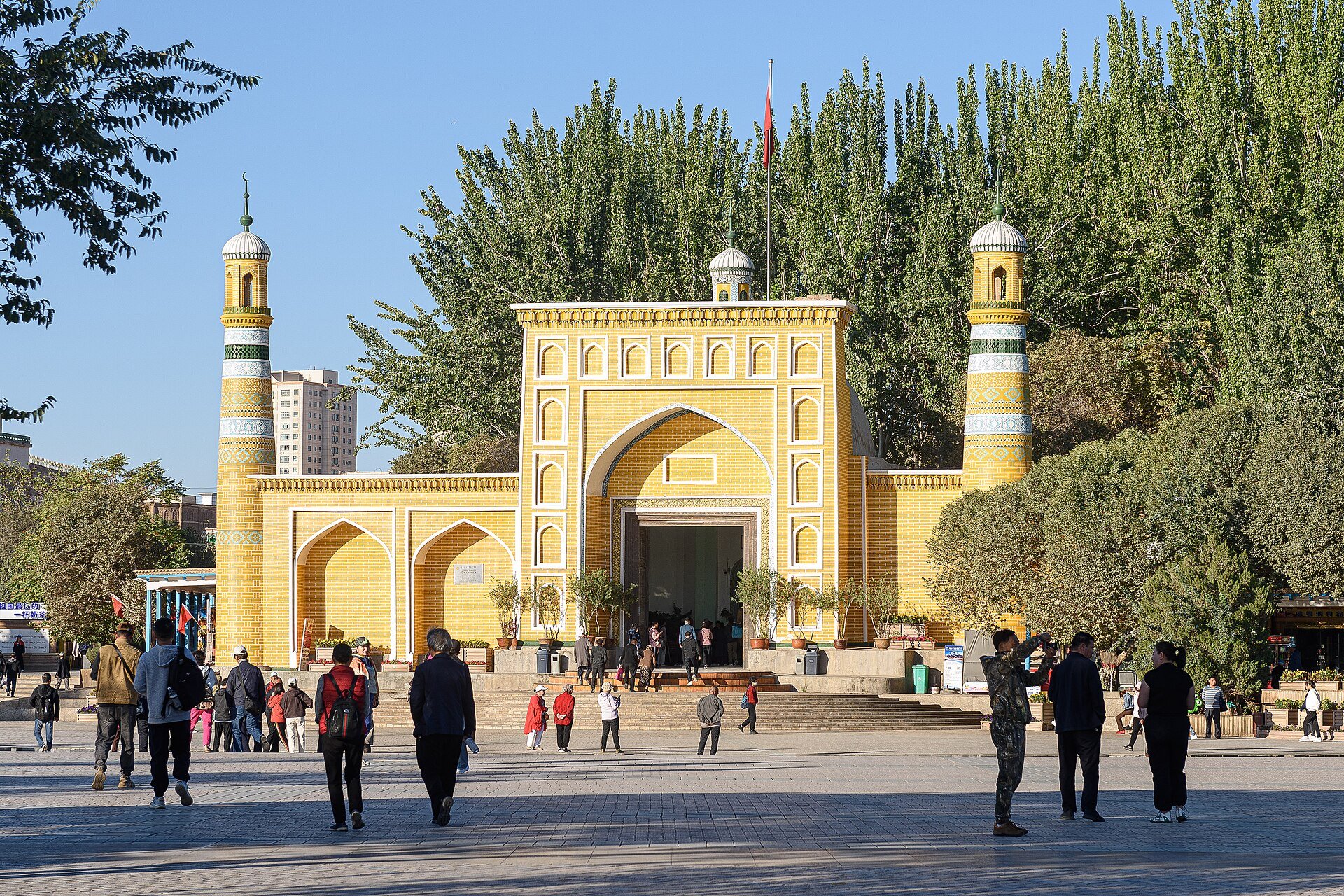
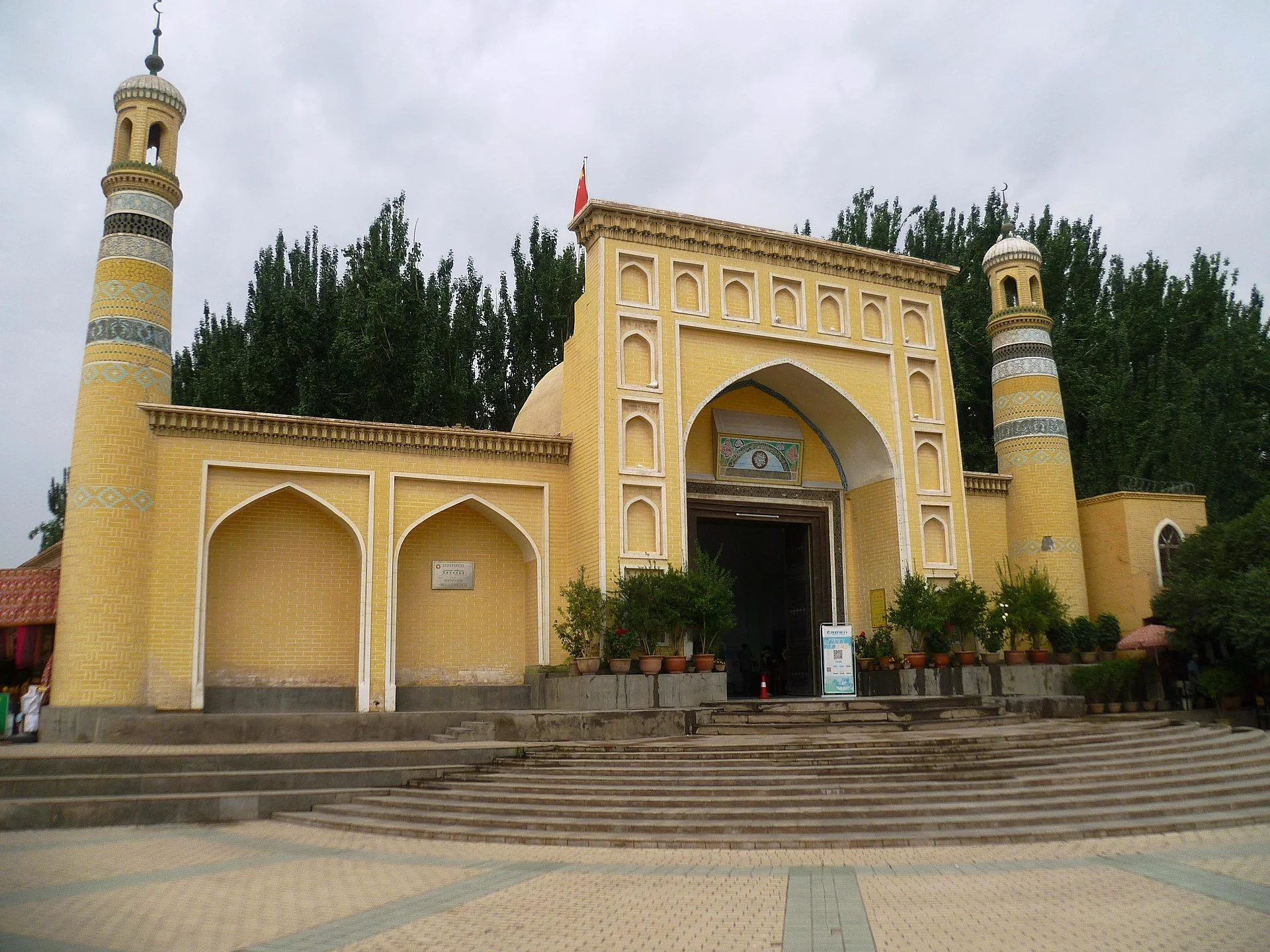
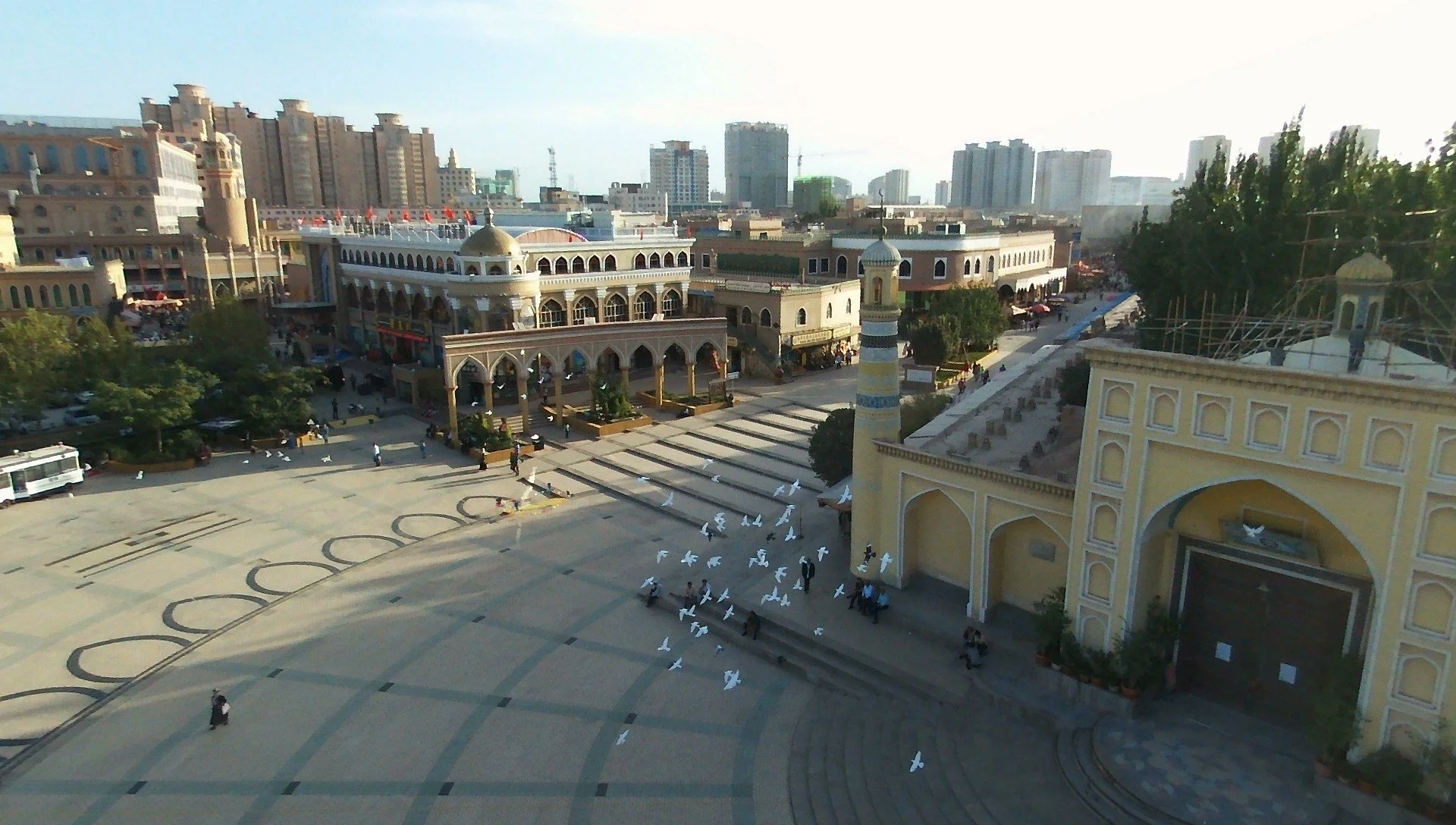
The Id Kah Mosque stands in central Kashgar as China's largest mosque, covering 16,800 square meters with capacity for 20,000 worshippers. Built in 1442 and comprehensively reconstructed in 1798, this mosque was the spiritual center for Uyghur Muslims across the region China administers as Xinjiang and many Uyghurs call East Turkistan. The name "Id Kah" derives from Persian eidgāh (place of festivities), referencing the vast square before the mosque where tens of thousands gathered for Eid celebrations. The structure synthesizes Central Asian architectural traditions with Uyghur building practices, its distinctive yellow-brick facade and twin minarets defining Kashgar's urban landscape.
Since 2016, Chinese authorities have closed the mosque to regular worship except for limited, government-supervised gatherings of elderly adherents on select holidays. This closure forms part of a broader campaign in which the Chinese government has destroyed or damaged approximately 16,000 mosques (65 percent of all mosques) across Xinjiang since 2017 and detained an estimated 1.8 million Uyghurs and other Turkic Muslims. Authorities have transformed the mosque into a tourist attraction that charges admission fees, preserving its physical form while eliminating its function as a living center of Islamic worship and community life.
Who Built the Id Kah Mosque and Why?
The site's history as sacred space predates the mosque's 1442 construction. Arab general Qutayba ibn Muslim's conquest of Central Asia in the early 8th century established Islam in the region. By 996 CE, Islamic structures occupied this location, and the area held the graves of Muslim missionaries and community leaders throughout the medieval period.
In 1442, Saqsiz Mirza, ruler of Kashgar during the Eastern Chagatai Khanate, commissioned a mosque on this cemetery site to commemorate his ancestors. Kashgar operated as an important Silk Road node, and the city's Muslim population required a congregational mosque for Friday prayers and major festivals. Ubul Adibek expanded the structure in 1538 to honor his deceased uncle, transforming the simple prayer hall into a functioning congregational mosque.
The mosque's current physical form dates primarily to 1798, when builders completely reconstructed the complex using golden-yellow bricks. A subsequent expansion in 1809 added the main gate and excavated an internal pool and canal system for ablutions. The 1838 enlargement brought the mosque to its present dimensions of 140 meters north-south by 120 meters east-west. In 1872, during Yakub Beg's rule, the gate tower received comprehensive renovation and the overall layout was formalized into its current configuration.
What Makes the Id Kah Mosque's Architecture Distinctive?
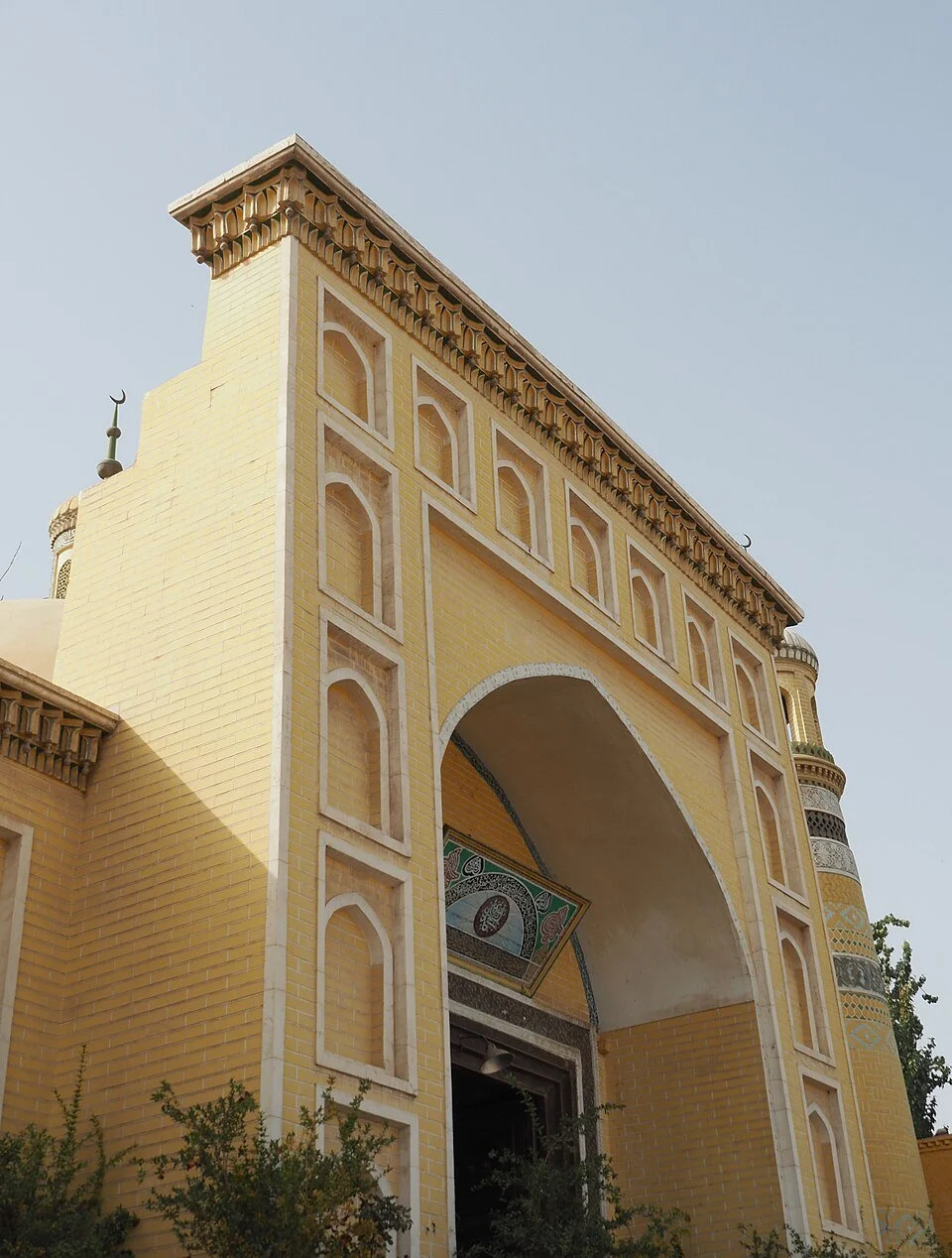
The mosque follows Central Asian courtyard mosque traditions, adapted to Uyghur architectural preferences. The facade dominates Id Kah Square with an elaborate composition in yellow brick. The main entrance gate stands 12.6 meters tall with an arched opening 4.7 meters high and 4.3 meters wide. Two asymmetrically placed minarets flank the gate tower, the taller reaching 18 meters. These cylindrical brick towers feature decorative bands of blue and green tiles against yellow brick, topped with crescent moon finials. Fifteen miniature arches around the main portal create rhythmic visual interest across the facade.
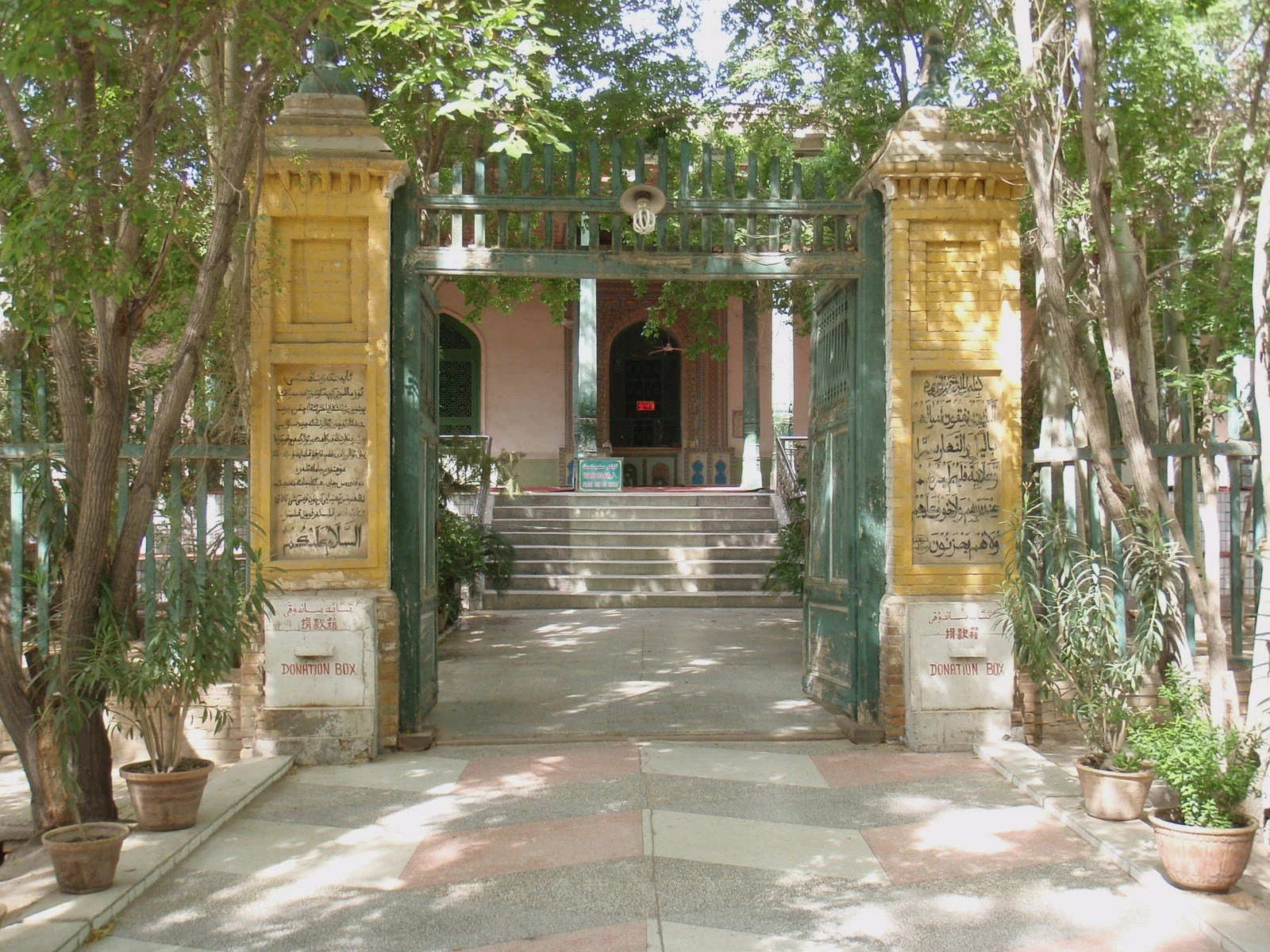
Beyond the entrance gate, the mosque unfolds as a series of courtyards and halls on an east-west axis. The main courtyard measures approximately 120 by 140 meters, paved with stone and shaded by mature poplar and pine trees. Along the courtyard's north and south sides stand 36 teaching halls where the imam delivered religious instruction and students studied Islamic sciences. A pool with clear water occupies the courtyard center, serving ablution needs while creating visual cooling in Kashgar's desert climate.
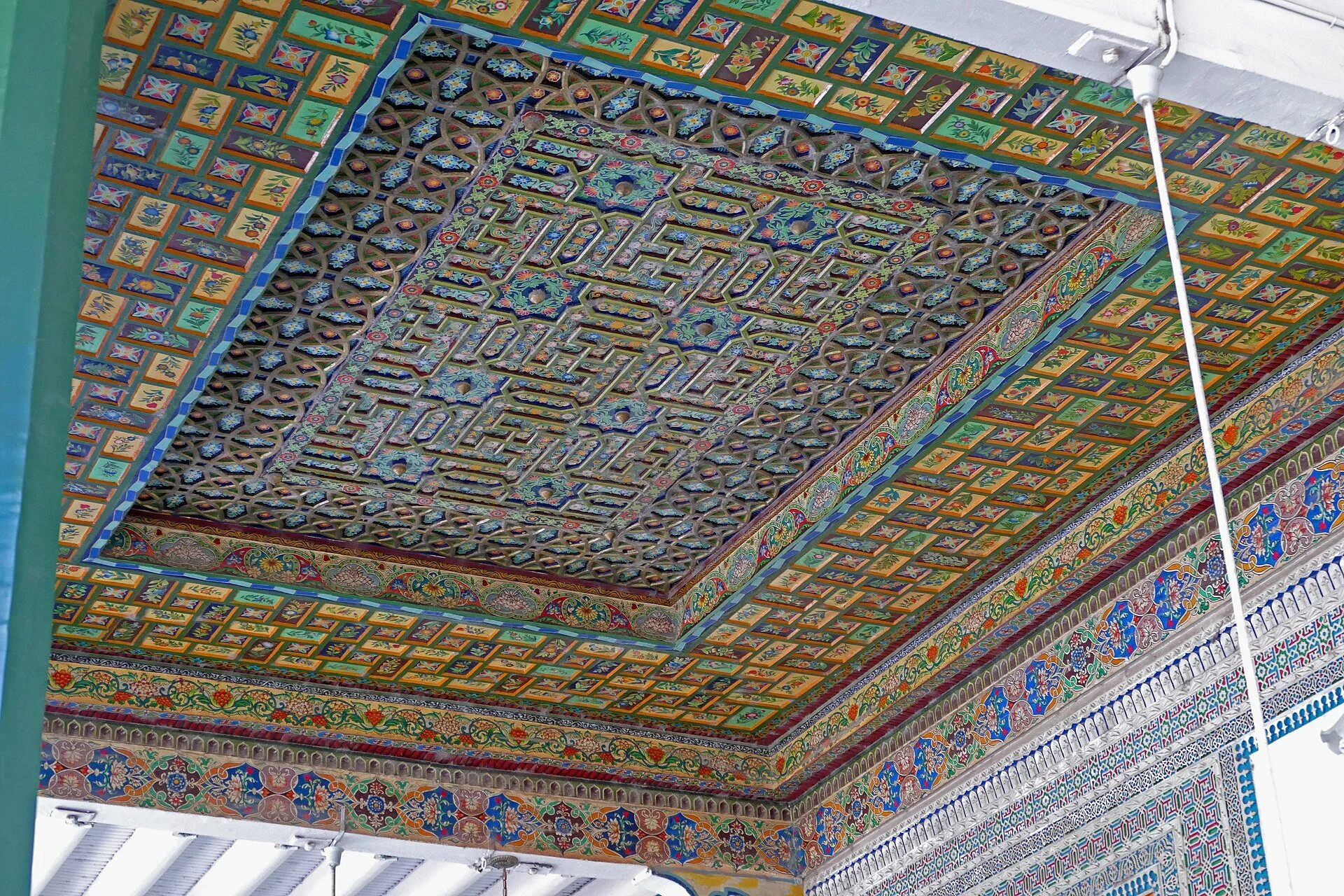
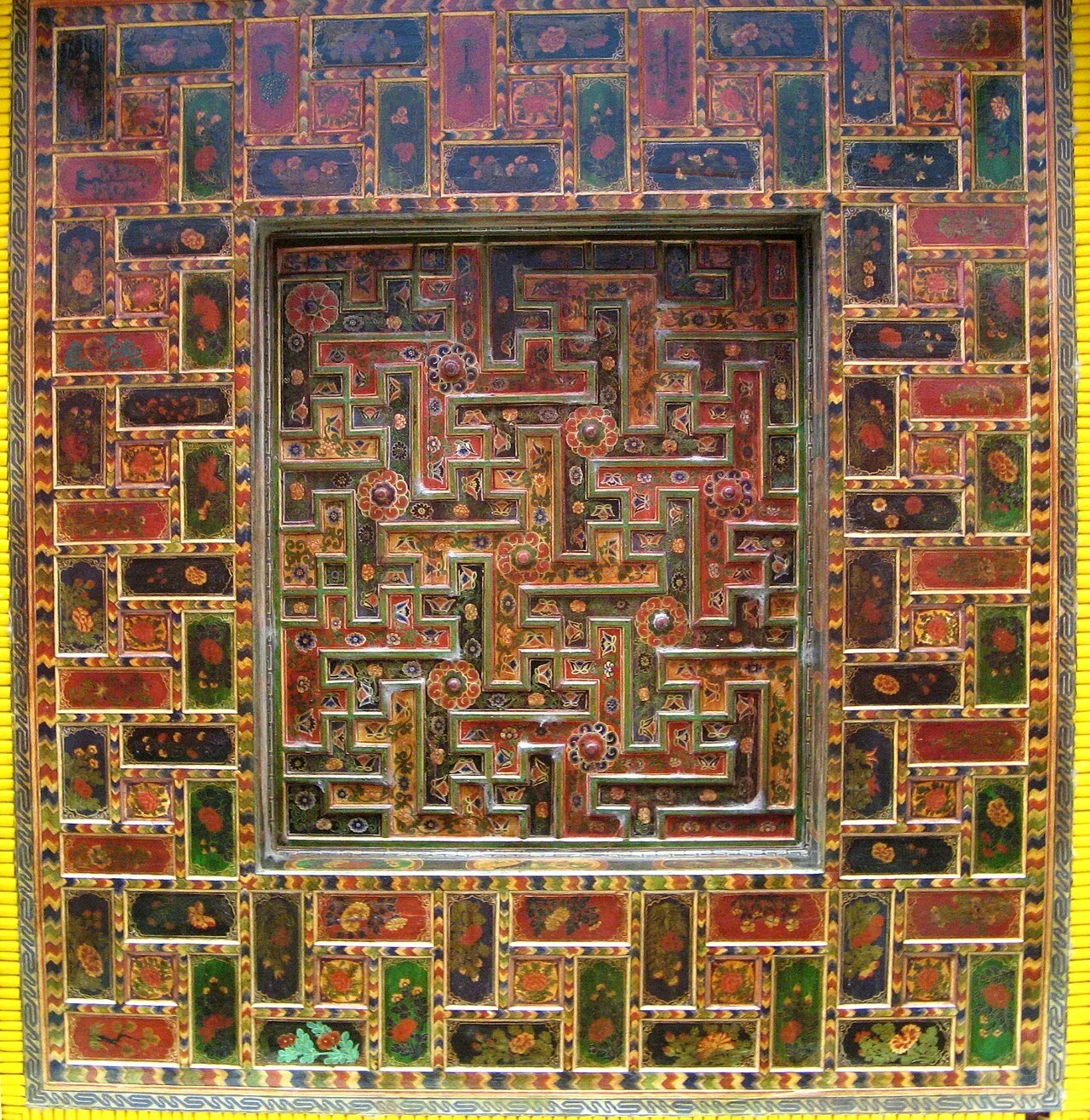
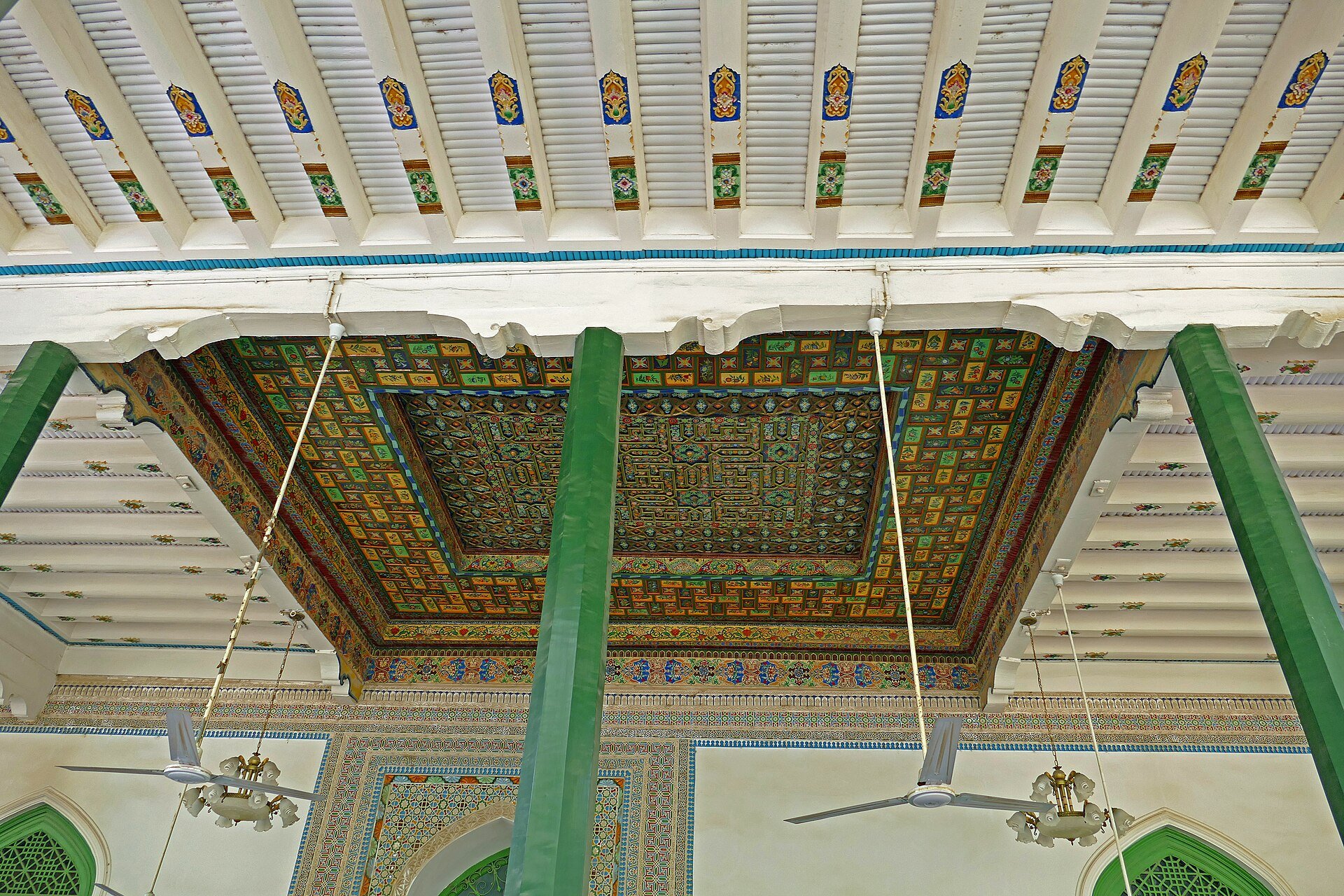
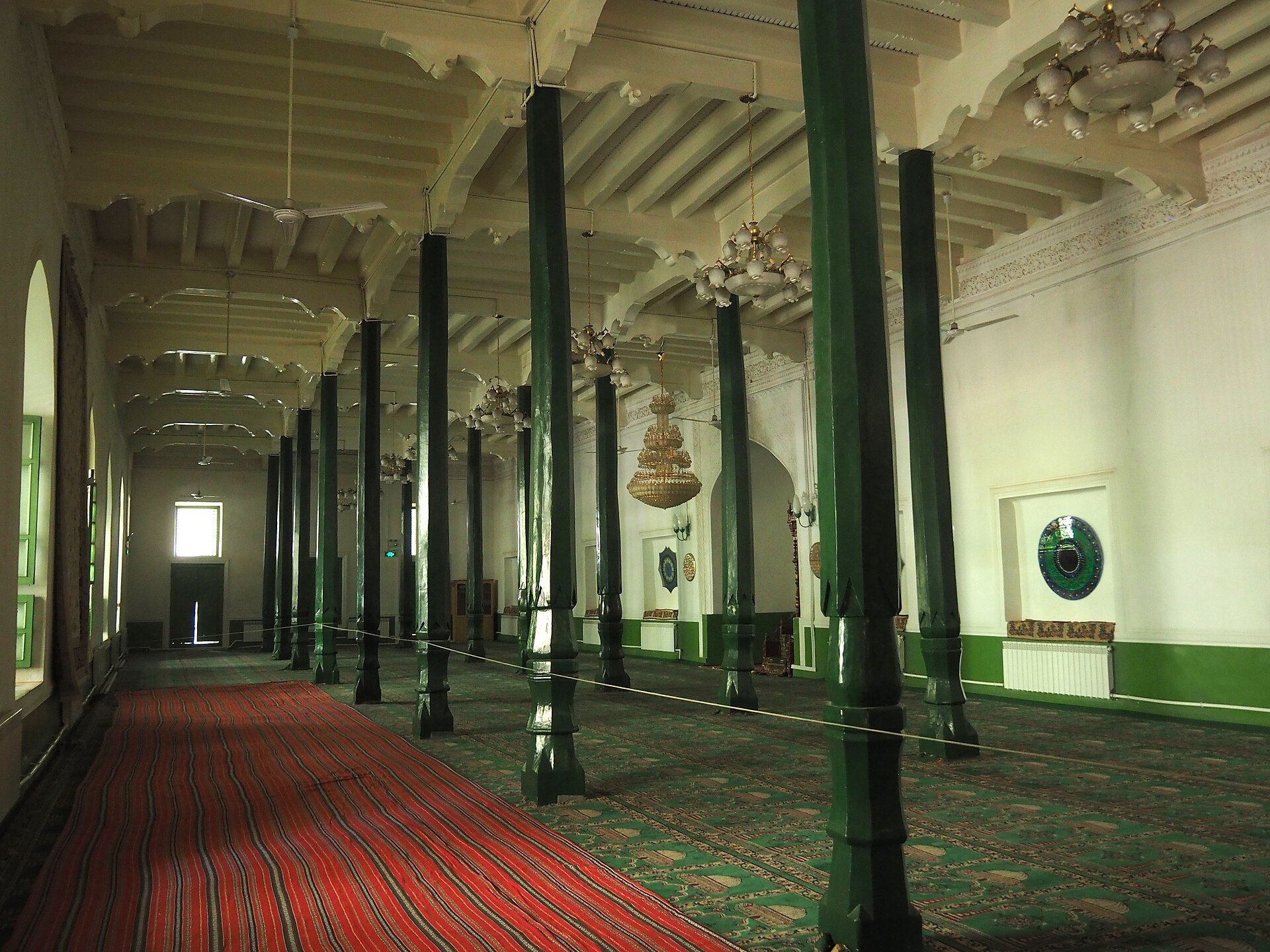
The prayer hall occupies the western end, raised on a platform more than one meter above courtyard level. The hall measures 140 meters long by 19 meters deep, creating an exceptionally wide unified prayer space. The hall divides into three zones: entrance portico, outer hall, and inner hall. One hundred forty carved wooden columns, each standing seven meters tall and painted light blue or green, support the flat timber roof in a grid pattern. The ceiling features painted geometric patterns including six-pointed and eight-pointed stars, vegetal arabesques, and Quranic calligraphy, demonstrating the integration of Central Asian decorative vocabularies with broader Islamic geometric design principles.
The inner hall contains the mihrab (prayer niche indicating the direction toward Mecca) with elaborate decorative treatment featuring carved geometric patterns and calligraphic inscriptions. Adjacent stands the minbar (pulpit) from which the imam delivered Friday sermons. A continuous wooden frieze bearing Quranic inscriptions in Kufic script runs beneath the ceiling around all four sides of the courtyard.
How Does Id Kah Mosque Reflect Central Asian Islamic Architecture?
The mosque's design reveals specific Uyghur adaptations of Central Asian Islamic architecture. The emphasis on courtyard planning reflects both Islamic requirements and Central Asian climatic responses. The extensive use of fired brick responds to local material availability; the Tarim Basin provided clay suitable for brick production but limited building stone. The timber roof construction, supported by wooden columns rather than stone or brick vaults, provided structural flexibility during earthquakes along the seismically active Tian Shan range.
The decorative program combining geometric patterns, vegetal arabesques, and calligraphy follows pan-Islamic aesthetic principles while incorporating local preferences for specific color palettes and motifs. Chinese decorative motifs including lotus flowers and ruyi (auspicious cloud) patterns appear in the ceiling decorations, revealing architectural synthesis in this border region where Islamic Central Asia met Chinese cultural influences.
What Role Did Id Kah Mosque Play in Uyghur Community Life?
The mosque did far more than host prayer. These teaching halls made it Xinjiang's primary Islamic educational center, where students spent years training to become religious scholars, teachers, and community leaders before carrying that training to communities across the region. Residents also gathered there to resolve disputes and maintain the social networks that held daily life together.
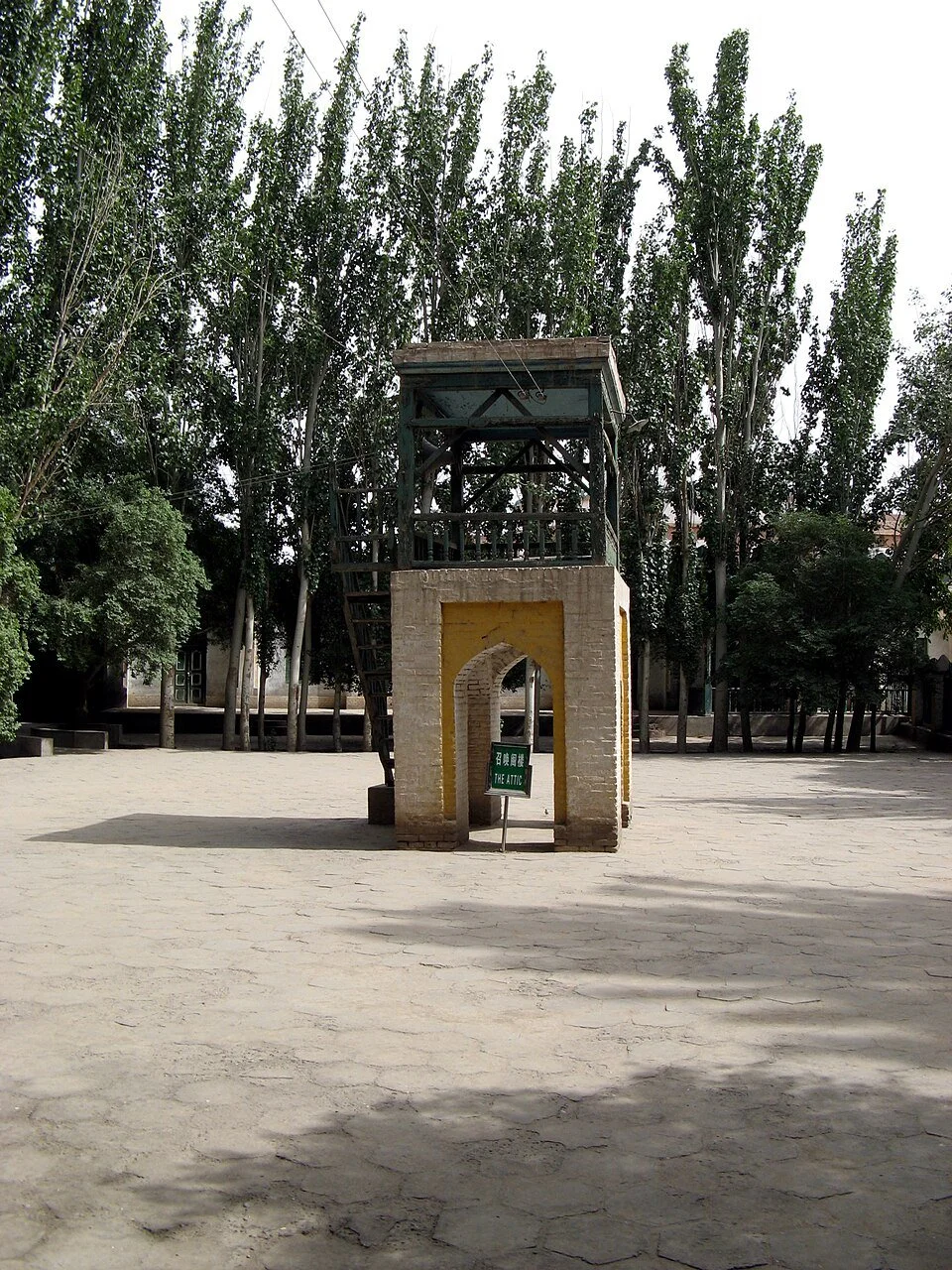
During Ramadan, the mosque hosted special nightly tarawih prayers and provided iftar meals for breaking the daily fast. Community members performed i'tikaf (spiritual retreat) during Ramadan's final ten nights. During Eid al-Fitr and Eid al-Adha, tens of thousands gathered at the mosque and surrounding square. Historical accounts describe 30,000 to 50,000 people filling the mosque and square during major holidays. After Eid prayers, musicians performed from the gate tower using traditional instruments, while celebrants gathered for communal festivities including traditional Uyghur dancing.
What Is the Id Kah Mosque's Current Status?
Attendance figures trace the decline. Friday prayers drew nearly 10,000 worshippers in 2009, then fell to 4,000-5,000 by 2011, before access tightened sharply after the 2016 closure. By 2021, the government-appointed imam reported only 800-900 worshippers at Friday prayers, attributing the drop to "a natural shift in values" rather than government restrictions. Independent observers documented that Chinese authorities staged these limited gatherings for propaganda purposes, using government-approved elderly participants to perform prayers under surveillance and create a facade of tolerance for foreign visitors.
On July 30, 2014, the mosque's imam, Jume Tahir, was stabbed to death shortly after morning prayers. Chinese authorities jailed his successor for 15 years in 2017 on charges of "spreading extremism." The following year, authorities removed a plaque containing Quranic verses that had hung outside the mosque's entrance for decades. The teaching halls, once home to generations of Islamic scholars, sit empty.
In 2023, Chinese authorities began charging admission fees for tourists to enter the mosque, transforming the sacred space into a commercial attraction. Entrance costs 20-40 yuan (approximately $3-6) depending on visitors' ages. As Turghunjan Alawudun of the World Uyghur Congress noted, charging entry fees to a mosque contradicts Islamic principles, as mosques traditionally welcome all visitors without charge.
What Is the Broader Context of Cultural Destruction in Xinjiang?
The mosque-destruction estimate cited above comes from satellite imagery analysis by the Australian Strategic Policy Institute, which found that of these mosques, an estimated 8,500 were demolished completely. The same research documented an additional 30 percent of important Islamic sites, including shrines, cemeteries, and pilgrimage routes, demolished outright, with 28 percent more damaged or altered.
The Guardian and Bellingcat examined 91 religious sites identified by former Xinjiang residents, finding that Chinese authorities inflicted significant structural damage on 31 mosques and two major shrines between 2016 and 2018, completely or nearly completely razing 15. Alongside this destruction, that same detention campaign peaked at an estimated 1.8 million people held in internment camps in 2018, in facilities officially described as "vocational education centers." Camps have since given way to the formal prison system. A February 2025 report from the Simon-Skjodt Center for the Prevention of Genocide at the U.S. Holocaust Memorial Museum puts the current prison and detention population at over 500,000, evidence that mass detention has changed form rather than ended.
Chinese authorities have systematically targeted Uyghur religious practices since 2016: prohibiting children from participating in religious activities, criminalizing routine practices such as fasting during Ramadan for government employees, restricting beards and Islamic dress, burning Uyghur-language books (including religious texts and Quran translations), and separating hundreds of thousands of Uyghur children from their families to place them in boarding schools where instruction occurs entirely in Mandarin Chinese.
Kashgar itself, along with Urumqi, is an exception: most mosque buildings there remain physically intact. Authorities preserve these urban mosques to maintain an appearance of religious freedom for visitors while systematically destroying mosques in smaller cities and rural areas. In January 2024, Chinese authorities revised Xinjiang's religious regulations, adding provisions requiring that "religious activity sites that are newly built, renovated, expanded, or rebuilt should reflect Chinese characteristics and style in terms of architecture." The rule formalized China's "Sinicization" campaign, which forces mosques to remove architectural features authorities deem "foreign," including domes, minarets, and crescent symbols.
The pattern continues into 2026. A monitoring structure known as the "Three Teams" system assigns imams, mosque administrators, and community informants to log who attends prayers and what is said in sermons at registered mosques, while imams undergo periodic loyalty reviews to keep their positions. During Ramadan 2026, human rights researchers reported more than 500 arrests in Hotan alone for private fasting or unregistered religious gatherings. The restrictions documented at Id Kah since 2016 reflect an active system, not a closed chapter.
The United Nations human rights office has urged China to release people who have been arbitrarily detained and disclose the whereabouts of those who are missing. In January 2021, the United States, followed by Canada and the United Kingdom, formally declared that China is committing genocide against Uyghurs. The European Parliament passed resolutions condemning the persecution.
Why Does Id Kah Mosque Matter?
Centuries of Uyghur Islamic culture took physical form in this mosque. Its design synthesized multiple architectural traditions while creating something distinctly Uyghur, reflecting complex cultural exchanges along Silk Road trade routes. The building documented how Islamic architectural principles adapted to new geographical contexts while maintaining spiritual and functional continuity with mosques across the Islamic world.
For Uyghur Muslims, Id Kah meant more than architectural heritage. It was the spiritual and social center of their largest city, the place where community life unfolded through daily prayers, Friday gatherings, Ramadan observances, Eid celebrations, educational programs, and countless informal exchanges. The mosque anchored Uyghur Muslim identity in Kashgar, giving religious practice, cultural transmission, and community cohesion a physical home across generations.
Chinese authorities have deliberately destroyed Uyghur cultural infrastructure by converting this living community institution into a monitored site for paying visitors. While the building's physical form survives, they have extinguished its function. A mosque without worshippers, an educational center without students, a community gathering space emptied of community: what remains is evidence of what has been lost.
China's systematic campaign to destroy 16,000 mosques across Xinjiang aims to sever Uyghurs from their Islamic heritage and cultural identity. Preserving Id Kah's shell while eliminating its substance illustrates this strategy: a facade of religious tolerance masking the systematic end of religious practice. The mosque stands, but Chinese authorities have forcibly ended the centuries of life within it.
For Muslims worldwide and those who value cultural heritage and religious freedom, Id Kah Mosque embodies both the historical richness of Uyghur Islamic architecture and the ongoing destruction of a people's cultural and religious identity. The building's survival as an emptied shell for paying visitors, stripped of its meaning and function, shows a cultural catastrophe unfolding in plain sight.
Glossary:
Eidgāh: Persian term meaning "place of festivities," referring to large open areas adjacent to mosques where communities gather for major Islamic holidays.
Mihrab: Prayer niche in the qibla wall indicating the direction toward Mecca.
Minbar: Elevated pulpit from which the imam delivers Friday sermons.
Qibla: Direction of prayer toward the Kaaba in Mecca.
