
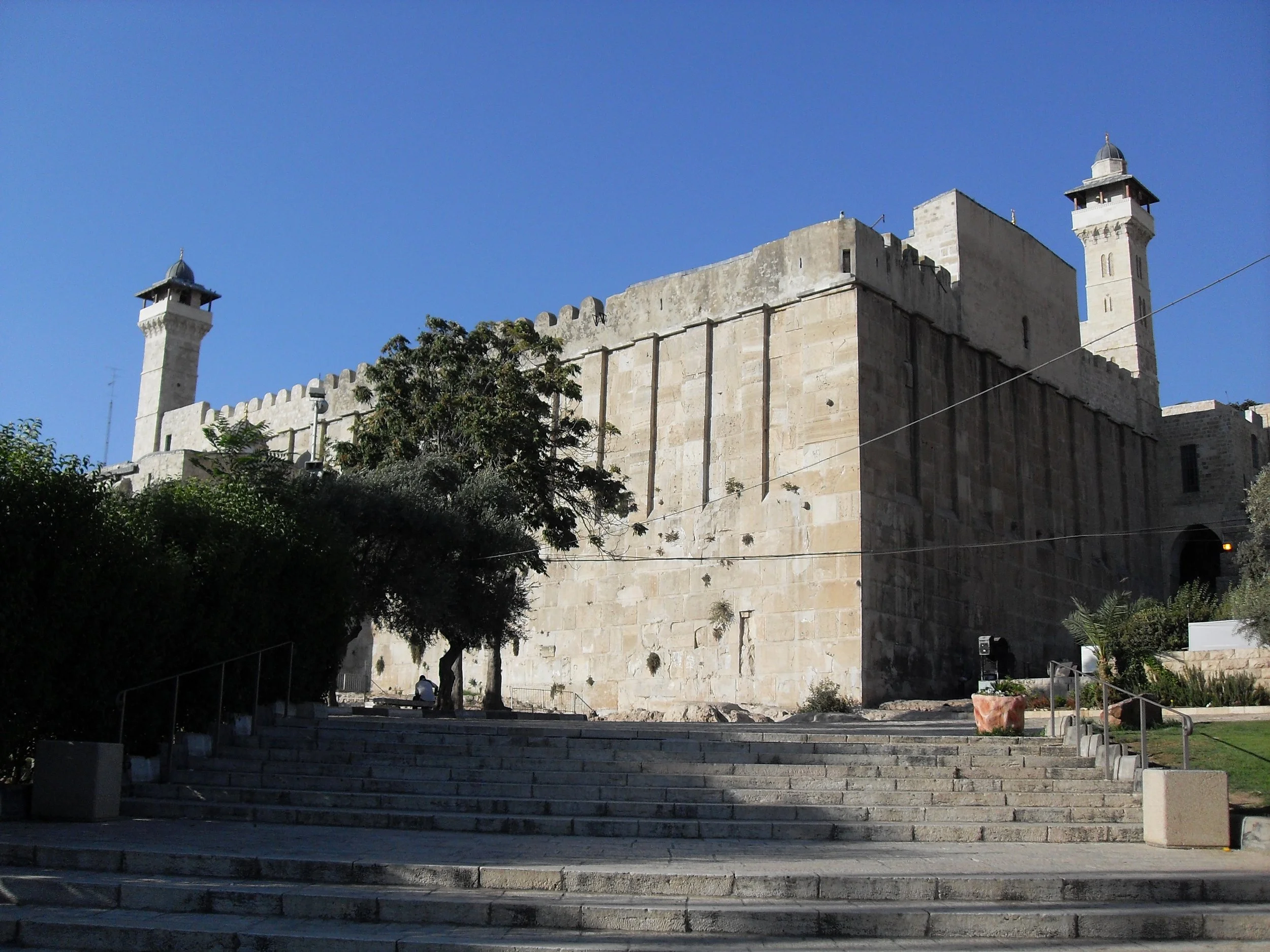
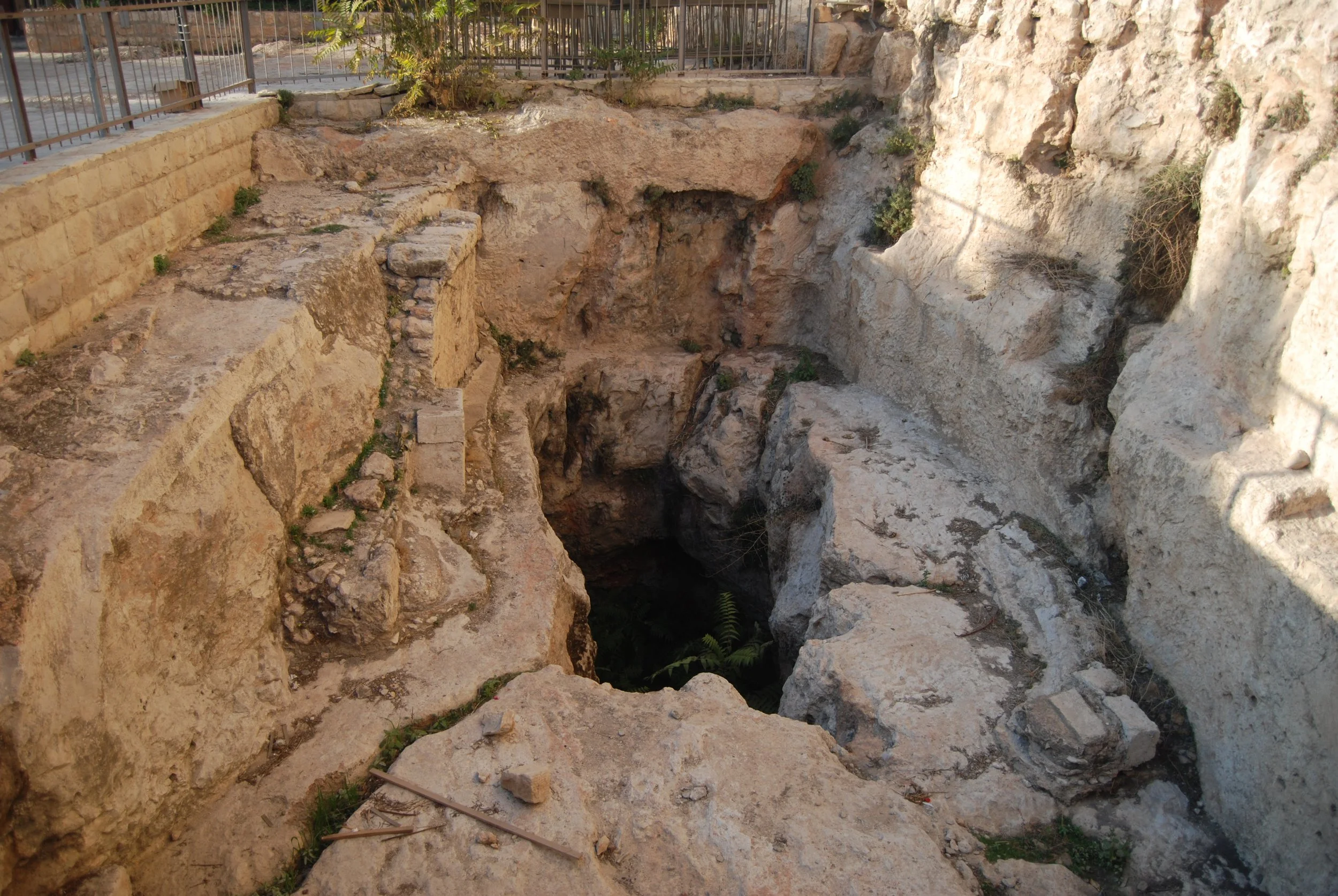

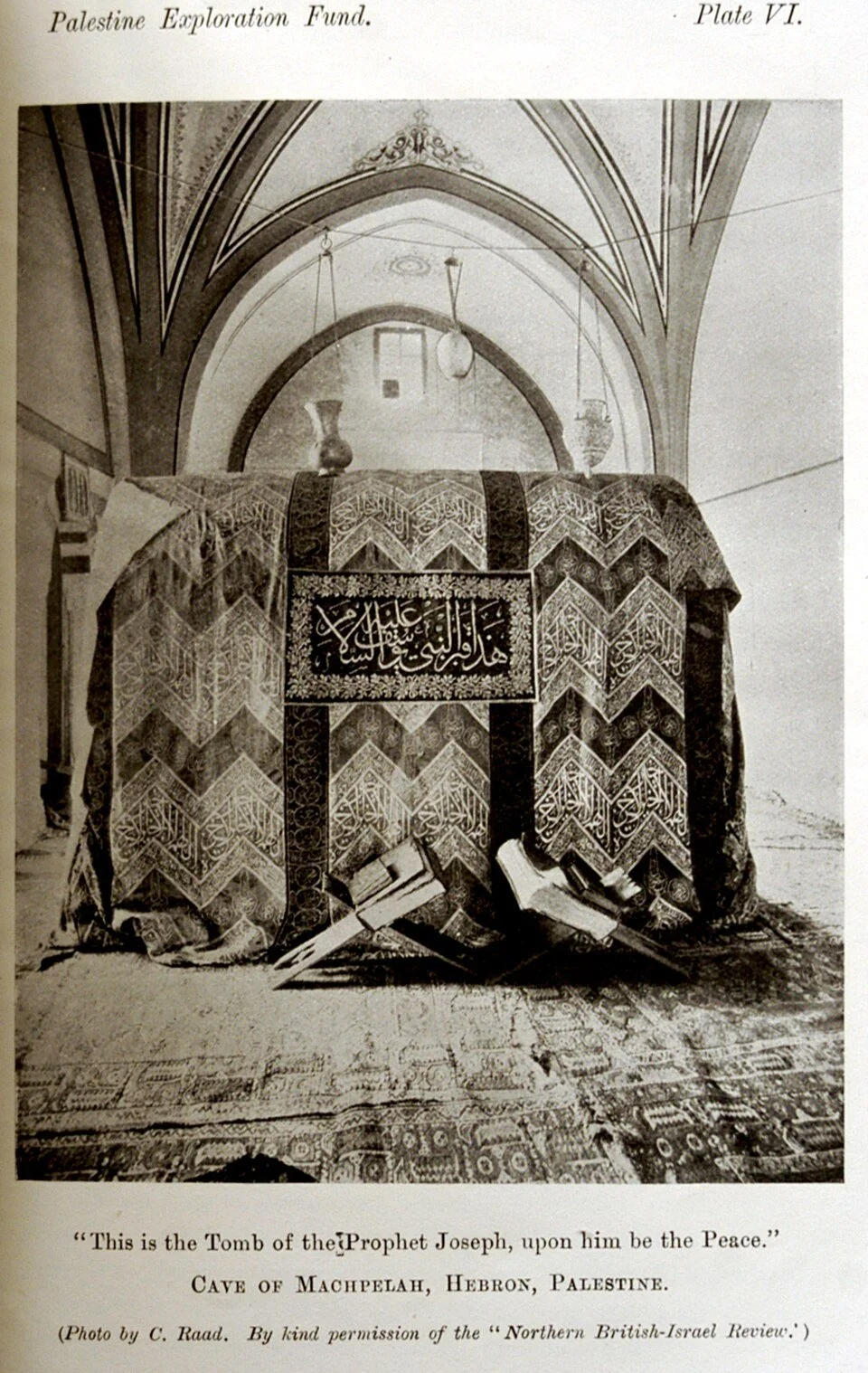
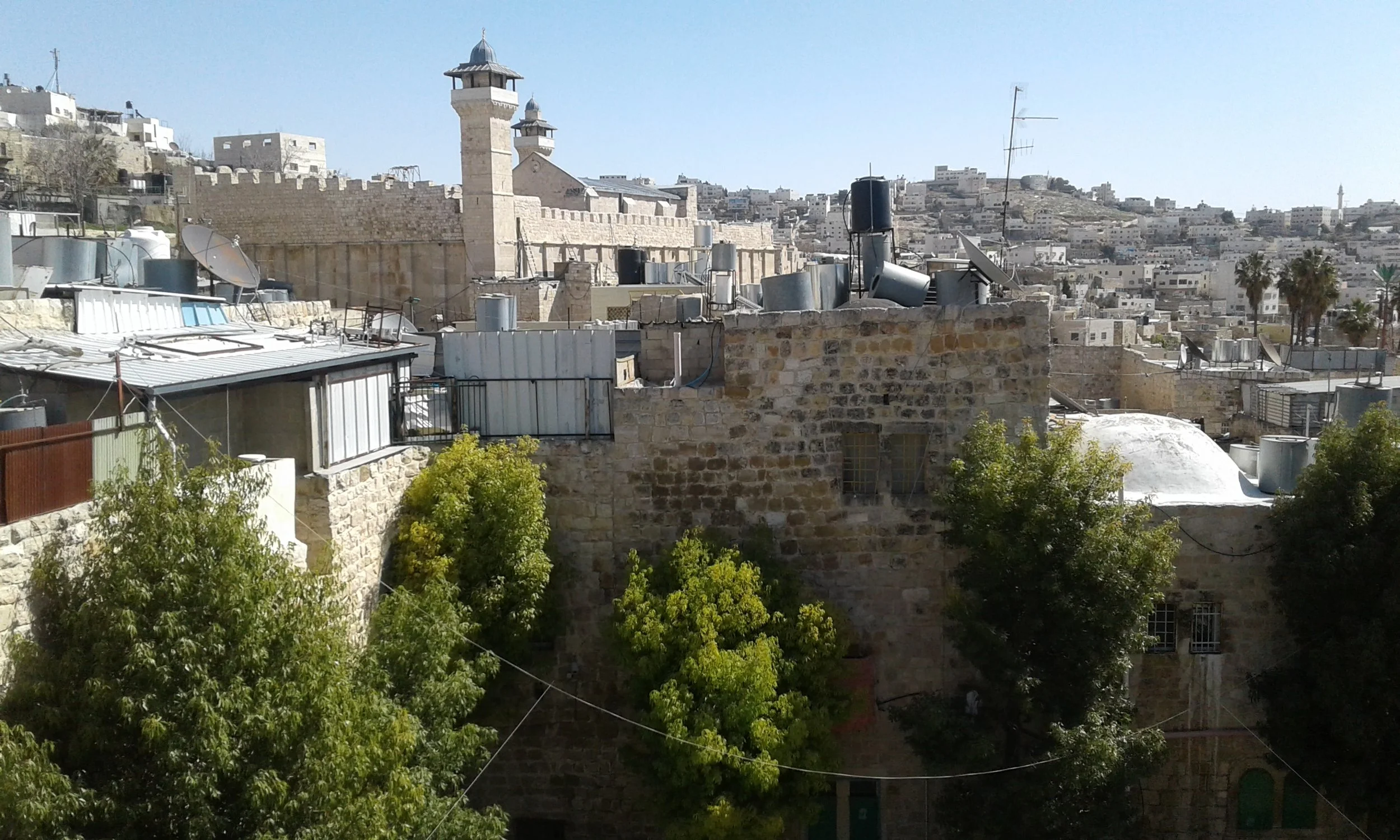
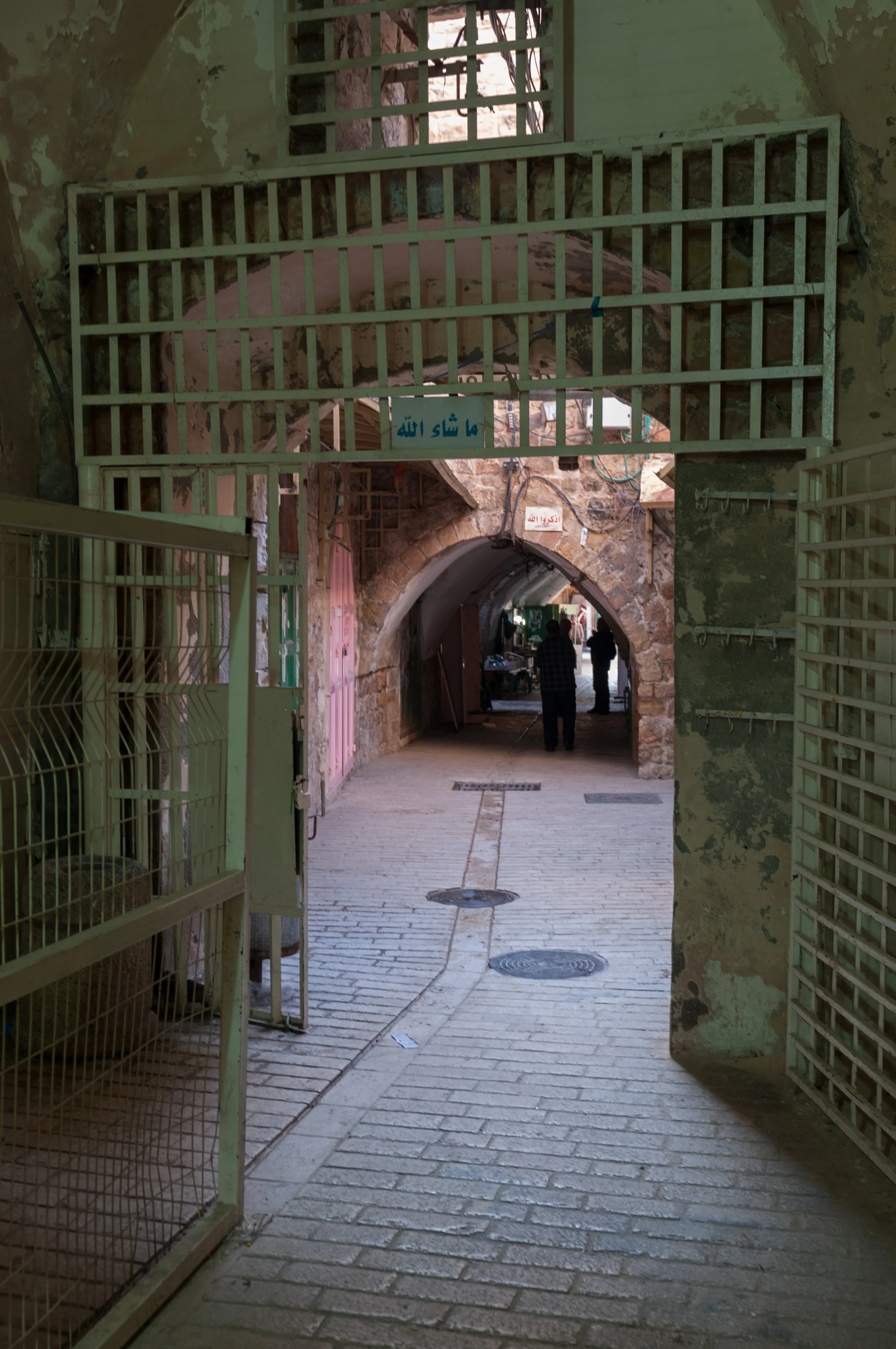
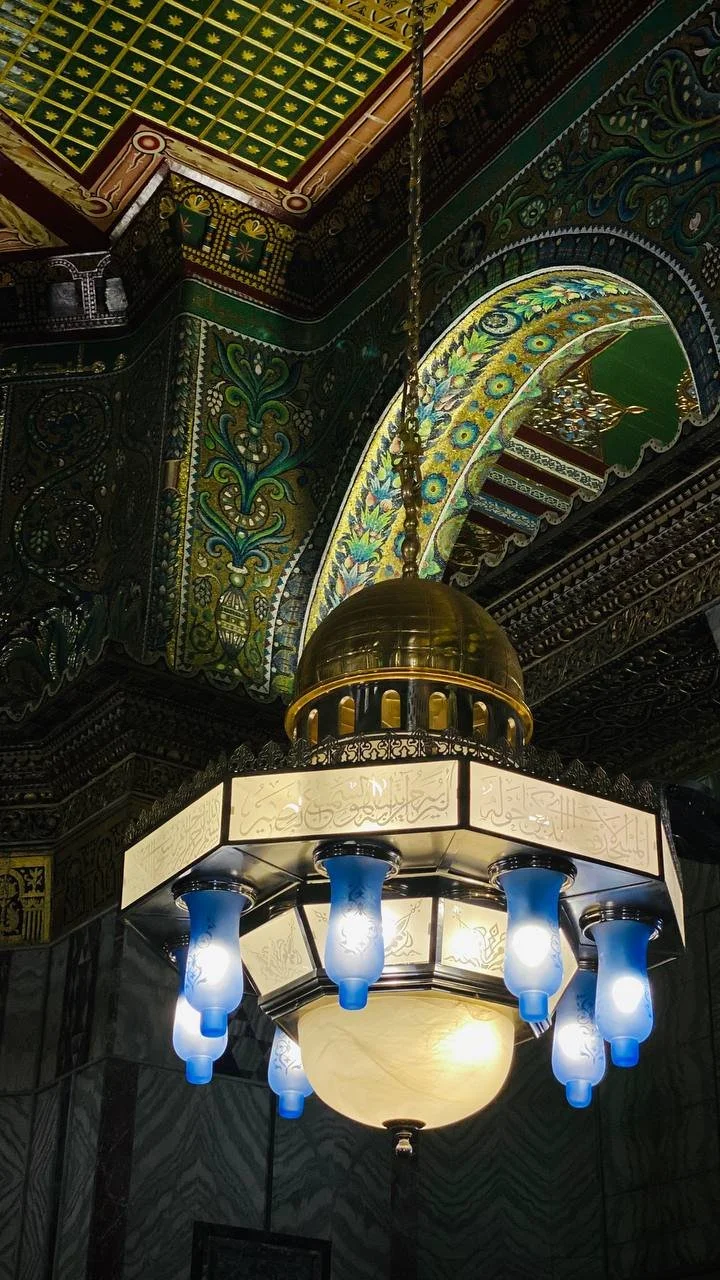
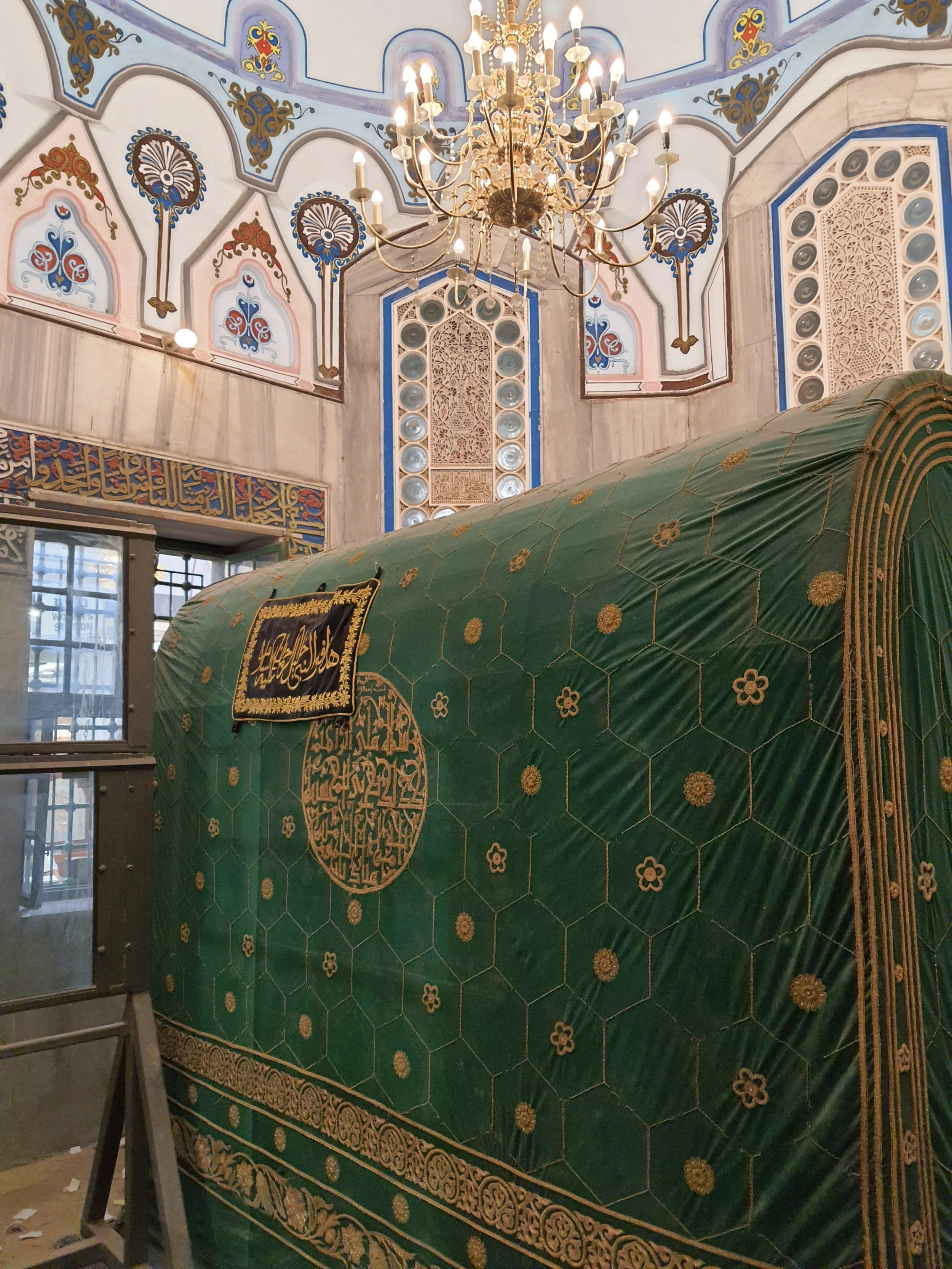
In the heart of Hebron's old city stands a massive stone structure that has stood for over two millennia. Masjid al-Ibrahimi rises above a series of subterranean caves believed to hold the tombs of Prophet Ibrahim (AS), his wife Sarah, their son Prophet Ishaq (AS), and other members of the prophetic lineage. Muslims, Jews, and Christians all revere this site as the burial place of these biblical and Quranic figures. The mosque's monumental Herodian walls, built from limestone blocks over seven meters (23 feet) long, enclose a space that has witnessed Byzantine basilicas, Crusader churches, and centuries of Islamic worship. Yet today, this UNESCO World Heritage site operates under military partition, its worshippers moving through checkpoints to reach a building that was once among the most accessible pilgrimage destinations in Palestine.
Who Built Masjid al-Ibrahimi?
The structure surrounding the caves dates to the late first century BCE, when Herod the Great (37-4 BCE) commissioned the rectangular enclosure. The monumental walls, measuring approximately 60 by 34 meters (197 by 112 feet), represent classic Herodian construction: massive ashlar blocks (precisely cut stones) with dressed margins framing a rough central boss (raised center portion), creating both structural integrity and visual depth. Stones exceeding seven meters (23 feet) in length and one and a half meters (five feet) in height form walls two and a half meters (eight feet) thick. This technique mirrors Herod's work at the Temple Mount in Jerusalem, employing drafted-margin ashlars that distributed loads evenly while requiring no mortar. The enclosure is the only Herodian structure to survive virtually intact to the present day.
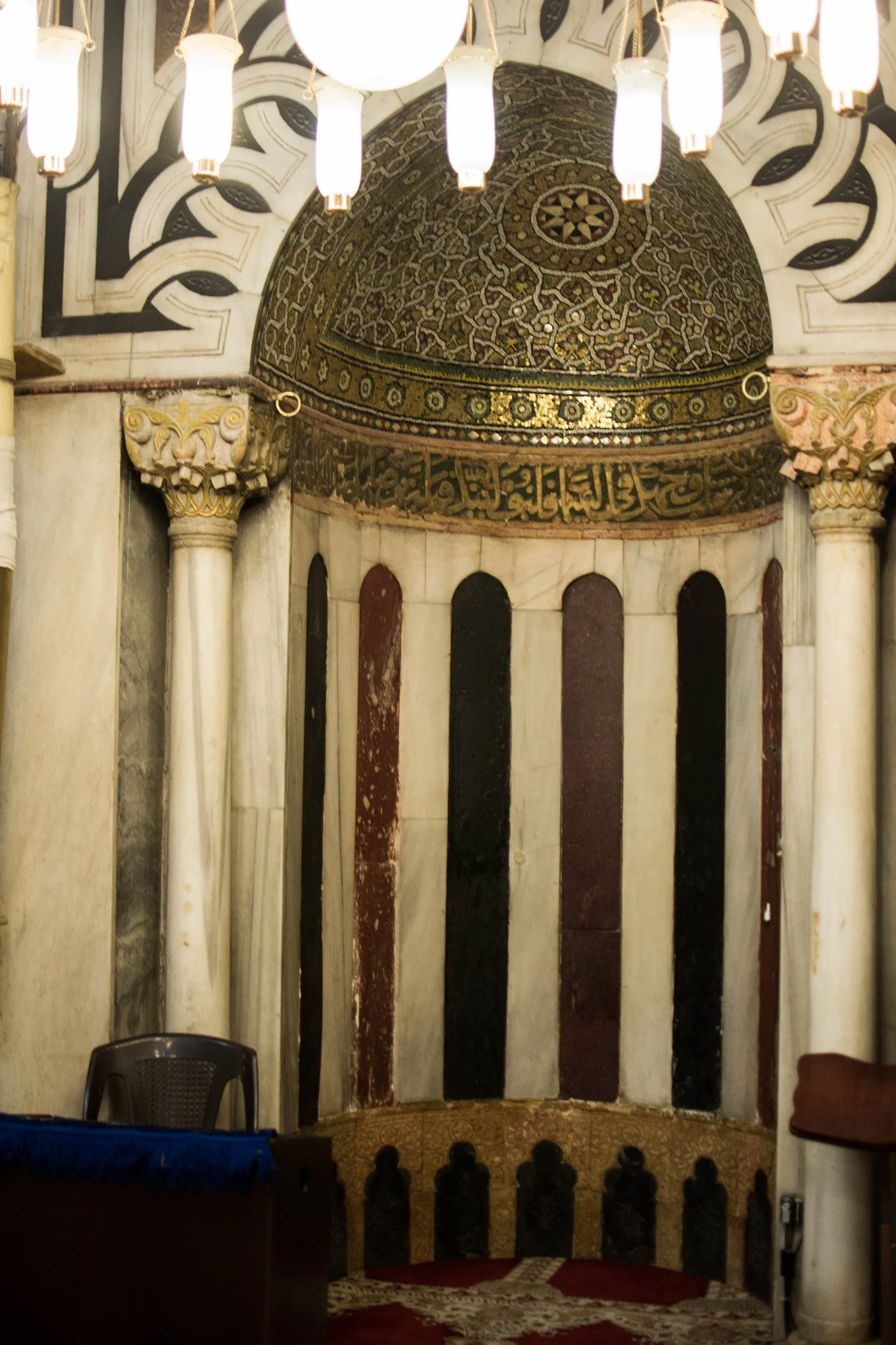
The site's transformation into a mosque followed the Muslim conquest in the seventh century. A Byzantine basilica built during the fourth century stood here, but after Muslim forces arrived, the structure was converted to Islamic use with the addition of a mihrab and the enclosure of the worship space. This established Masjid al-Ibrahimi as a revered pilgrimage site in Islam.
The mosque takes its name from Prophet Ibrahim (AS), known in Islam as Khalilullah, "the Friend of God." Hebron itself is called al-Khalil in Arabic, meaning "The Friend." The site became an important pilgrimage destination for Muslims traveling between Jerusalem and Mecca from the early Islamic period.
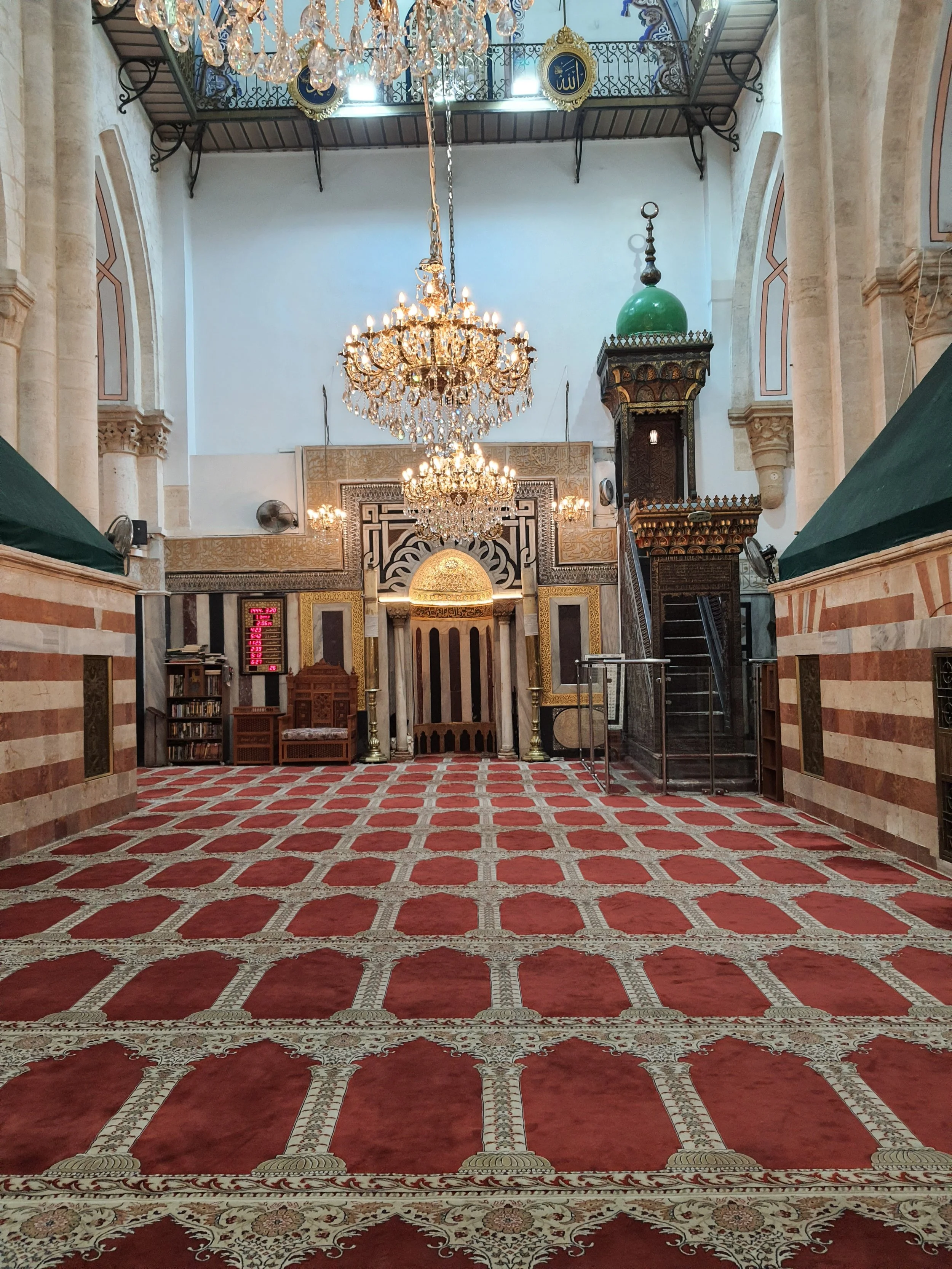
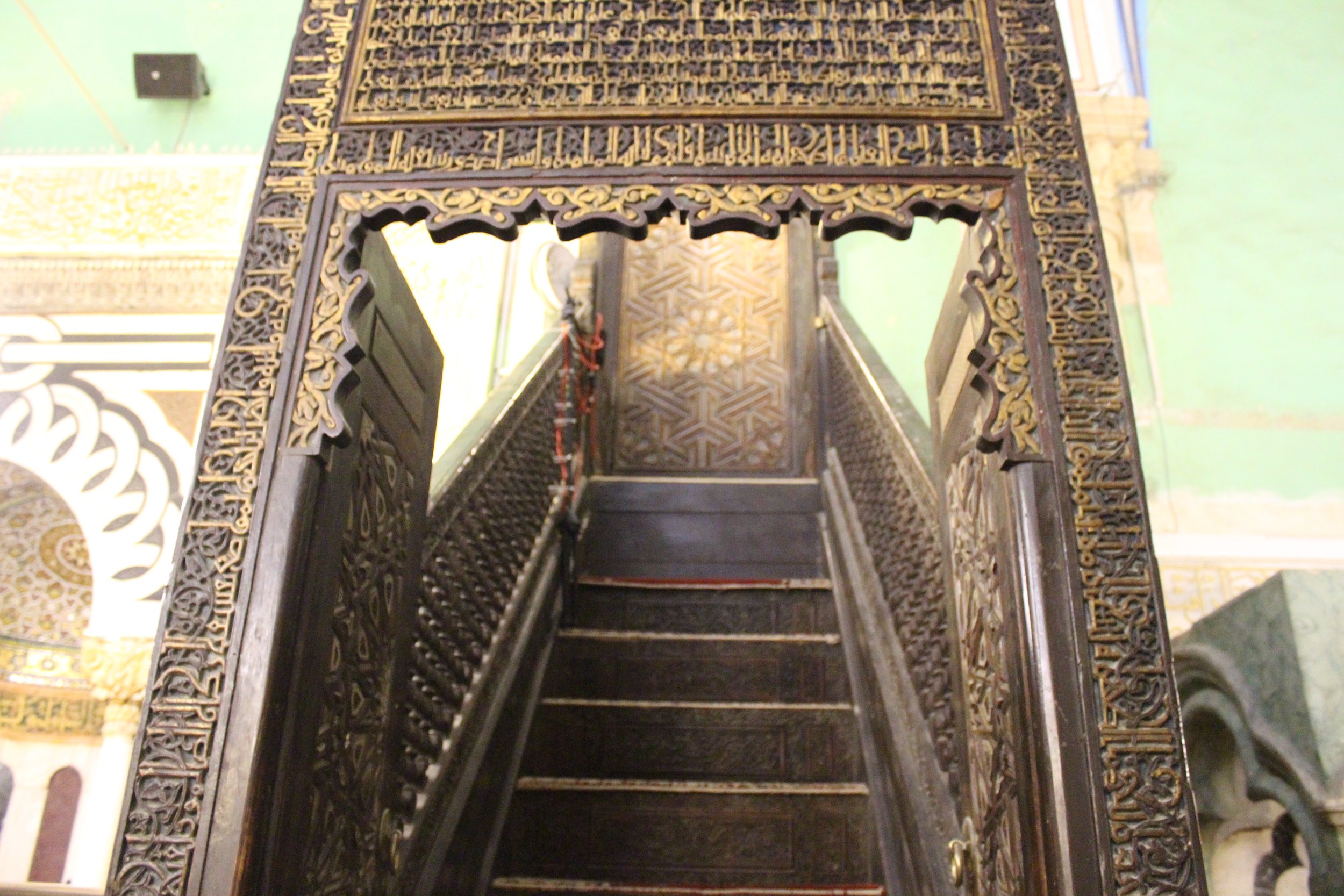
When Crusader forces captured Hebron in 1100 CE, they transformed the mosque into a church called the Castle of Saint Abraham, constructing the current prayer hall in Romanesque style. The building remained a church for nearly ninety years until 1188, when Salah al-Din al-Ayyubi (Saladin) reconquered the city following his victories against the Crusader states. He restored the mosque's Islamic identity and initiated comprehensive renovations, adding four minarets at the corners of the enclosure (two of which survive) and installing a wooden minbar originally crafted for a mosque in Asqalan during the Fatimid period. This eleventh-century minbar is considered the oldest Islamic wooden pulpit still in use.
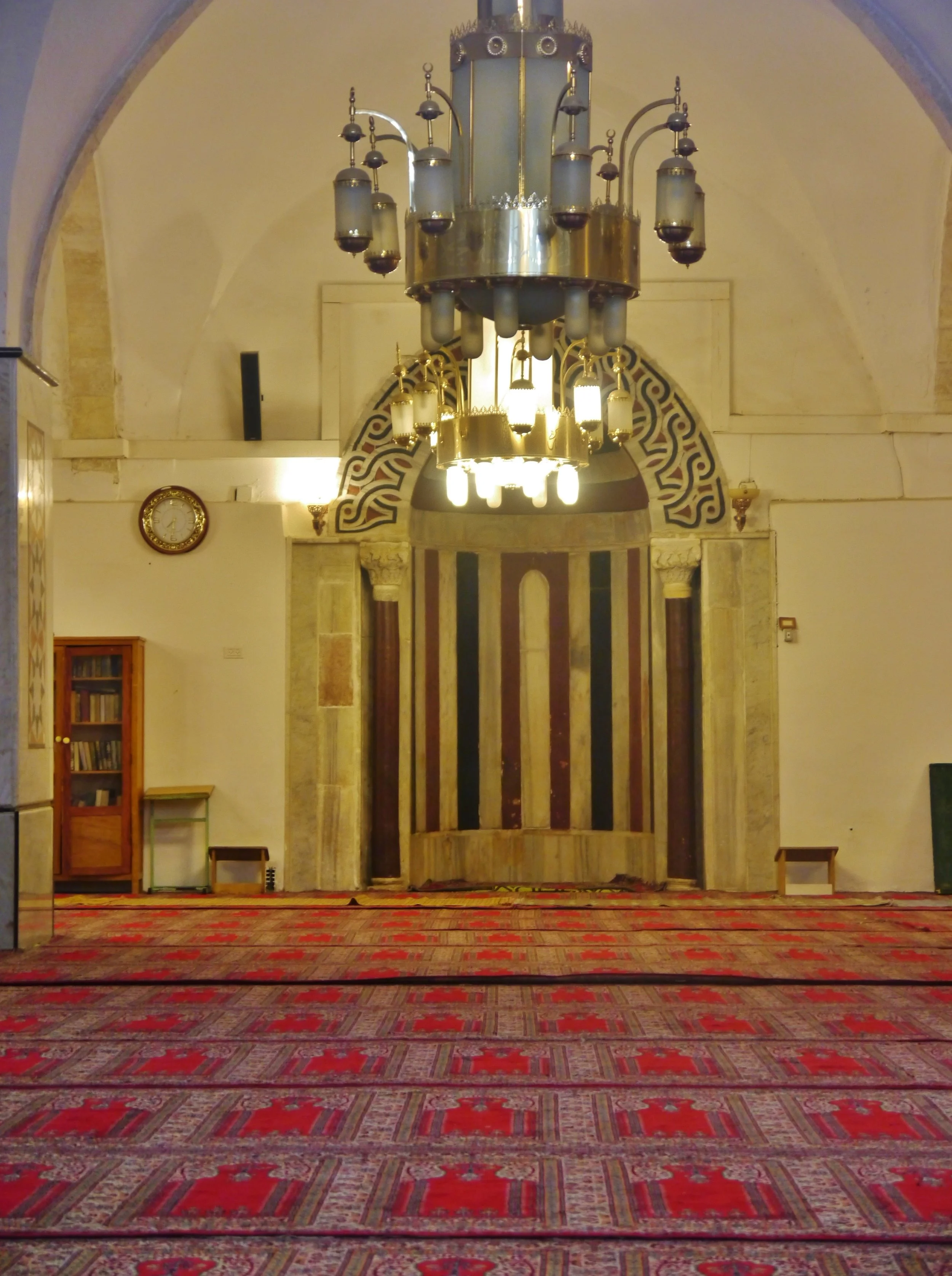
The Mamluk period (1250-1517) brought the most extensive architectural transformation. Successive governors and sultans treated Hebron as a major pilgrimage site along the route from Jerusalem to Mecca. Between 1318 and 1320, Amir Sanjar al-Jawali, the powerful Mamluk governor of Gaza and Palestine who held the title of overseer of the two harams in Palestine (al-Haram al-Sharif in Jerusalem and the Ibrahimi sanctuary in Hebron), commissioned the Masjid al-Jawali as an integral addition to the complex. Amir Tankaz al-Nasiri, deputy to the sultanate in Bilad al-Sham (Greater Syria), ordered marble lining for the mosque's walls in 1332. Sultan Zahir Barquq (who ruled 1382-1389 and again 1390-1399) commissioned a mihrab in the southern wall of the courtyard. The Mamluks also added the distinctive twin square minarets that still define the mosque's skyline, built crenellations along the top of the sanctuary walls, and placed elaborate cenotaphs directly above the locations believed to contain the tombs of the patriarchs and matriarchs.
What Makes Masjid al-Ibrahimi's Architecture Distinctive?
The mosque's architectural distinctiveness lies in its layered construction, each period adding to rather than replacing what came before. The Herodian enclosure forms the foundation, its massive stone walls rising approximately 12 meters and showcasing the precision that made this building technique famous. These walls enclose not just the worship spaces but the caves beneath, which remain largely inaccessible except through two narrow openings.
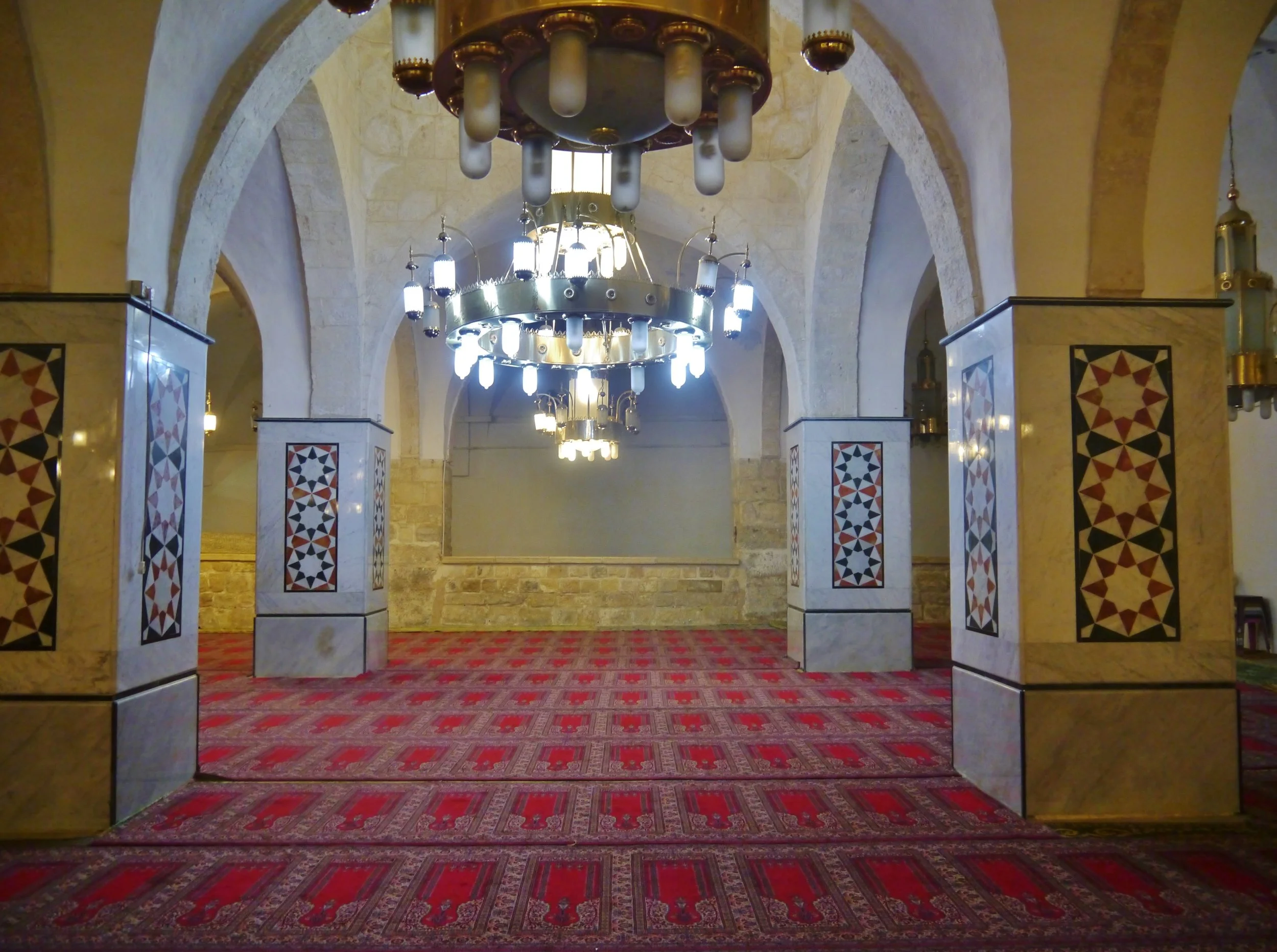
The primary prayer hall built by the Crusaders displays Romanesque characteristics: rounded arches, solid proportions, and masonry vaulting. When Salah al-Din reconverted the building to Islamic use, he maintained this structural framework while adding Islamic furnishings. The surviving wooden minbar exemplifies Fatimid craftsmanship, its panels decorated with geometric patterns that required no nails or glue, only interlocking joinery.
The Mamluk contributions established the complex's current visual identity. The twin minarets rise from the enclosure in the characteristic Bahri Mamluk style: square shafts that taper toward octagonal upper sections. While the specific proportions of these minarets are not documented in available sources, they follow the pattern established in contemporary Mamluk architecture in Cairo and Damascus, where minarets became increasingly slender and decorative during the early fourteenth century.
Inside, polychrome marble paneling covers the walls, commissioned in 1332. The marble creates alternating bands of color and pattern, a Mamluk aesthetic preference that combined local materials with imported marbles to create visual richness. The Malikiyya Prayer Hall occupies the northwest corner of the courtyard, consisting of an iwan with a rectangular plan. Sultan Barquq's mihrab, carved into the southern courtyard wall, demonstrates the technical skill Mamluk craftsmen brought to decorative stonework.
The Masjid al-Jawali: Expanding the Sacred Space
The most significant Mamluk addition was the Masjid al-Jawali, built between 1318 and 1320 by Amir Sanjar al-Jawali to accommodate the growing number of pilgrims. This mosque integrates seamlessly with the main complex, though it remains invisible from the exterior. Its western wall is actually the eastern wall of the original Herodian enclosure, while its other walls were carved directly from the bedrock of the site.
The mosque consists of three arcades with intersecting vaults, creating a system of cross-vaults supported by large stone columns. Each arcade is crowned by a dome. The central dome rises above the middle of the prayer hall, its corners decorated with muqarnas (stalactite-like carved ornaments) and fitted with mosaic windows that filter light into the space. According to fifteenth-century historian al-Maqrizi, the ceiling was constructed from "beautifully dressed stone," a detail that emphasizes the quality of craftsmanship. The mihrab in the southeastern wall, carved into the rock and tiled with decorated marble slabs, marks the qibla direction.
The Women's Mosque (Jami' al-Nisa) extends from the western wall, added in 1393-1394 under the sponsorship of Amir Shihab al-Din al-Yaghmuri. This portico structure provided dedicated prayer space for women worshippers, reflecting Mamluk attention to accommodating diverse groups of pilgrims.
How Does Masjid al-Ibrahimi Reflect Mamluk Architectural Patronage?
Masjid al-Ibrahimi exemplifies how Mamluk governors used architectural patronage to demonstrate both piety and political authority. The Bahri Mamluk period (1250-1382) saw military commanders who had risen from slave-soldier origins establish their legitimacy through conspicuous religious building. Hebron held particular strategic importance: it sat along the pilgrimage route from Jerusalem to Mecca, and its association with Prophet Ibrahim gave it religious prestige that extended across the three Abrahamic faiths.
Sanjar al-Jawali's governorship of Gaza and Palestine (1311-1320) produced a building campaign that transformed multiple cities. His addition to the Ibrahimi Mosque demonstrated that he could marshal the resources, craftsmen, and political capital necessary to expand one of Islam's most sacred sites. His title as overseer of both harams placed him among the most powerful figures in the Mamluk hierarchy.
The architectural style of the Masjid al-Jawali reflects Syrian Mamluk preferences. The stone vaulting, integration with natural rock formations, and use of cross-vaults over arcades all appear in contemporary Mamluk structures throughout Bilad al-Sham. Each sultan or emir who added to the complex gained religious merit while advertising his position in the Mamluk hierarchy.
Urban Integration: Hebron's Growth Around the Haram
The mosque complex shaped Hebron's urban development in ways that remain visible today. Unlike many Islamic cities where the great mosque occupies the geographic center, Masjid al-Ibrahimi sits near the southwest corner of the old city. The topography of the site and the existing settlement patterns along the main road to Jerusalem influenced this placement, but once established, the haram became the focal point for urban growth.
The Mamluk period saw Hebron expand significantly as a pilgrimage destination and Sufi center. Zawaya (Sufi lodges) were built throughout the city's quarters, drawn by the spiritual prestige of the site. The takiyya (hospice and free kitchen) tradition established here by the ninth century became a model later adopted in Jerusalem, Istanbul, Damascus, and Cairo. Main roads and auxiliary streets oriented toward the mosque, creating circulation patterns that directed pilgrims and residents toward the sacred precinct.
The market areas (souqs) developed in close proximity to serve the pilgrimage economy. Khans (caravanserais) provided accommodation for traveling merchants and pilgrims. This infrastructure made Hebron a commercial hub as well as a religious center, with trade routes connecting southern Palestine, Sinai, eastern Jordan, and the northern Arabian Peninsula all passing through the city.
What Is Masjid al-Ibrahimi's Current Status?
The mosque's contemporary situation reflects decades of escalating restrictions that accelerated dramatically in 2025 and 2026. Following Israel's occupation of Hebron in 1967, constraints on Muslim access began gradually, with Jewish prayer permitted in areas of the complex and eventual designation of exclusive Jewish prayer spaces. These restrictions intensified following the 1994 massacre, when Israeli settler Baruch Goldstein entered the mosque during Ramadan prayers and opened fire on worshippers in prostration, killing 29 people and wounding over 125. Rather than removing the settlement presence that enabled the attack, Israeli authorities partitioned the mosque.
The 1994 Shamgar Commission divided the mosque, allocating 63 percent of the space for Jewish worship and 37 percent for Muslim worship. Multiple military checkpoints control entry. Worshippers undergo repeated security searches before reaching the prayer hall. For ten days each year, the arrangement reverses: Jewish sites become accessible to Muslims for prayer and vice versa, but this temporary reciprocity does not address the fundamental restructuring of the space. The restriction on the Muslim call to prayer, enforced 769 times during 2025 according to reports from the Union of OIC News Agencies, removes one of the defining acoustic features of Islamic worship.
The situation deteriorated sharply between January and April 2026. In January, Israeli authorities stripped Hebron Municipality of its planning and construction authority over the site, transferring these powers to the religious council of the nearby Kiryat Arba settlement. In February, administrative control was removed from the Islamic Waqf and the Palestinian Ministry of Religious Affairs and transferred to the Israeli Civil Administration. Palestinian officials condemned these moves as violations of the legal and historical status quo, describing them as the most significant changes to the site since the 1994 massacre.
During Ramadan in March 2026, Israeli forces policed access to the mosque, turning away Palestinian worshippers and enforcing age and gender restrictions on who could enter. The partition has transformed the mosque's architectural character. Concrete walls and security barriers divide areas that were designed as continuous spaces. Jewish worshippers and Israeli soldiers enter in shoes, which from an Islamic perspective constitutes desecration of the mosque. Wine used in Jewish rituals is brought into spaces Muslims regard as sacred. Surveillance cameras have been installed in the Muslim section, monitoring worshippers during prayer.
UNESCO designated "Hebron's Old City and the Tomb of the Patriarchs in the occupied West Bank" as a World Heritage site in danger in 2017, recognizing both the architectural significance and the threats to its preservation. The Hebron Rehabilitation Committee (HRC), established in 1996, has worked continuously on restoration and maintenance despite obstacles imposed by occupation authorities. The committee has trained specialists in caring for mosaics, stucco, marble, stone, tiles, wood, iron, and murals. Major projects have included repairing water damage to the foundation through construction of an internal drainage canal, restoring decorative elements, and maintaining the tomb areas.
The 2017 restoration revealed delicate architectural features that had been obscured and restored interior colors. This work proceeded despite Israeli restrictions that have at times prevented the HRC from continuing restoration. Palestinian officials and international observers describe the 2025-2026 administrative transfers as part of a broader pattern of institutional absorption of Hebron's old city into Israeli settlement infrastructure, with some characterizing it as an attempt to replicate at al-Aqsa Mosque in Jerusalem what has been accomplished at the Ibrahimi Mosque.
Glossary:
Arcade: A series of arches supported by columns or piers, often forming a covered walkway or structural element in a building.
Ashlar: Precisely cut and fitted stone blocks used in fine masonry, characteristic of monumental construction.
Basilica: A large public building with a rectangular plan, typically used for Roman administrative purposes; later adapted for Christian churches.
Cenotaph: A tomb-like memorial placed above a burial site, often elaborately decorated; the actual burials lie below.
Iwan: A vaulted hall or space with one side entirely open, typically facing a courtyard.
Khan: A caravanserai; a roadside inn providing accommodation for traveling merchants and pilgrims.
Mihrab: A niche in the wall of a mosque indicating the direction of prayer toward Mecca.
Minbar: A pulpit from which the Friday sermon is delivered in a mosque.
Muqarnas: Decorative corbelled vaulting creating a honeycomb or stalactite-like effect, characteristic of Islamic architecture.
Portico: A structure consisting of a roof supported by columns, typically forming a covered entrance or walkway.
Qibla: The direction of the Kaaba in Mecca, toward which Muslims face during prayer.
Romanesque: A medieval European architectural style characterized by rounded arches, solid proportions, and massive stone construction; used by Crusaders in the Levant.
Souq: A marketplace or commercial district in an Islamic city; plural: suqs.
Takiyya: A hospice and free kitchen providing food and shelter to travelers and the poor, often attached to religious complexes.
Vaulting: An arched structure forming a ceiling or roof, typically made of stone or brick.
Zawiya: A Sufi lodge or religious retreat; plural: zawaya.
Want more Islamic architecture insights delivered to your inbox?
We publish a weekly newsletter exploring the design systems, building traditions, and historical stories behind mosques across the Islamic world. Recent posts covered passive cooling strategies, spiral minarets as political symbols, and the intersection of heritage and occupation.Subscribe here — it's completely free.