
Dar al-Islam Mosque in Abiquiu, New Mexico, United States
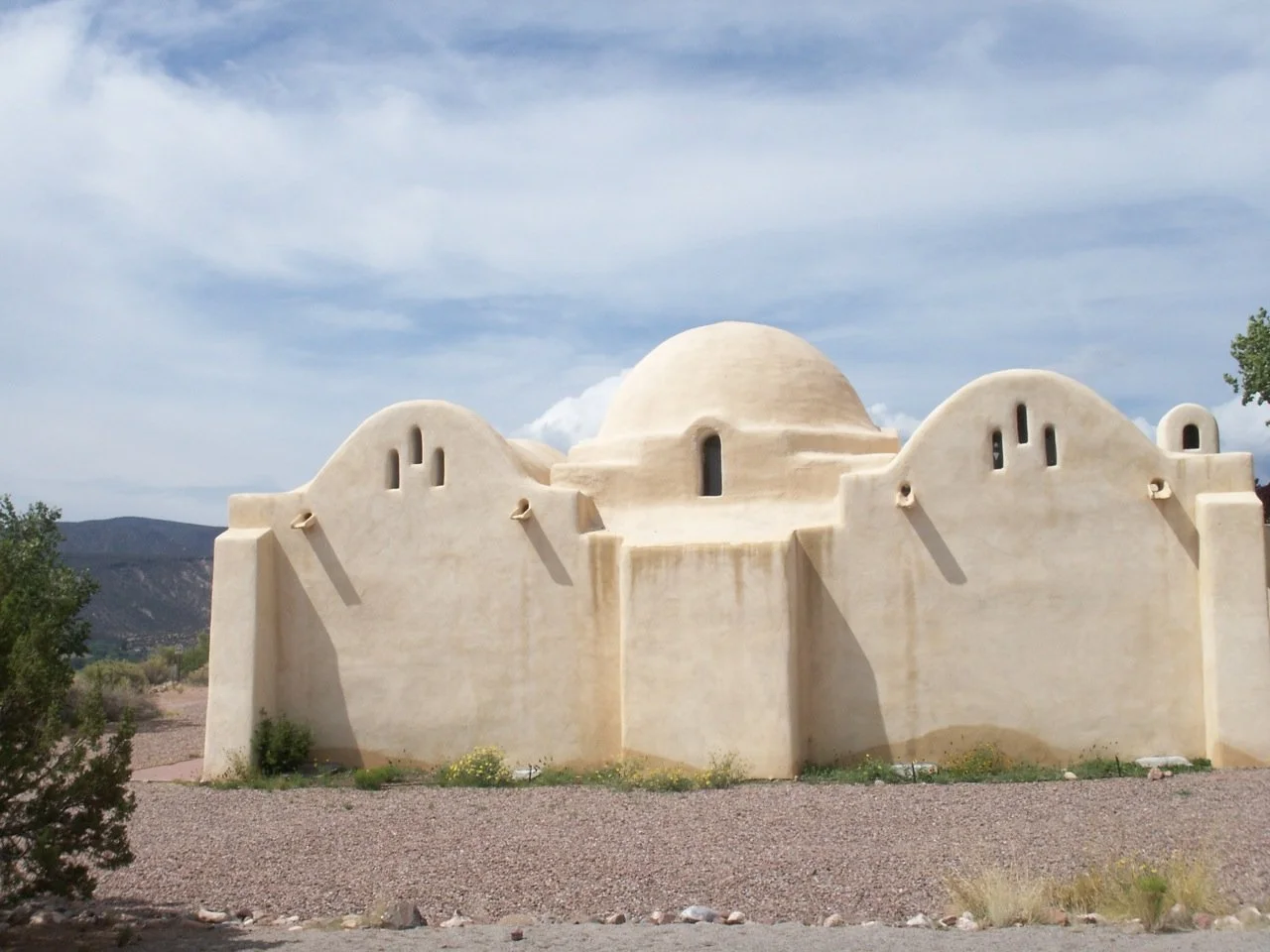
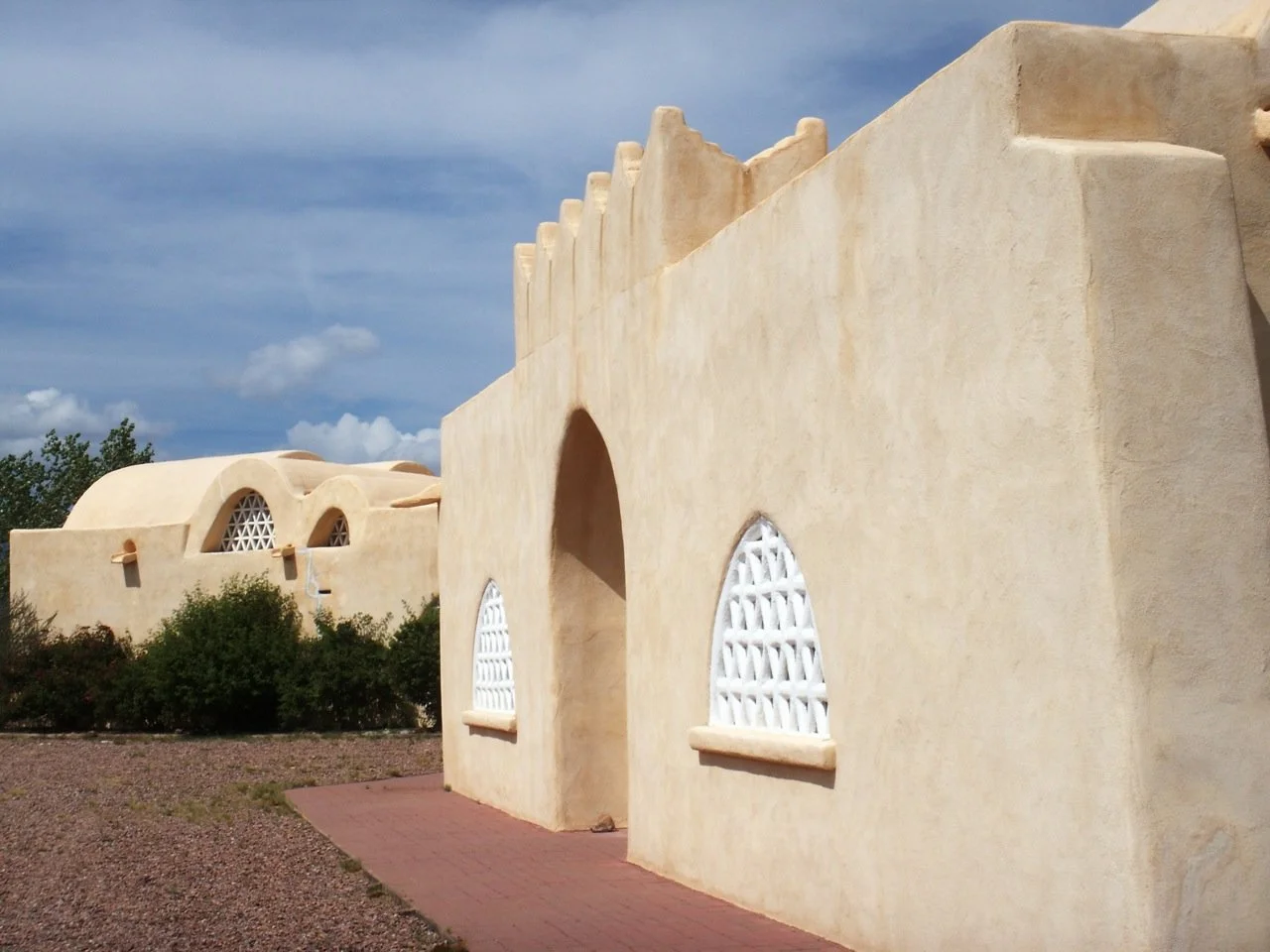
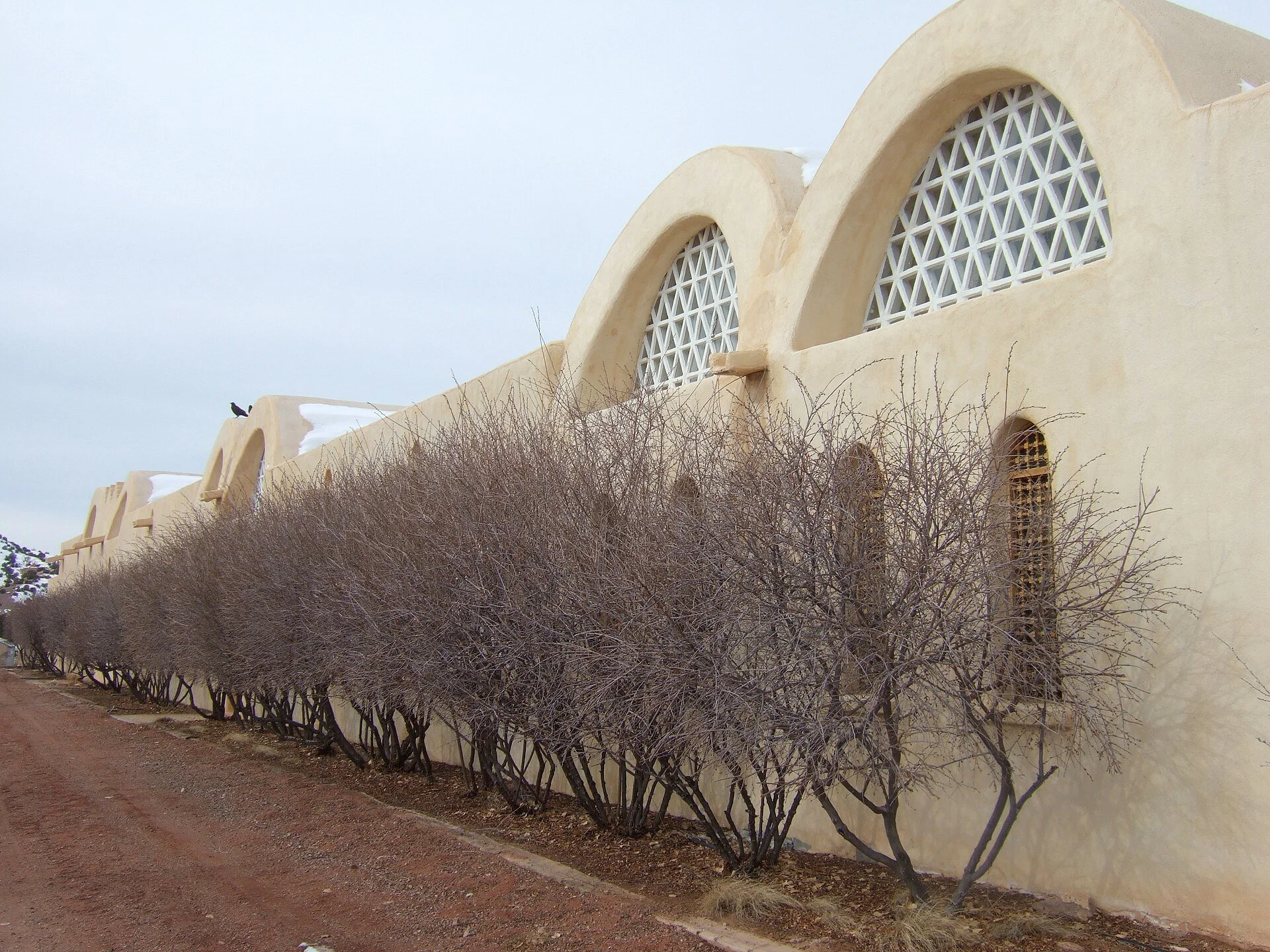
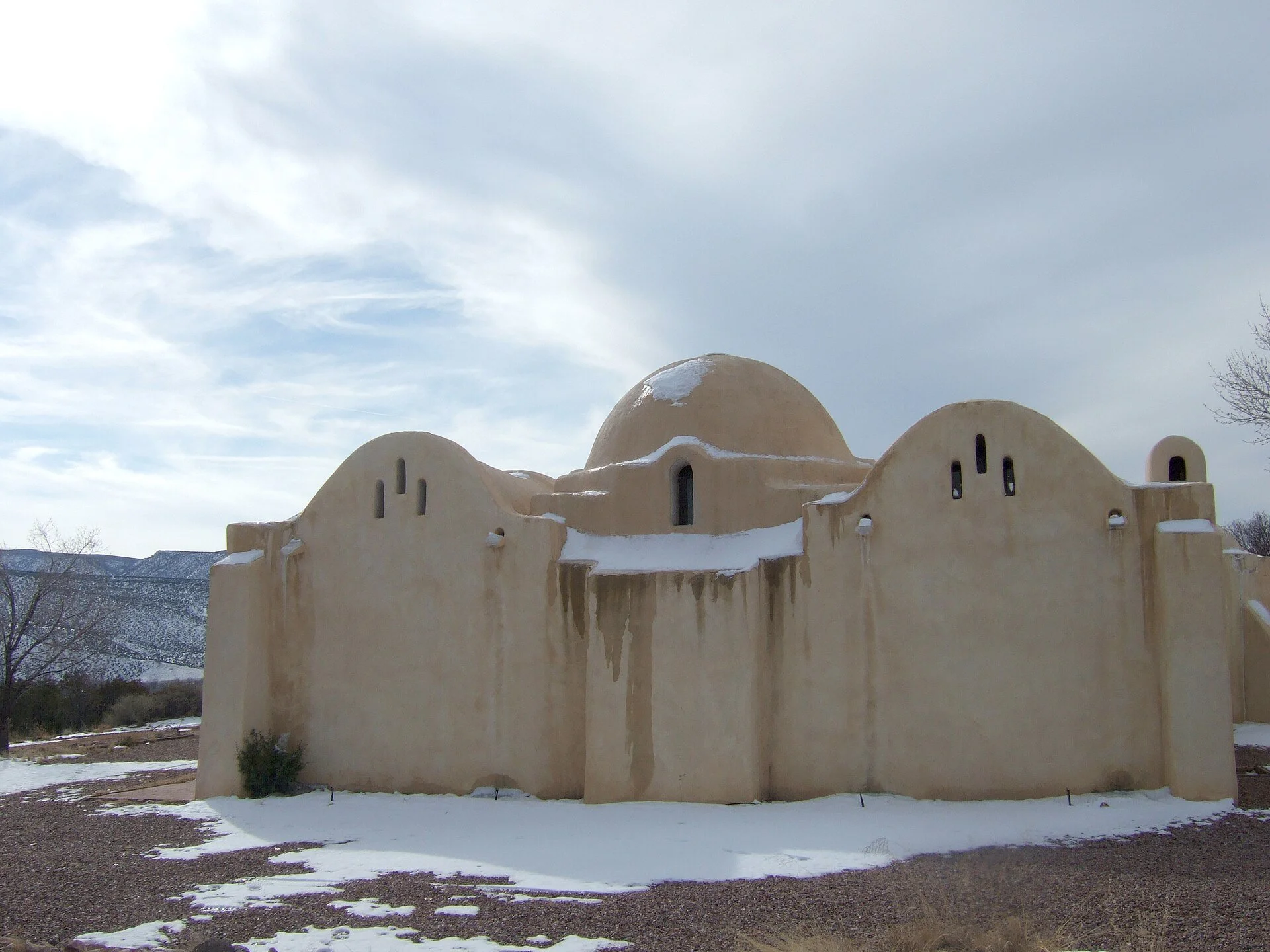
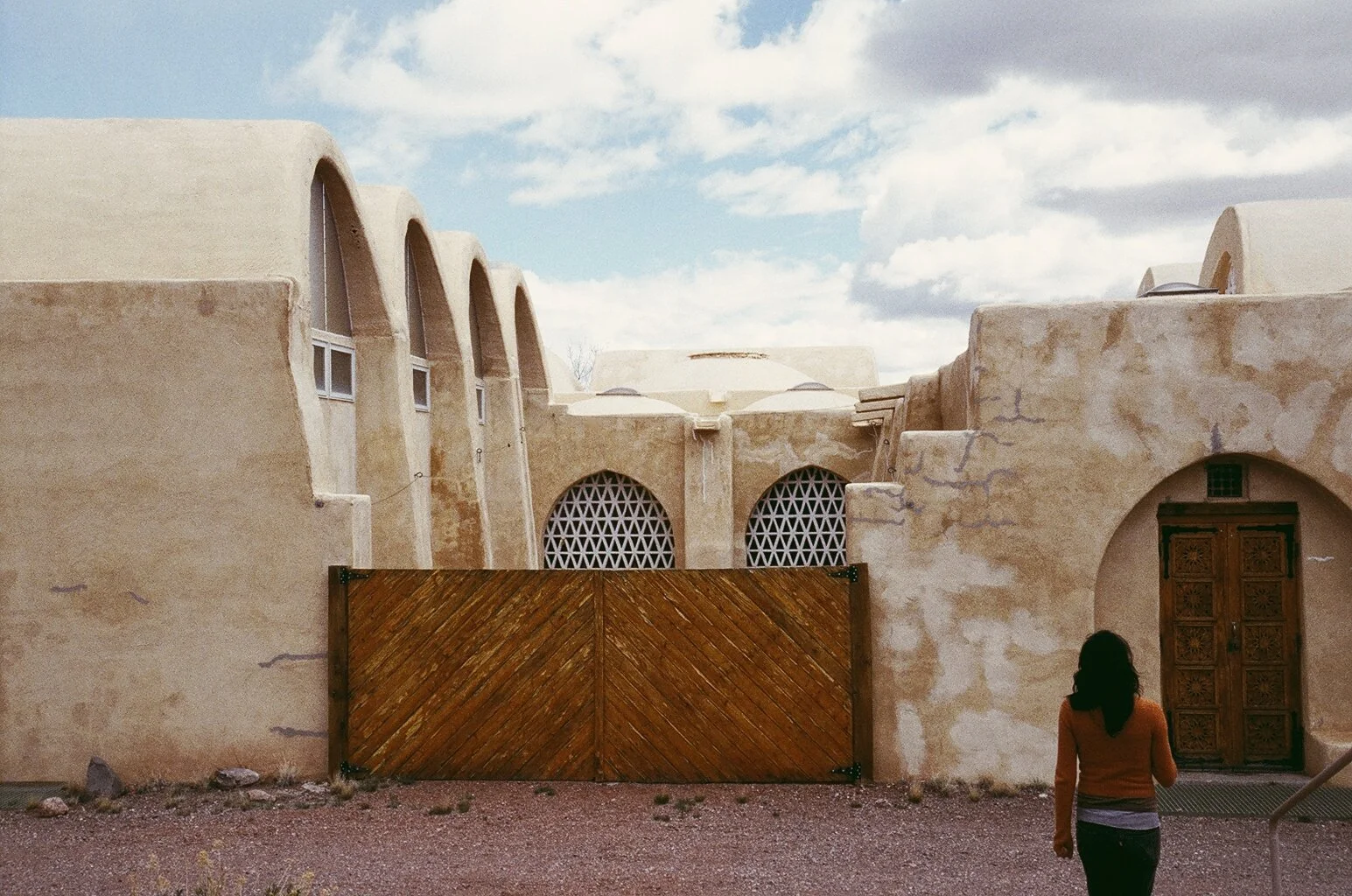
On a remote mesa plateau above the Chama River Valley in northern New Mexico stands an adobe mosque bridging three continents through its architecture. Dar al-Islam, designed by Egyptian architect Hassan Fathy and constructed between 1980 and 1982, represents the convergence of ancient Nubian building techniques, North African Islamic architecture, and the Southwestern United States' indigenous adobe traditions. Built entirely from earth bricks using methods requiring no timber framework or steel reinforcement, this 2,260-square-foot mosque marked Fathy's final major project and introduced Nubian vault and dome construction to North America.
The mosque formed the architectural heart of an intentional Muslim community, America's first planned Islamic residential settlement. Though the original vision of 150 families never materialized, the mosque and educational complex continue functioning as a retreat center hosting workshops, teacher training, and spiritual gatherings serving Muslims and non-Muslims.
Who Built Dar al-Islam and Why?
Abdullah Nuridin Durkee, an American Muslim convert and scholar, envisioned establishing an Islamic intentional community in the United States during the late 1970s. During pilgrimage to Mecca, Durkee met Sahl Kabbani, a Saudi businessman educated in the United States, who committed financial support. Mothie and Johara, daughters of Saudi King Khalid ibn Abdulaziz Al Saud, provided substantial funding through the Riyadh Ladies' Benevolent Association. Abdullah Omar Nasseef, former secretary-general of the World Muslim League, joined as co-founder.
The group purchased 1,000 acres near Abiquiu in 1979 for $1,372,000. They prioritized affordable acreage, geographic isolation supporting contemplative community life, and landscape resembling Middle Eastern desert regions. The site's advantage included northern New Mexico's continuous adobe construction tradition spanning over three thousand years, practiced by Indigenous Pueblo peoples and Spanish colonial settlers who adapted North African building methods through Moorish Spain.
The founders approached Hassan Fathy, whose 1973 book Architecture for the Poor championed sustainable vernacular architecture. Fathy initially hesitated, unfamiliar with Native American practices and concerned about imposing Egyptian forms inappropriately. The founders persuaded him by emphasizing the region's existing adobe tradition and their desire for architecture expressing Islamic principles through climatically appropriate design.
Fathy arrived in Abiquiu in 1980 with two master builders from Nubia: Allahadin Mustapha Muhammed and Abdul Jalil Mousa. Over two weeks, approximately 40 volunteers from diverse backgrounds worked alongside the Nubian masters to build the mosque, receiving hands-on instruction in brick-making, mud mortar preparation, and vault construction. This communal building process fulfilled Fathy's philosophy that communities should possess knowledge to construct their own structures.
What Makes Dar al-Islam's Architecture Distinctive?
The mosque occupies a nearly square plan approximately 48 feet per side. Six domes covering single-bay units create the prayer hall's roofing system. Each dome rests on pendentives (curved triangular sections transitioning from square bay to circular dome base), constructed entirely from mud brick using Nubian vault techniques applied to both the domed spaces and connecting barrel vaults.
The structure contains no timber beams, steel reinforcement, or concrete. Walls approximately 24 inches thick provide structural integrity for supporting the domes and thermal mass moderating interior temperatures. Northern New Mexico experiences significant temperature swings (summer days exceeding 90°F dropping to 40°F nights), and the adobe's thermal properties maintain relatively stable interior conditions.
Construction utilized adobe bricks measuring approximately 10 by 7 by 1.5 inches, smaller than typical Southwestern blocks. Workers mixed local soil with water and chopped straw, forming bricks in wooden molds. Each brick received two parallel finger grooves, creating suction points essential for vault construction. After sun-drying several days, bricks achieved sufficient strength for laying.
The attached madrasa follows similar construction principles with rectangular bays. Both buildings feature minimal window openings positioned to provide ventilation and light while minimizing heat gain. The openings incorporate carved wooden screens in geometric patterns, demonstrating Islamic decorative traditions adapted to available materials.
The mosque's exterior deliberately resonates with both North African Islamic architecture and Southwestern Pueblo forms. The building's earth-colored surfaces, stepped profiles created by dome and vault exteriors, and horizontal emphasis echo both traditions without directly copying either. This synthesis reflects Fathy's philosophy: vernacular buildings should express their place through locally available materials and climatically appropriate forms while maintaining cultural identity through spatial organization and proportional systems rather than applied decoration.
How Does Nubian Vault Construction Work?
The Nubian vault technique enables construction of arched roofs using only mud brick and mortar without temporary wooden supports. This ancient method, with surviving examples in Egypt over 3,000 years old, offers particular advantages in regions lacking timber resources.
Construction begins with two parallel walls and one higher gable wall at the end. Workers stretch a guide cable between the side walls' tops, defining the vault's central axis and maintaining constant radius. This ensures proper curved geometry approaching a catenary arch (the naturally occurring curve formed by a hanging chain, where forces remain purely compressive).
The first brick course leans at approximately 60 degrees against the tall gable wall. Workers apply mud mortar generously, and finger grooves pressed into each brick's face create suction providing immediate grip. Each subsequent course leans against the previous course, transferring loads progressively back to the gable wall. Unlike conventional vaulting where the arch remains unstable until completion, Nubian vaults gain strength progressively as each course becomes immediately self-supporting.
For domes, builders establish a square bay with corner buttresses, laying brick courses in horizontal rings with an inward lean. Each rising course decreases in diameter, spiraling upward until the dome closes. The mud mortar's immediate grip, enhanced by finger-groove suction, allows this corbelled construction without formwork.
At Dar al-Islam, the Nubian masters demonstrated these techniques while volunteers participated in brick-making and mortar mixing. This knowledge transfer fulfilled Fathy's conviction that sustainable architecture requires communities controlling their building processes rather than depending on industrial materials and specialized contractors.
What Is Hassan Fathy's Architectural Philosophy?
Hassan Fathy (1900-1989) trained at Cairo University in European Beaux-Arts traditions but grew concerned that imported modernist architecture disconnected Egyptians from their heritage while remaining unaffordable for rural populations. His realization came while seeking housing solutions for agricultural workers: peasant communities in southern Egypt continued building with sun-dried mud brick, creating climatically adapted structures using only labor and traditional skills.
Between 1946 and 1952, Fathy designed New Gourna, a resettlement village near Luxor featuring mud brick buildings. He trained local masons in Nubian vault construction and involved residents in building. The project failed socially (residents resisted relocation and found the architecture culturally foreign), halting after only 130 of 900 planned buildings were completed. Despite this, New Gourna established Fathy's international reputation through his 1969 book Architecture for the Poor, which resonated with architects questioning modernism's universal applicability.
Fathy's philosophy centered on responsive architecture: buildings addressing specific climatic conditions through passive environmental control; expressing cultural identity through spatial organization rooted in regional traditions; utilizing locally available materials and traditional craft knowledge; and involving communities in designing and building their environments.
How Does Dar al-Islam Connect to Hassan Fathy's Broader Work?
Dar al-Islam represented Fathy's second opportunity to design a complete village, incorporating lessons from New Gourna. Unlike New Gourna's involuntary resettlement, Dar al-Islam's residents chose to join an intentional community with shared religious purpose. The founders' deliberate selection of Abiquiu for its existing adobe tradition created cultural bridges absent in New Gourna. Local Hispano and Indigenous Pueblo builders already possessed earth construction knowledge, enabling dialogue between Nubian techniques and regional practices.
The intensive two-week mosque construction workshop, bringing together Muslim and non-Muslim builders from diverse backgrounds, embodied Fathy's ideal of communal building as social process. However, only the mosque and school were completed following Fathy's designs. The original master plan envisioned housing for 150 families, women's center, public bath, and crafts center, but subsequent buildings required modifications to conform to local building codes. The remote location prevented the community from reaching its planned size.
By 1990, Dar al-Islam restructured from residential community to educational retreat center. This transformation paradoxically fulfilled aspects of Fathy's vision that New Gourna never achieved. While not the self-sustaining residential village initially imagined, it succeeded as an educational center demonstrating sustainable architecture. The buildings continue functioning four decades later, hosting workshops, teacher training, and retreats while remaining architecturally significant as Fathy's only built work in the Western Hemisphere.
What Is Dar al-Islam's Contemporary Role?
Today, Dar al-Islam operates primarily as a seasonal retreat center during spring, summer, and fall. The organization provides space for Muslim families, youth groups, and women's gatherings seeking spiritual renewal in the high desert landscape. Programming emphasizes "land-based spirituality," connecting Islamic teachings to environmental stewardship and encouraging contemplative engagement with the mesa plateau's dramatic geology and native ecosystems.
The site includes Plaza Blanca, spectacular white sandstone and clay formations featured in Georgia O'Keeffe's paintings. These geological sculptures provide hiking access and contemplation spaces for visitors. Educational initiatives include teacher institutes training educators about Islam for public school curricula, curriculum development projects, and workshops addressing contemporary American Muslim community issues.
The architectural complex functions as educational resource for architecture students and earth-building practitioners studying Fathy's design and Nubian construction. The buildings demonstrate passive environmental control without mechanical systems, maintaining comfortable temperatures through thermal mass and orientation. This performance validates vernacular techniques as sustainable alternatives to energy-intensive construction.
Preservation challenges emerge as the buildings age. Adobe requires regular maintenance, particularly during New Mexico's occasional intense thunderstorms. The organization balances maintaining structural integrity with accommodating contemporary programmatic needs and building code compliance.
Dar al-Islam's significance extends beyond architectural merit. As America's first planned Islamic community, it represents an important moment in American Muslim history. Though the residential village proved unsustainable, the retreat center model serves Muslims seeking connection to Islamic traditions while engaging with American landscapes and multicultural contexts. The mosque demonstrates possibilities for cross-cultural architectural dialogue, synthesizing Nubian techniques, Islamic spatial principles, and Southwestern traditions without superficial pastiche or abandoning cultural identity for modernist universalism.
Glossary:
Adobe: Sun-dried mud brick used in construction, traditional building material throughout the American Southwest and Middle East.
Catenary arch: The naturally occurring curve formed by a hanging chain, representing the ideal structural form for compression-only arches and vaults.
Formwork: Temporary wooden support structures typically required during construction of arches and vaults, removed after mortar cures.
Madrasa: Islamic school, typically attached to mosques, for religious education.
Pendentive: Curved triangular section that transitions from a square bay to circular dome base.
Thermal mass: A material's capacity to absorb, store, and release heat, moderating temperature fluctuations.
Vault: Arched roof or ceiling constructed of stone, brick, or other masonry.
