
Hassan II Mosque in Casablanca, Morocco
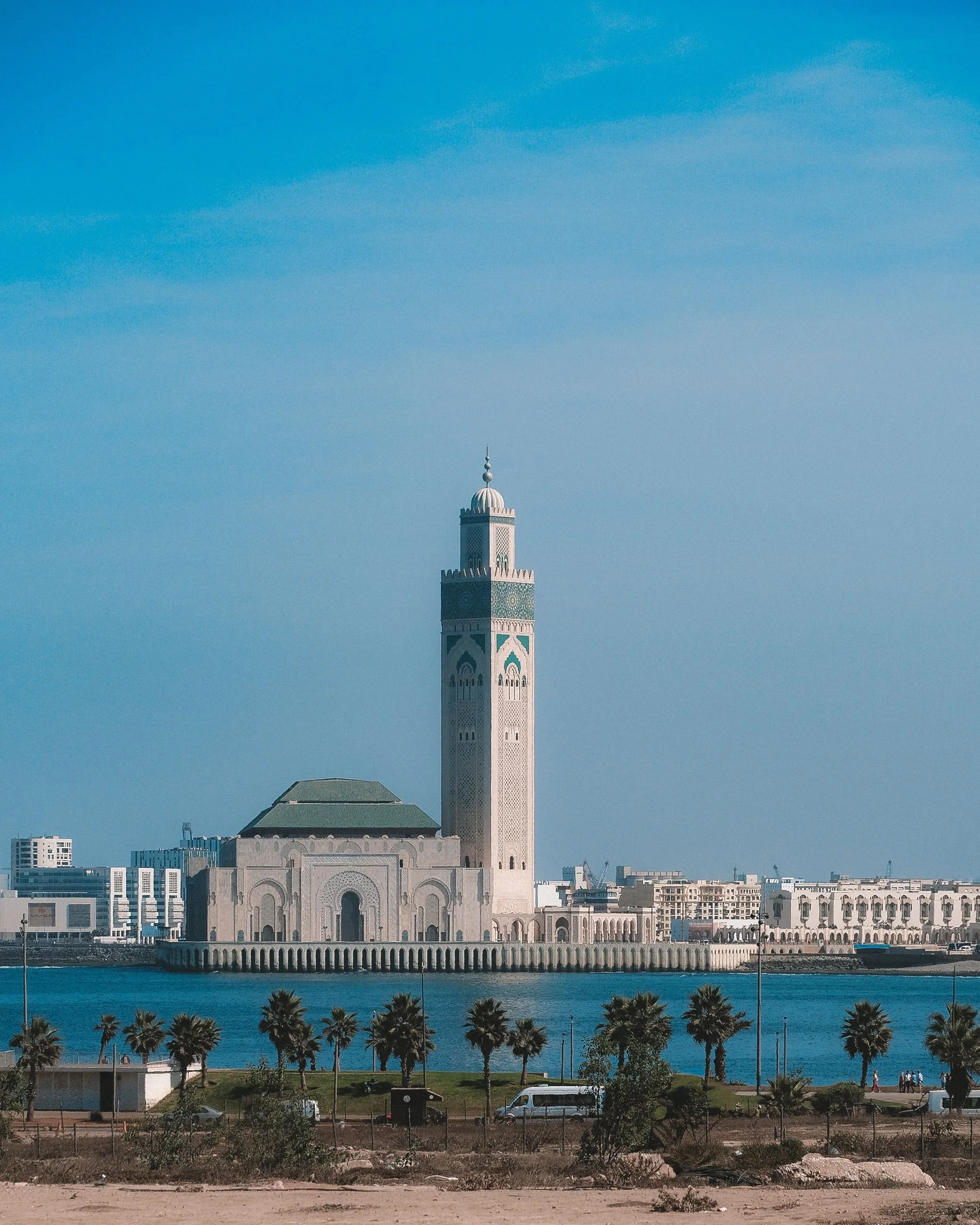
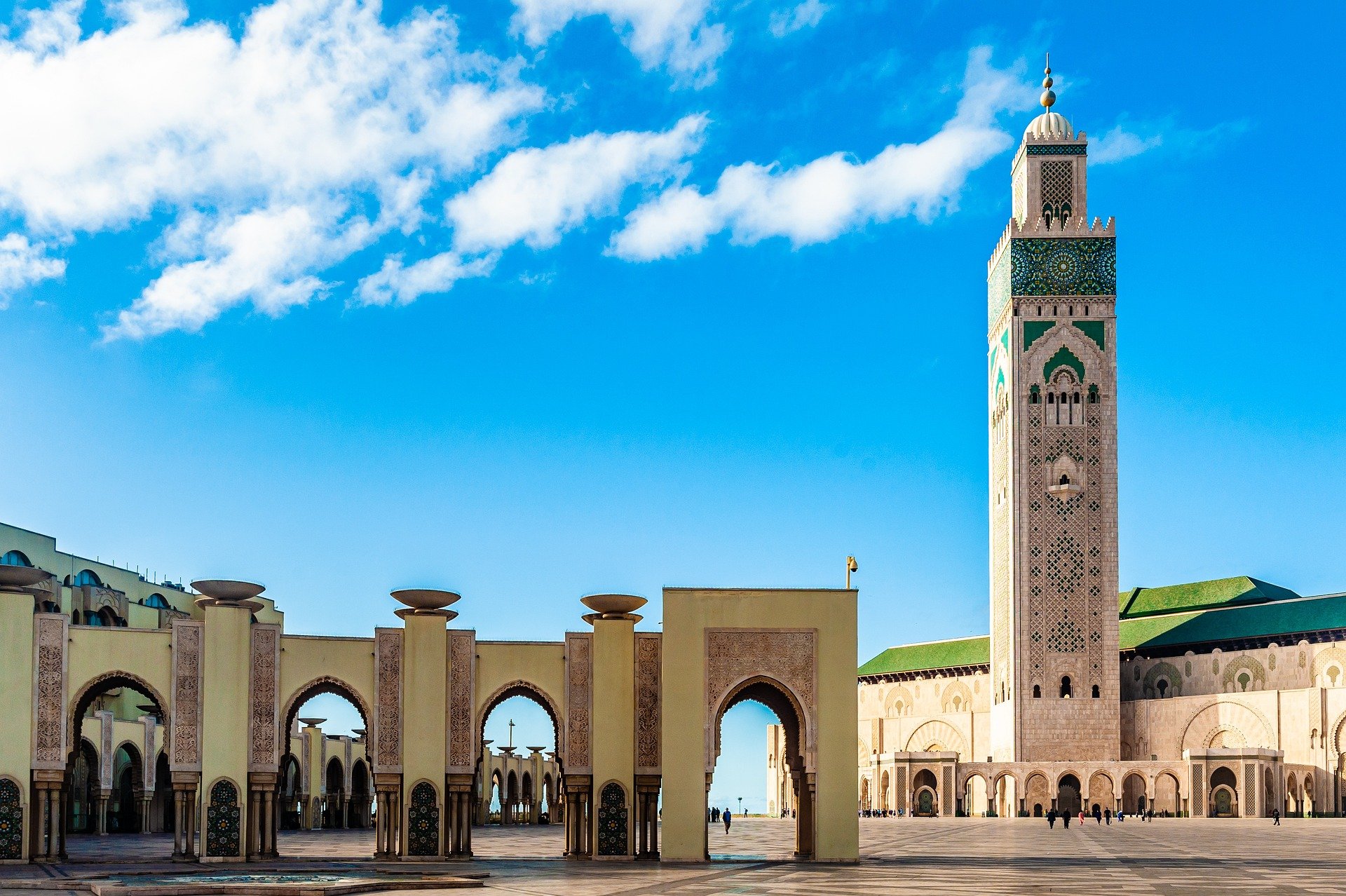
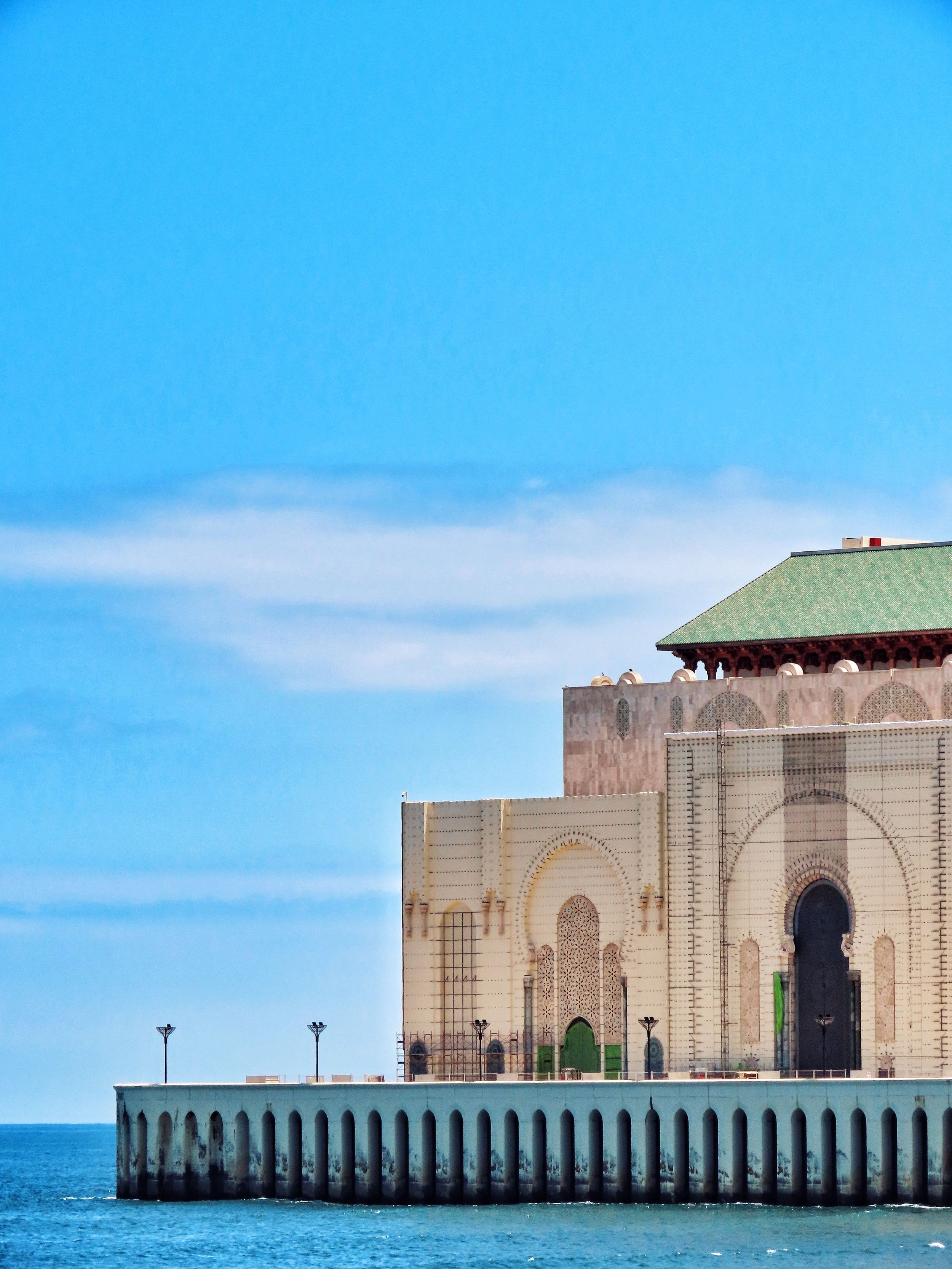
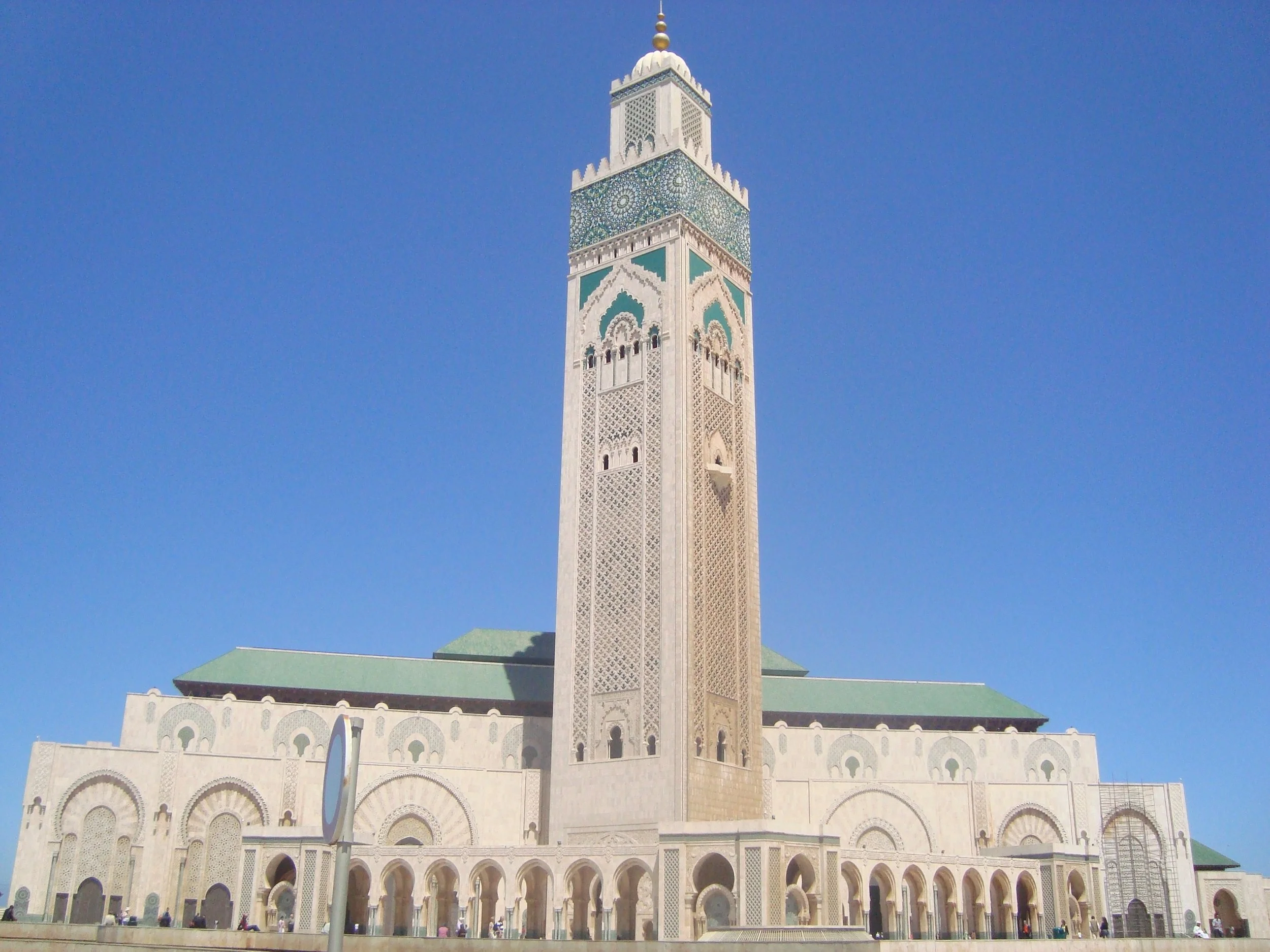
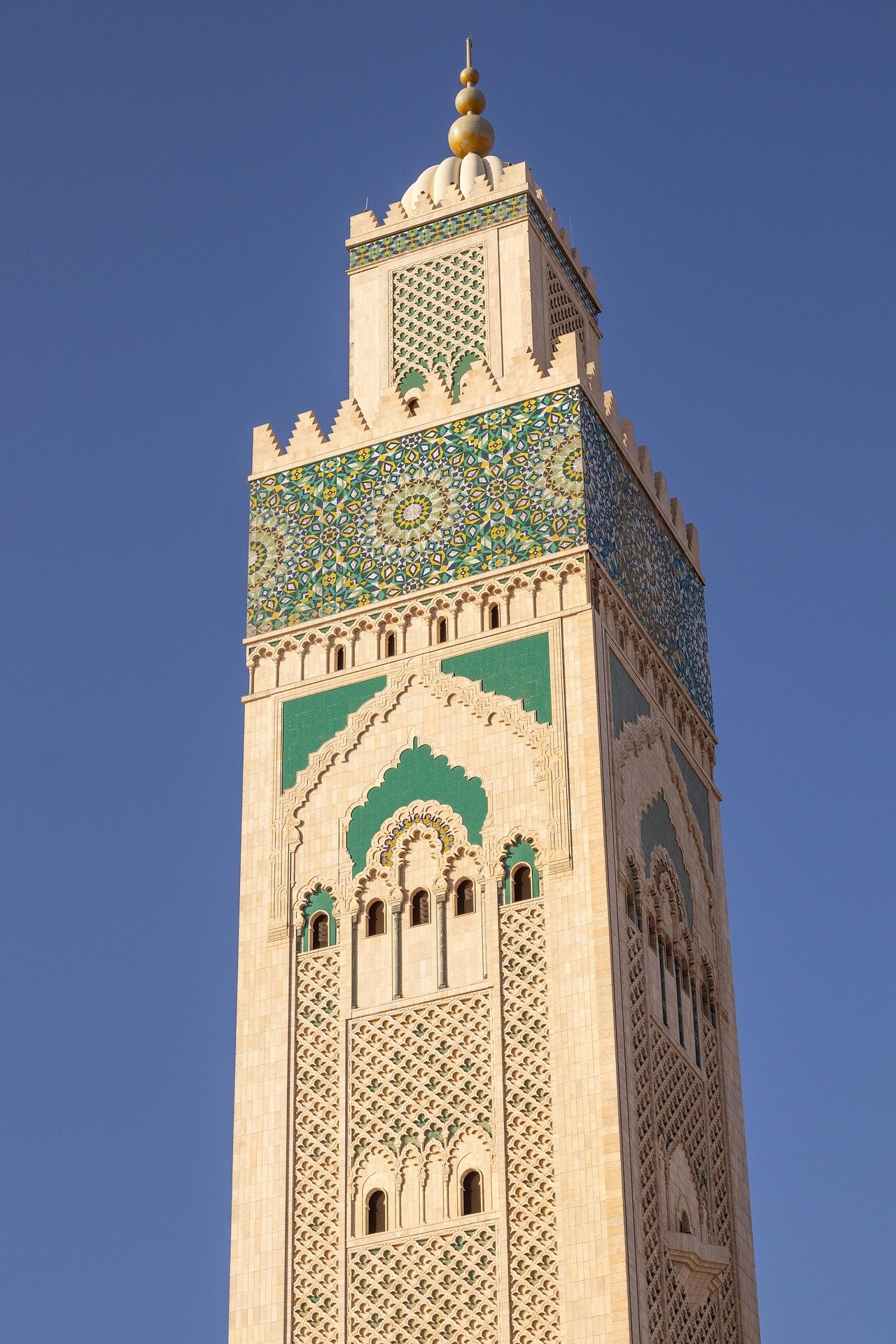
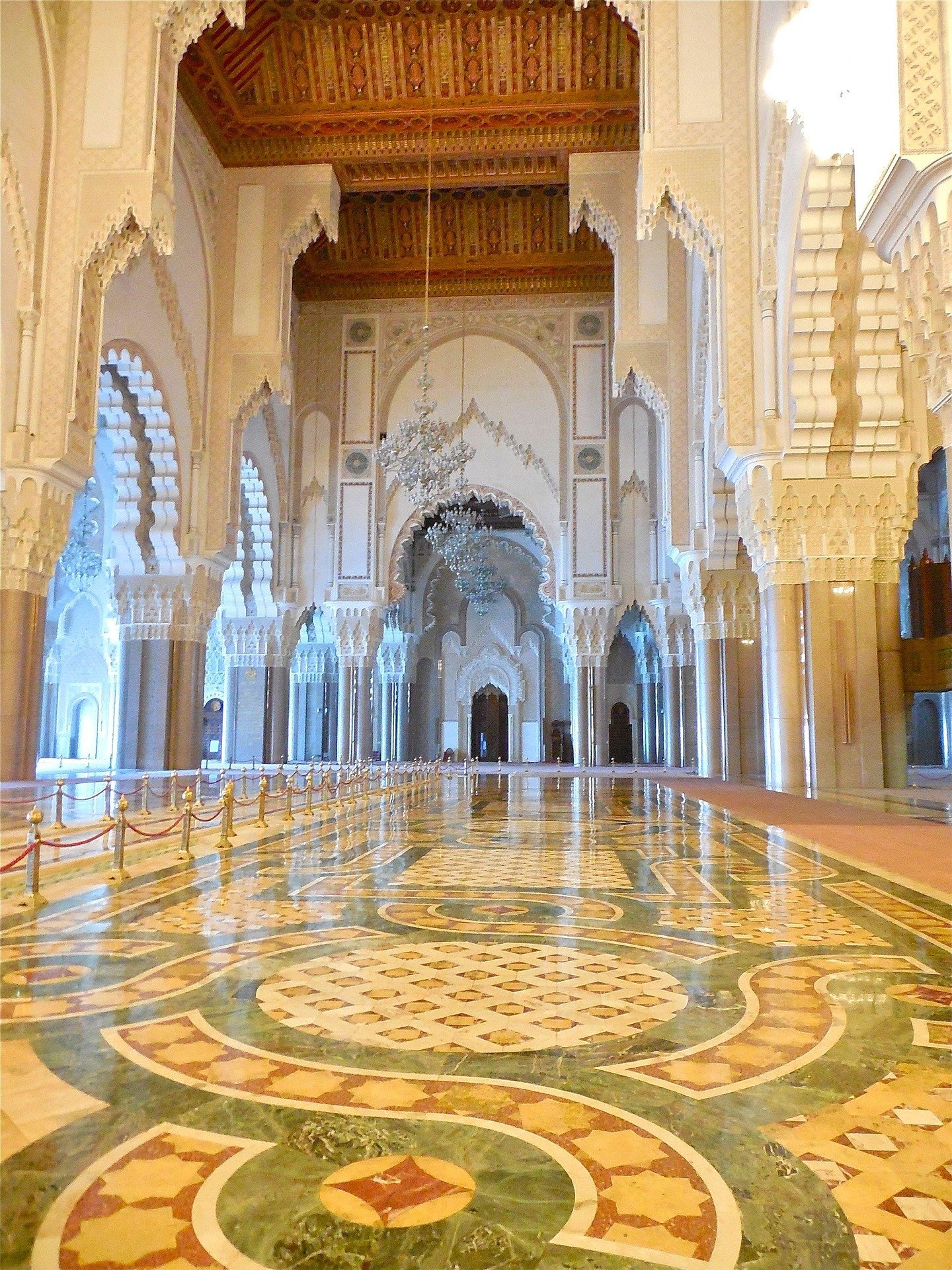
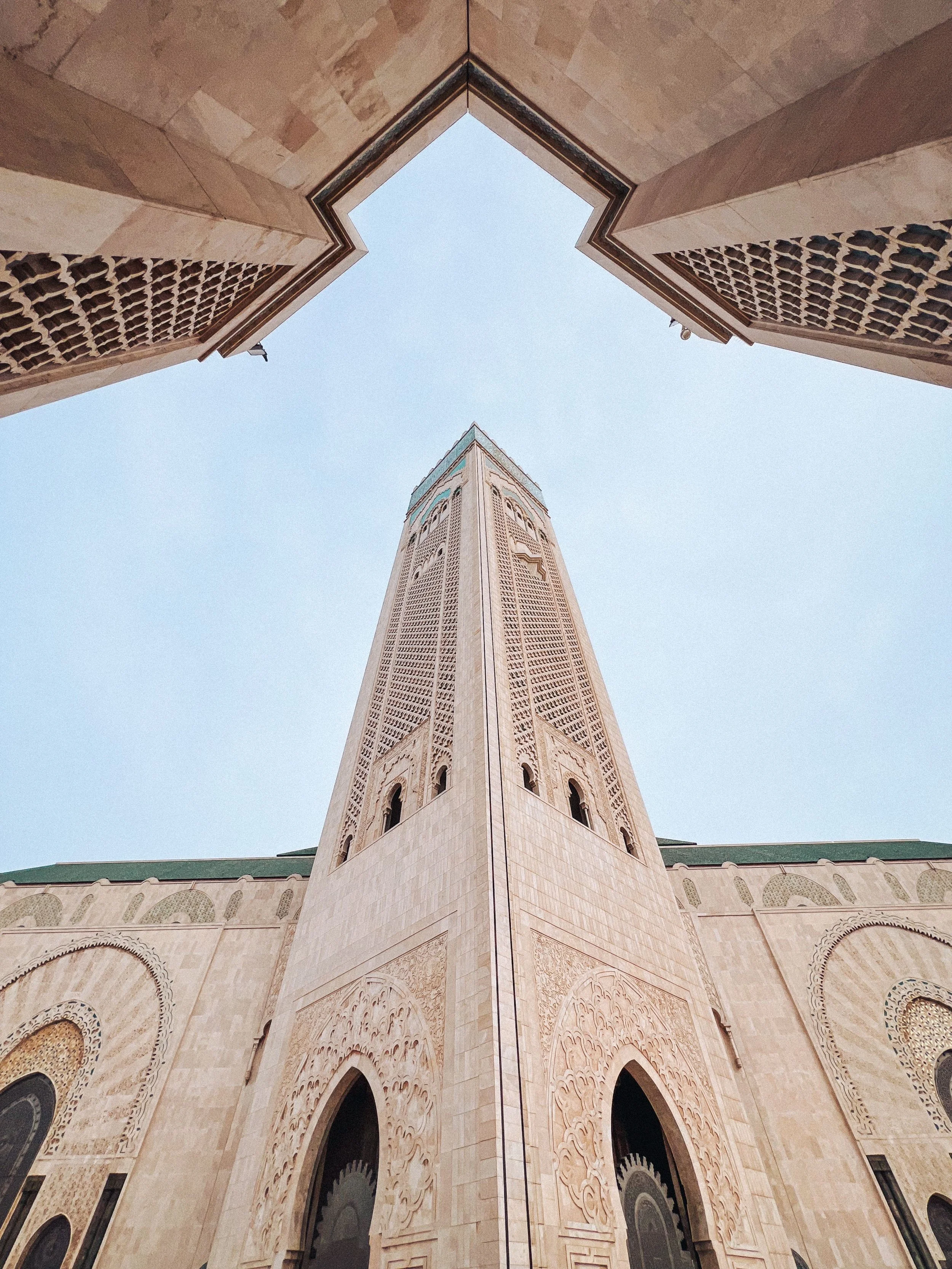
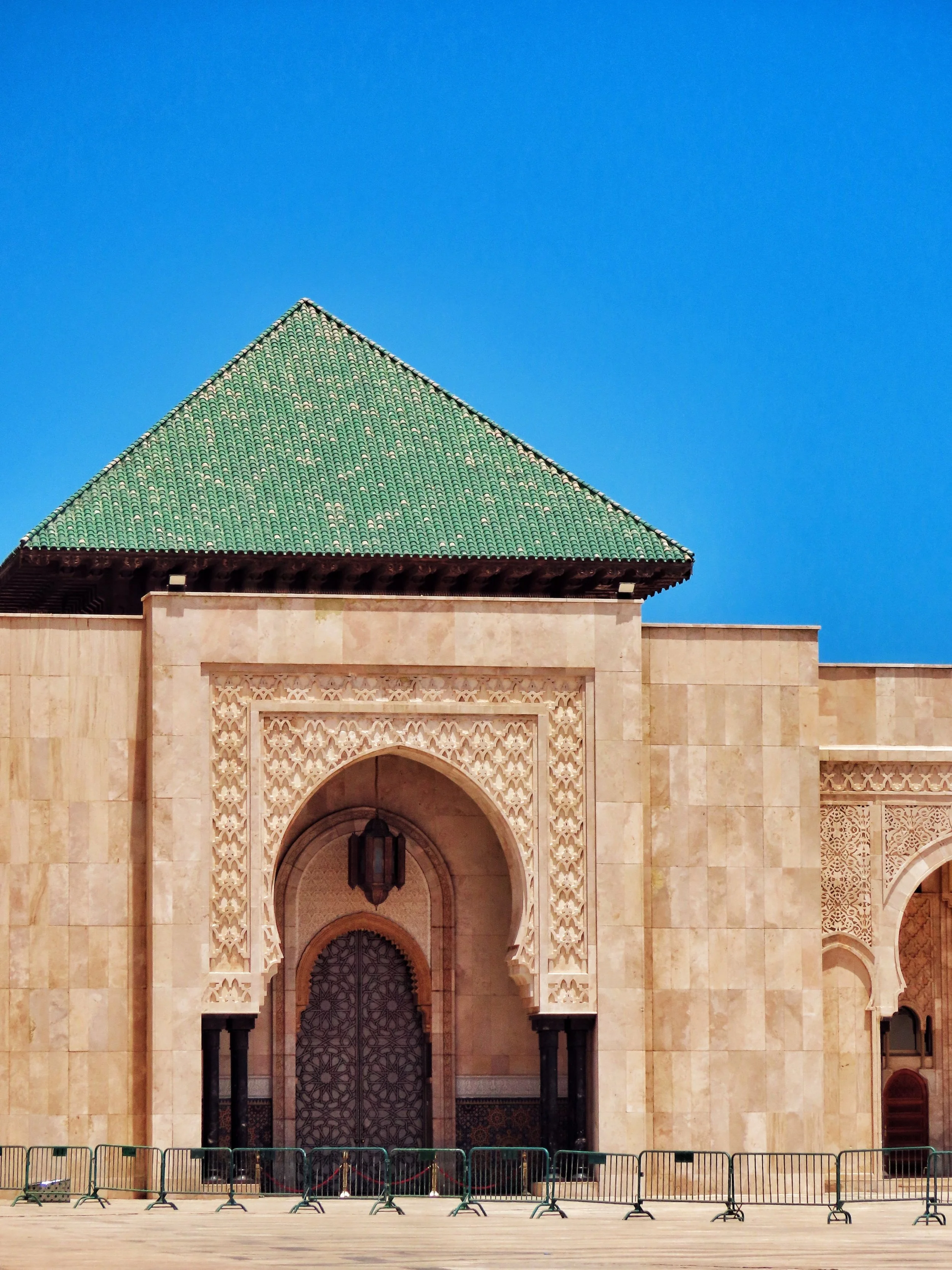
The Hassan II Mosque sits partly over the Atlantic Ocean on the coastline of Casablanca, Morocco, a scale of construction rare in twentieth century religious architecture. King Hassan II commissioned the mosque in the early 1980s, and construction ran from 1986 to 1993. Its minaret rises 210 meters, making it the world's second-tallest minaret today. It held the title of tallest minaret and tallest structure attached to a religious building anywhere until 2019, when the Djamaa el Djazaïr in Algiers surpassed it at 265 meters. What sets the mosque apart from other monumental twentieth century mosques is the choice to place a religious building directly on reclaimed land jutting into the sea. That decision was drawn from a specific Quranic image and executed through engineering that had no regional precedent to follow.
Who Built the Hassan II Mosque and Why?
King Hassan II of Morocco announced his intention to build a landmark mosque for Casablanca around 1980. Morocco's economic capital had grown rapidly through the twentieth century but lacked a monument on the scale of the historic imperial cities of Fez, Marrakech, and Rabat. The king wanted a building that would anchor the city's identity the way the Koutoubia Mosque anchors Marrakech and the unfinished Hassan Tower anchors Rabat.
He selected Michel Pinseau, a French architect born in 1926 and trained at the École Nationale Supérieure des Beaux-Arts in Paris, to design the project. Pinseau had lived in Morocco for more than two decades studying Moroccan Islamic architecture closely, which made him, despite not being Moroccan or Muslim himself, the king's trusted designer for the commission. Construction began on July 12, 1986, with a target completion date tied to the king's 60th birthday. The scale of the undertaking pushed the timeline back several years, and the mosque was formally inaugurated on August 30, 1993.
The site itself carried its own logic. Hassan II chose a rocky outcrop on the Atlantic shoreline, land that required reclamation before construction could begin. One source describes this land as having previously held informal housing, with residents displaced without compensation to clear the site. The symbolic reasoning behind the location is better documented: Hassan II wanted the mosque to reflect a Quranic verse describing God's throne as resting upon the water, so that worshippers would feel the ocean as part of their experience of prayer.
What Makes the Hassan II Mosque's Architecture Distinctive?
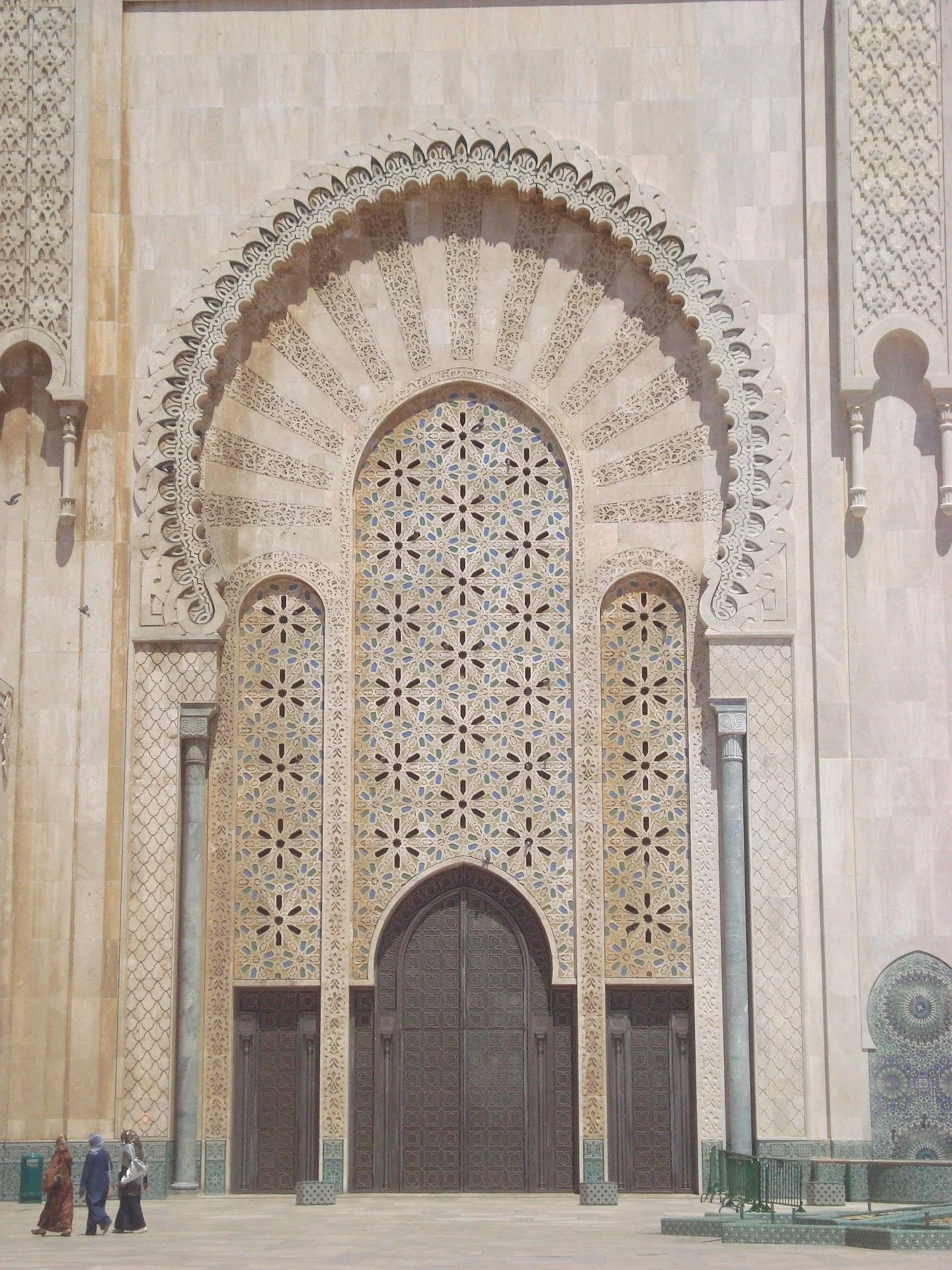
The mosque draws on Moorish-Andalusian design, the decorative and spatial vocabulary developed in Morocco and al-Andalus between the eighth and fifteenth centuries. Pinseau modeled the mosque's proportions and minaret on two specific precedents: the Koutoubia Mosque in Marrakech and the incomplete Hassan Tower in Rabat, both built under earlier Moroccan dynasties. Scaling those historic forms to a modern building of this size required engineering that neither twelfth century structure needed to solve.
The main structure measures 200 meters long, 100 meters wide, and 65 meters high, with a prayer hall covering 20,000 square meters, one of the largest enclosed prayer spaces built anywhere in the twentieth century. The building holds 25,000 worshippers indoors, with room for another 80,000 in the surrounding esplanade, for a combined capacity of 105,000. Because roughly a third of the structure extends over the ocean, engineers built in anti-seismic measures uncommon in Moroccan religious architecture up to that point, a departure driven directly by the site rather than by stylistic ambition.
The building's exterior finishes point to the same fusion of tradition and technology. Titanium, bronze, and granite cover the façades, materials chosen partly for their resistance to salt air. Nearly every material used across the complex is Moroccan in origin, drawn deliberately from across the kingdom's regions: cedar from the Middle Atlas, marble from Agadir, and granite from Tafraoute. The white granite columns and the mosque's Murano glass chandeliers, imported from Venice, are the notable exceptions. Nearly everything else in the building was sourced and made domestically, a deliberate choice to demonstrate Moroccan material and labor capacity rather than import foreign luxury.
How Is the Hassan II Mosque Complex Organized?
The Hassan II Mosque was conceived as more than a prayer hall. The complex includes a madrasa, a public hammam covering roughly 6,000 square meters, a library, and a large open esplanade that functions as both approach and overflow prayer space. Together these elements form an integrated cultural and religious complex rather than a single freestanding building, echoing the historic Islamic pattern of pairing a mosque with education, hygiene, and gathering functions on one site.
The esplanade does double duty. On ordinary days it is public open space along Casablanca's Corniche; during major prayers it absorbs tens of thousands of additional worshippers who cannot fit inside the prayer hall itself. This layered capacity, a compact indoor hall backed by an expansive outdoor ground, let the design meet a congregational scale that a prayer hall alone could not have accommodated without becoming architecturally unworkable.
How Does the Retractable Roof Change the Prayer Hall?
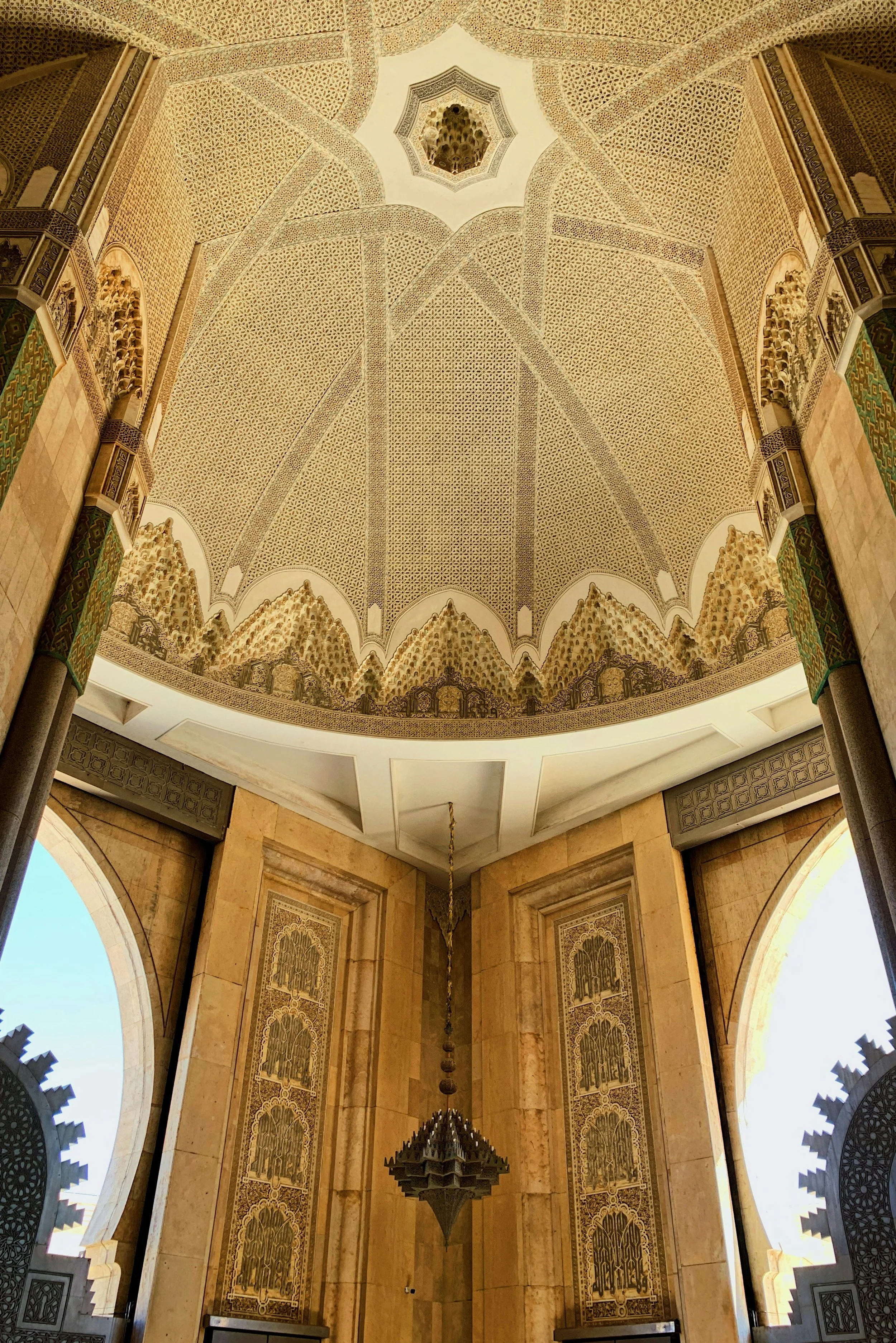
The prayer hall's roof, built from cedar wood and weighing an estimated 1,100 tons, slides open on an electrically driven chain-and-track mechanism in about five minutes. The mechanism moves far more weight than a typical retractable roof, and does it against wind loads coming directly off the Atlantic.
The effect on the space is significant. Closed, the hall functions as a conventional covered prayer space lit by chandeliers. Open, it becomes something closer to a courtyard mosque, letting daylight or night sky reach the same floor where worshippers pray. A single hall serves both experiences without moving the congregation: open on mild evenings, closed against Atlantic wind and rain.
Why Build a Mosque Floor Over the Ocean?
Part of the prayer hall floor is glass, positioned so worshippers can see the sea beneath them while they pray, the most literal expression of the mosque's founding concept. Some reports describe this section as reserved largely for royal use rather than open to general visitors.
Building over water required reclaiming roughly 15 hectares of coastal land and pouring foundations directly into the seabed, work handled by the French contractor Bouygues. This foundation work, combined with the seismic bracing mentioned earlier, meant a large share of the engineering budget went toward problems invisible to anyone standing in the finished building. The visible payoff, praying beside and partly above the Atlantic, depended entirely on work that never shows.
What Craftsmanship Went Into the Mosque's Interior?
An estimated 6,000 master artisans worked on the mosque's interior over several years, drawn from across Morocco's regions to bring in a range of local specialties rather than a single regional style. Woodcarvers, most associated with Fez, cut and painted the cedar ceiling panels and the retractable roof's underside in geometric motifs. Stone carvers shaped marble ablution fountains in the basement level into forms compared to lotus flowers. Zellige tile workers, meanwhile, produced more than 10,000 square meters of geometric mosaic across the complex, reportedly developing around 80 new pattern combinations rather than repeating historic designs wholesale.
Commissioning new zellige patterns instead of reproducing existing ones treats the mosque as a living extension of Moroccan craft rather than a museum piece. It gave working artisans a large-scale commission to expand their pattern vocabulary. The completed mosque now functions as a reference point for that expanded repertoire, the way older monuments like the Bou Inania Madrasa in Fez have long served as pattern references for earlier generations of craftsmen.
How Was the Hassan II Mosque Paid For, and Why Is That Controversial?
Estimates of the mosque's total cost range from roughly $400 million to $800 million, with sources disagreeing on the exact figure. What is consistent across accounts is the funding structure: King Hassan II covered a portion from royal funds, commonly cited as around one third, while the remainder came from a public subscription campaign. An estimated 12 million Moroccans contributed, each receiving a printed certificate acknowledging their donation, with additional funds arriving as loans and gifts from Western and Arab governments.
Academic critique of the project has been sharper than the tourism-oriented sources describing it. One analysis characterizes the subscription campaign as carrying elements of coercion rather than pure voluntary giving, noting that it took place while Morocco carried significant international debt. Whether donations were genuinely voluntary or effectively compulsory remains disputed. The same critique notes that the mosque required a major restoration between 2005 and 2008, costing an estimated $100 million. That expense addressed deterioration from ocean exposure, a maintenance burden directly tied to the oceanfront site that made the building famous in the first place.
How Does the Hassan II Mosque Reflect Late Twentieth Century Religious Architecture?
The Hassan II Mosque belongs to a wave of state-sponsored mega-mosques built across the Middle East and North Africa from the 1980s onward, projects that used religious architecture to project national identity and political authority simultaneously. Unlike historic congregational mosques that grew gradually alongside their cities, these buildings were conceived from the outset as singular monuments, commissioned by a head of state and completed within a fixed, publicized timeline.
What distinguishes the Hassan II Mosque within that wave is its explicit citation of specific historic Moroccan precedents, the Koutoubia and Hassan Tower, rather than a generic Islamic style assembled from multiple regional traditions. It also stands out for the sheer size of its workforce: an entirely Moroccan artisan corps of thousands, working under a French architect and a French general contractor. Few state mosque projects of this era drew so heavily on a single national labor pool.
Why Does the Hassan II Mosque Matter Today?
The Hassan II Mosque remains one of the largest mosques in Africa. It is also one of only a small number of mosques in Morocco open to non-Muslim visitors, a policy that has made it a rare point of public architectural access to a functioning, actively used mosque interior. This openness has turned the building into an unusual dual-purpose space: an active site of daily and Friday prayer for the local Muslim community, and an educational stop for visitors encountering Moroccan Islamic architecture and craft firsthand.
Ongoing maintenance against salt corrosion, including the 2005–2008 restoration, points to a tension built into the mosque's founding concept: the oceanfront setting that gives the building its defining identity is the same condition that requires continuous, costly upkeep. More than three decades after its completion, the mosque continues to shape how large-scale religious commissions in the region are conceived, both as an architectural reference point and as a cautionary example of the financial and political questions such projects can raise.
Glossary:
Zellige: Geometric mosaic tilework made from individually cut, glazed ceramic pieces, a Moroccan decorative tradition dating to the medieval period
Madrasa: An educational institution, historically for Islamic religious instruction
Minaret: A tower from which the call to prayer is traditionally given
Esplanade: A large open, level area, here functioning as overflow prayer space and public ground
