
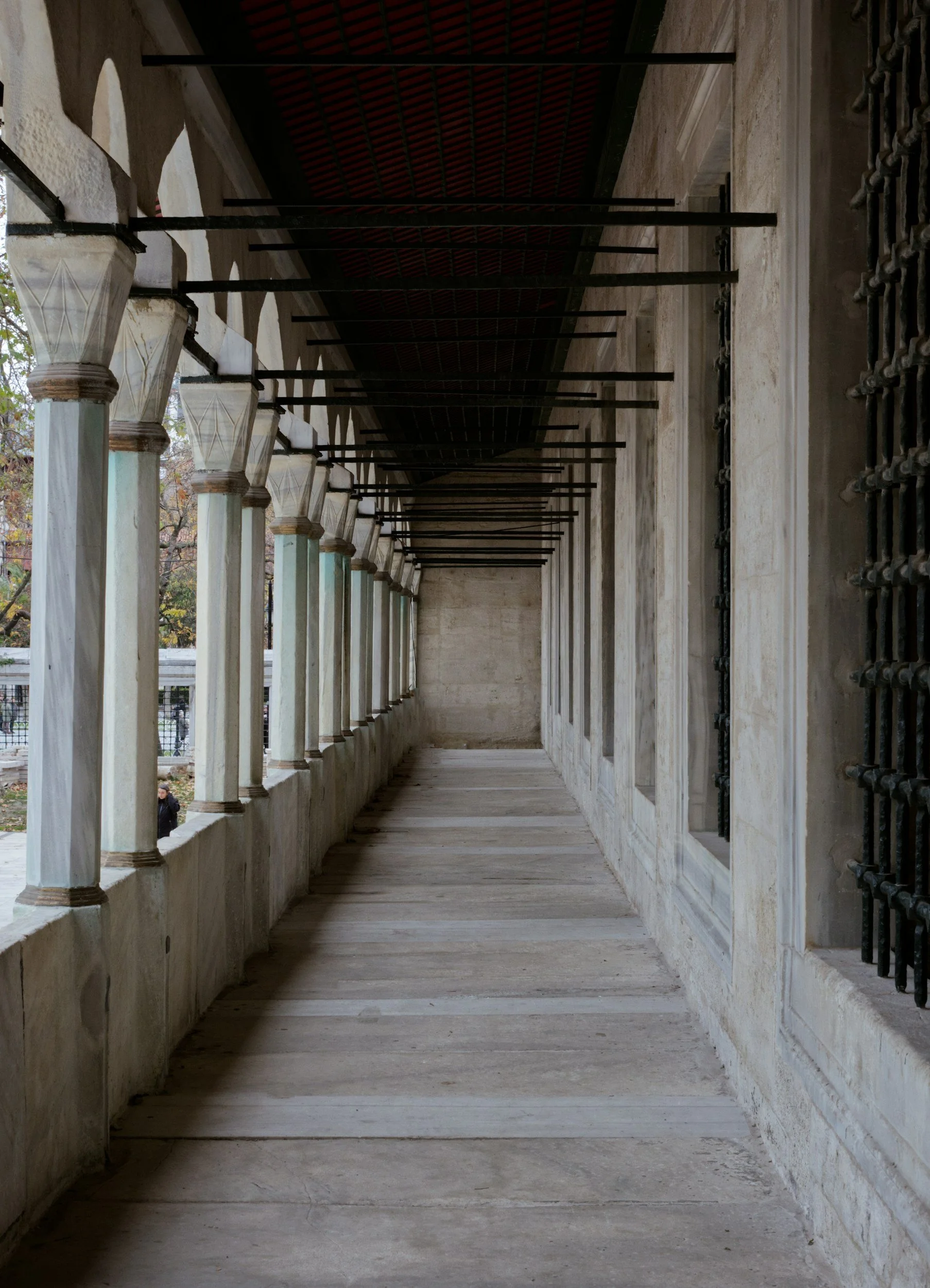
Photo by Ilker Ozmen
Mosques across the Islamic world were built in some of the hottest climates on earth: the Arabian desert, the Levantine coast, the Iranian plateau, the tropical islands of Southeast Asia. Before mechanical air conditioning, architects and builders solved the same problem using wind, water, mass, and shade. These were not incidental design choices. Each element of a mosque's physical form, from the orientation of the prayer hall to the thickness of its walls to the geometry of its window screens, carried a thermal function alongside its spiritual and aesthetic ones.
We will examine four strategies that traditional mosque builders used to manage heat: the open courtyard (sahn), thick-walled construction, the wind catcher (badgir or malqaf), and the lattice screen (mashrabiyya). These systems rarely operated in isolation. Understanding how they worked, and how they worked together, reveals a design tradition that responded to climate with both precision and ingenuity.
How Did the Courtyard (Sahn) Cool a Mosque?
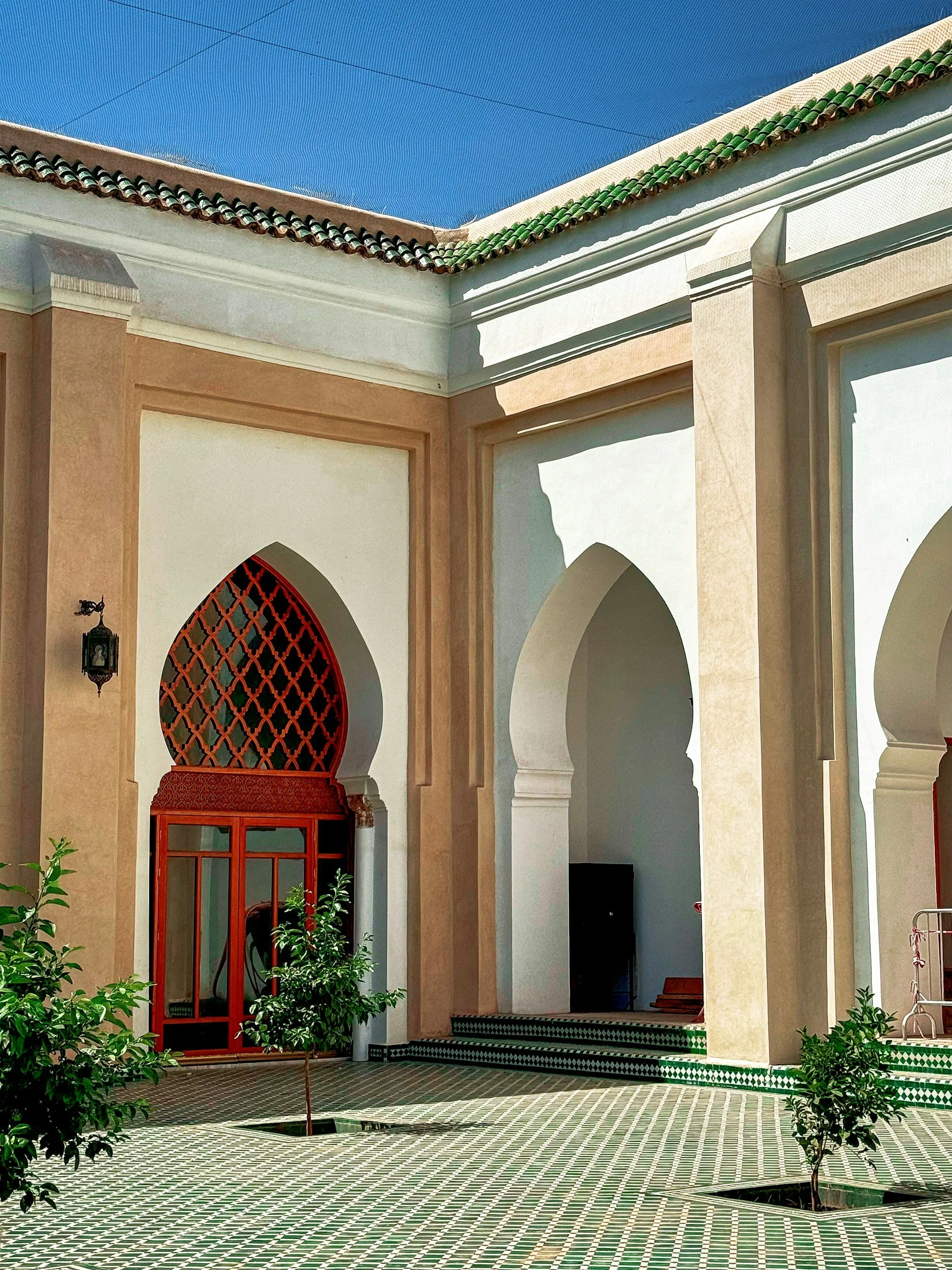
Photo by Mounir Abdi
The open courtyard at the center of a congregational mosque was the building's primary climate system. A sahn functions on several overlapping principles that, taken together, kept the surrounding prayer spaces cooler than the outside air for most of the prayer day.
Cold air is denser than warm air and sinks. At night in hot, arid climates, temperatures drop sharply after dark. Cool night air collects in the courtyard and flows into the adjacent rooms, displacing the warmer air that built up during the day. Once the sun rises, the arcade surrounding the courtyard, known as the riwaq, casts shade over the floor and traps that cool air below while the exterior temperature climbs. This process is called night flushing, and it was built into traditional courtyard design as a reliable mechanism rather than a happy accident.
The central fountain or ablution basin amplified this effect. Water evaporating from the surface lowered the temperature of the air immediately surrounding it. In drier climates, this evaporative cooling is particularly effective: the drier the air, the more aggressively it absorbs moisture, and the more cooling results from evaporation. In the sahn of Ibn Tulun Mosque in Cairo, which measures 92 by 92 meters, the scale of the open space created enough thermal mass in the surrounding brick piers and stone pavement to stabilize temperature across the prayer day. The riwaq arcades simultaneously sheltered worshippers from direct sun and allowed air to move freely beneath.
The courtyard plan also created the conditions for convection. Hot air rises. A courtyard open to the sky allowed warm air to escape upward, drawing cooler air from the shaded arcade and adjacent rooms to replace it. This airflow required no mechanical component. It required only the right proportions of enclosed wall, open sky, and shade.
What Did Thick Walls Actually Do?
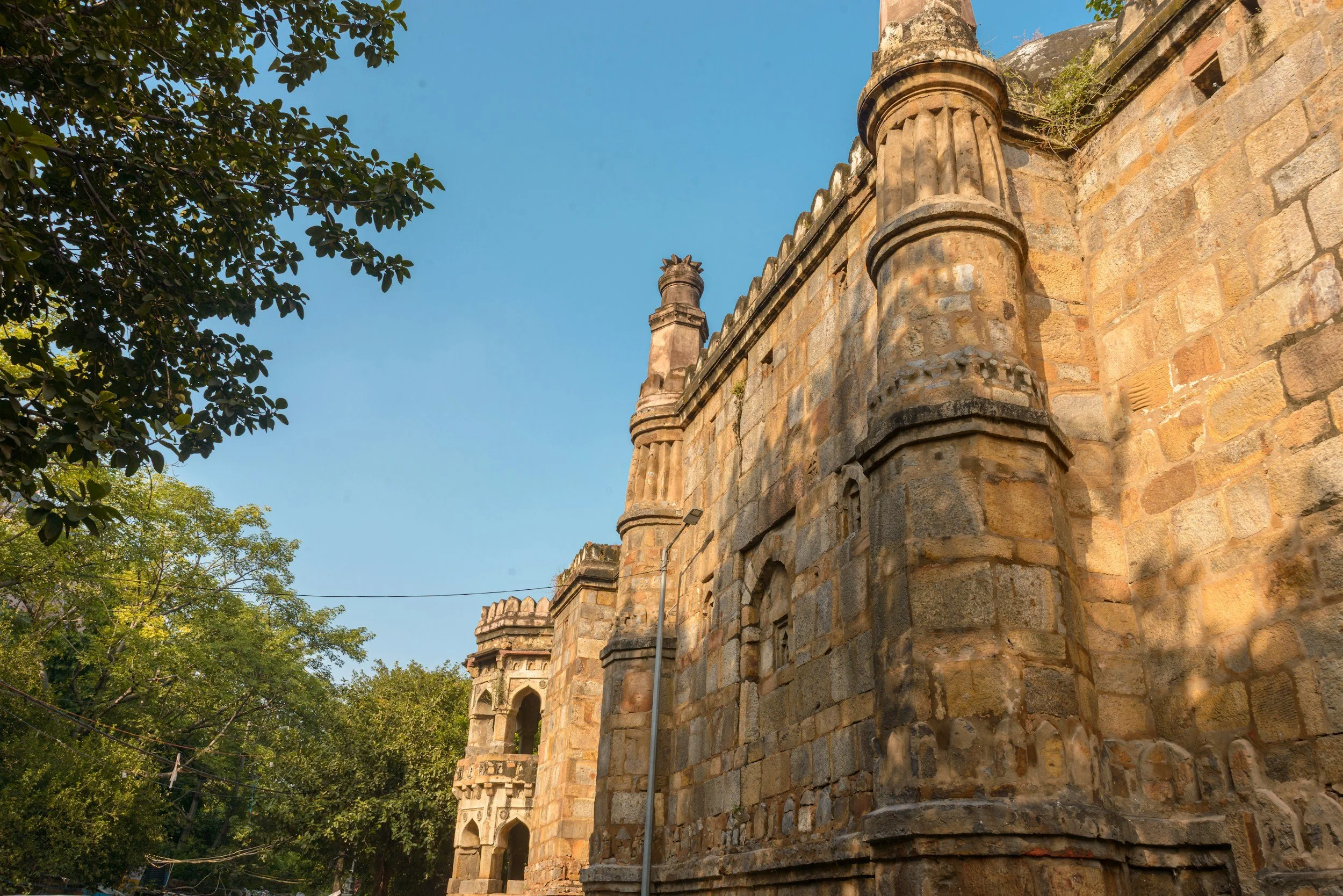
Photo by Zoshua Colah
Stone and brick walls store heat during the day and release it slowly at night, a property called thermal mass. In climates with wide temperature swings between day and night, this lag between heat absorption and heat release is precisely what a building needs. The wall absorbs midday heat before it penetrates to the interior, keeping worshippers cool during afternoon prayers, then releases that stored warmth after dark when outdoor temperatures have already dropped.
The walls of Al-Sayed Hashim Mosque in Gaza's Old City were approximately 90 centimeters thick, built from local sandstone and limestone. That thickness was not structural excess. It provided the thermal buffer a coastal Palestinian climate required, where summer humidity compounds the heat and the building must manage both. Thick walls appear across Islamic architecture in different materials depending on what was locally available: mud brick in the Saharan and Arabian regions, cut stone in the Levant and Egypt, fired brick in the Abbasid heartland. The material varied; the logic did not.
In each case, builders chose mass over transparency and small openings over large ones wherever the qibla direction permitted. Because mosques are oriented toward Mecca, the direction of the qibla wall varies by location. In many regions, the qibla wall faces west, receiving intense afternoon sun. Research on mosque thermal performance has found that the design of this specific wall matters significantly: appropriate shading, surface treatment, and buffer spaces can reduce indoor wall surface temperatures by 4 to 6 degrees Celsius, meaningfully improving comfort during the hottest prayer times without mechanical assistance.
What Is a Wind Catcher and How Did It Work?
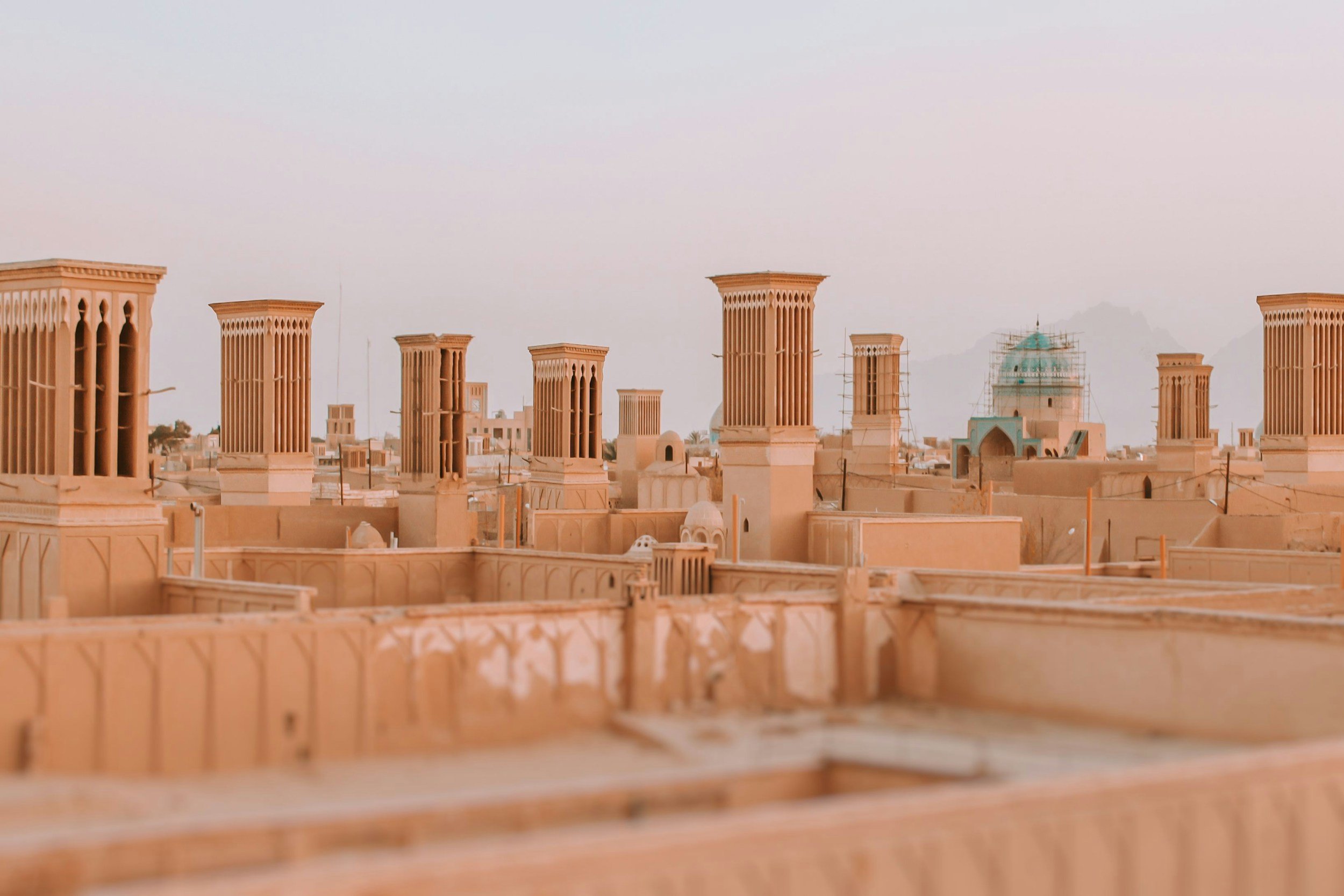
Photo by Hasan Almasi
The badgir (Persian: wind catcher) is a tower-mounted ventilation device that captures prevailing winds at roof height and channels them down into the building below. Wind catchers appear across the Islamic world from Pakistan to North Africa, adapted to local wind conditions, and were built over prayer halls of mosques as well as water cisterns and residences.
The basic mechanism uses a vertical shaft with openings at the top oriented toward prevailing winds. Air entering the vents is channeled downward into the building, creating movement and cooling. In hot, dry climates, builders placed small ponds or fountains at the base of the shaft, so the descending air passed over water and cooled further through evaporation before reaching the prayer space.
When wind is absent, the system works in reverse. Solar radiation heats the tower's walls, warming the air inside. Warm air rises and exits from the top of the tower, pulling cooler air from the courtyard and basement below upward through the rooms. The badgir functions as both a wind catcher and a thermal chimney depending on conditions, shifting between the two modes automatically based on wind speed and sun exposure.
The tallest surviving wind catcher, at the Bagh-e Dowlatabad garden complex in Yazd, Iran, rises 33.35 meters above the roofline it serves. That scale reflects the serious thermal engineering these structures represented, not decorative ambition. Yazd, known historically as the city of wind catchers, demonstrates how widespread and refined this technology became in regions where summer heat was extreme and consistent.
At the base of some Persian wind catchers, the air passed not just over a fountain basin but over water drawn from a qanat (Arabic/Persian: underground channel), a gravity-fed tunnel that conveyed water from mountain aquifers across many kilometers to arid settlements. Because qanat water traveled underground and emerged at a consistent temperature, it remained cooler than the desert air above, amplifying the evaporative cooling the badgir produced. Qanats also served mosque complexes directly as a water source for ablution.
The Egyptian variant, called the malqaf, differed in form. Rather than the multi-directional Persian shaft, the malqaf was a one-directional scoop angled at 30 to 45 degrees to catch the prevailing northerly winds of Cairo and the Nile Delta. Where the badgir responded to variable winds from multiple directions, the malqaf was tuned to a specific climate, a regional adaptation of the same underlying principle.
Both types appear over mosque prayer halls in historical use. Ventilating a large congregational space without mechanical assistance requires moving a substantial volume of air. These towers managed that problem for centuries.
How Did the Lattice Screen (Mashrabiyya) Manage Light and Air?
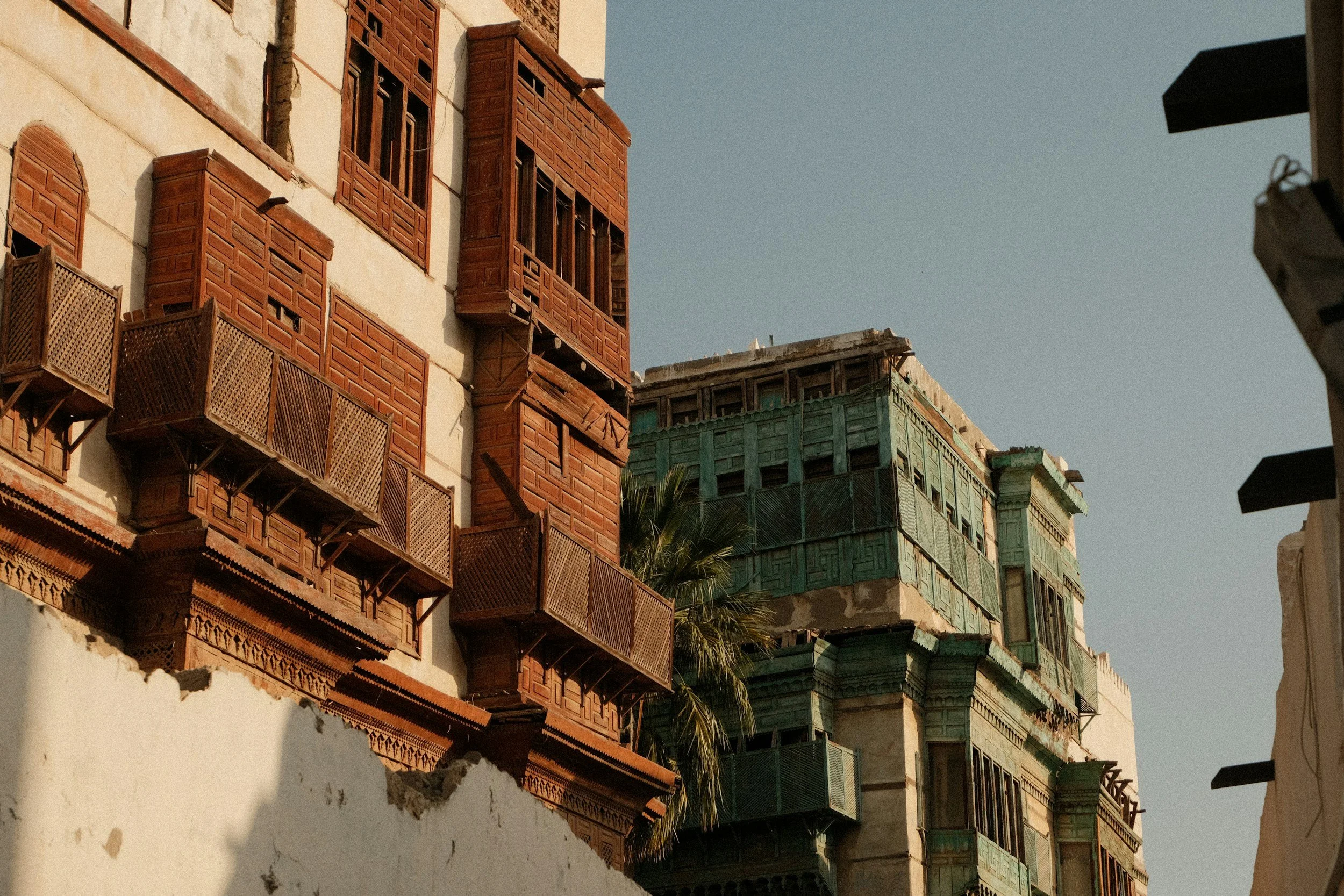
Photo by abdullah alallah
The mashrabiyya is a carved wooden or stone lattice screen placed over window openings to filter light, air, and direct views simultaneously. Its origins trace to pre-Islamic Egypt, where jars of water were placed behind the screen so that incoming breezes evaporated the water and cooled the air before it entered the room. The name derives from the Arabic root sharaba (to drink), a reference to this original cooling and humidifying function.
Wood-based mashrabiyya screens regulate humidity actively as well as temperature. Wood absorbs moisture when the surrounding air is dry and releases it when the air is humid. When a breeze passes through the lattice, the wood contributes some of its stored moisture, softening the harshness of a dry desert wind before it reaches the interior. As architect Hassan Fathy observed, the mashrabiyya intercepts direct solar radiation and softens glare while also acting on the humidity of the incoming air.
The geometry of the lattice served a thermal purpose. Traditional screens featured smaller openings in the lower sections and larger openings higher up. This configuration slowed air movement at the level where people sat or stood, avoiding uncomfortable drafts, while allowing faster airflow above head height. Field studies in historic Jeddah buildings recorded temperature reductions of up to 2.4 degrees Celsius in rooms with open mashrabiyya screens compared to rooms with closed ones, a modest figure that becomes meaningful during prayers at the hottest hours.
In mosque architecture, mashrabiyya screens appeared on interior facades aligned toward the qibla, as documented in Cairo's Al-Azhar Mosque, and on exterior window openings where direct solar exposure would otherwise heat the prayer hall. The Mamluk period in Egypt saw the technique develop in stone as well as wood, with carved stone lattices in public buildings offering greater durability in dense urban contexts.
How Did These Systems Work Together?
The most effective traditional mosque environments combined multiple strategies rather than relying on a single one. Thick walls reduced daytime heat gain. The courtyard's night-flushing mechanism pre-cooled the building before morning prayer. The fountain added humidity and lowered air temperature through evaporation. A badgir or malqaf channeled fresh air during the day. Mashrabiyya screens on windows controlled solar gain while maintaining airflow. The high ceilings and dome above the prayer hall allowed hot air to rise and collect above the congregation rather than remaining at breath level.
These systems worked because builders understood the mosque as an integrated climate system, not simply as an enclosure with ventilation features added. The relationship between the courtyard's shaded floor and the surrounding rooms, between the fountain's evaporation and the screen's humidity regulation, between the tower above and the cool cistern below, were designed in relation to each other.
Baiturrahman Grand Mosque in Banda Aceh illustrates how dramatically these principles shifted in a different climate. Sumatra's coastal tropics required no winter warmth retention and no arid evaporative cooling. The challenge there was sustained heat and humidity. The mosque's original tiered timber roofs, with their wide overhangs and raised ridgelines, maximized shade and allowed hot, humid air to escape upward. The ironwood shingles over the later Dutch-built domes were chosen for resistance to moisture rather than thermal mass. Same underlying logic, different material response.
Why These Systems Matter Now
Contemporary architects keep returning to traditional passive cooling strategies because they work, and because they consume no energy. Research on naturally ventilated buildings suggests they use approximately 40% less energy than mechanically ventilated equivalents. The badgir requires no electricity. The sahn requires no mechanical components. The mashrabiyya requires no maintenance beyond the craft skill that produced it.
Jean Nouvel's Institut du Monde Arabe in Paris uses mechanically controlled apertures modeled on the mashrabiyya, opening and closing in response to sunlight to regulate the interior. Researchers in Cairo have modeled mosque minarets functioning as passive solar chimneys, using the same thermal buoyancy principles as the historical tower systems. These are not nostalgic gestures. They are applications of proven physics to contemporary construction problems.
For Muslim communities building mosques in hot climates today, integrating passive cooling strategies is both an architectural choice and a form of stewardship. These strategies belong to a long tradition of building with the environment rather than against it, one this architectural heritage developed over many centuries and many climates.
Glossary:
Sahn: Open courtyard in a mosque, functioning as both worship space and climate regulator.
Riwaq: Arcaded portico surrounding a courtyard, providing shaded circulation space.
Badgir: Persian wind catcher or wind tower, a shaft built to capture prevailing winds and channel them into a building for ventilation and passive cooling.
Malqaf: Egyptian variant of the wind catcher, a one-directional wind scoop angled to catch prevailing winds.
Mashrabiyya: Carved wooden or stone lattice screen placed over window openings, controlling light, air movement, humidity, and views.
Qanat: A gravity-fed underground channel that conveys water from mountain aquifers to arid settlements, used across the Islamic world for irrigation, drinking water, ablution, and in combination with wind catchers for passive cooling.
Shabestan: An underground summer room found in Persian houses and buildings, cooled by air flow from a qanat channel running beneath it.
Thermal mass: The capacity of a material to absorb, store, and slowly release heat, moderating interior temperatures across a daily cycle.
Qibla: The direction Muslims face during prayer, oriented toward the Kaaba in Mecca.
Night flushing: A passive cooling process in which cool night air fills a courtyard or interior space and remains trapped by shade structures during the day.
