
Al-Omari Grand Mosque in Beirut, Lebanon



This post was last updated on January 3, 2026.
The Al-Omari Grand Mosque (Jami' al-Kabir, "the Great Mosque") occupies the center of Beirut's downtown district, a sandstone prayer hall that has functioned as the city's primary congregational mosque since the Mamluk period. When Mamluk forces converted the existing Crusader cathedral into a mosque in 1291, they formalized a site that had accumulated nearly two millennia of religious use: beginning with a pre-Islamic place of worship, continuing as a Byzantine basilica, and passing through Crusader occupation before its Islamic identity was established. The building's Romanesque stonework and layered Mamluk and Ottoman inscriptions remain visible within a single structure. A Lebanese presidential decree classified it as a protected historic building in 1936.
Who Established the Al-Omari Grand Mosque and Why?
The building's early timeline is genuinely contested. The Wanderleb architectural database, which documents Lebanese historic monuments, explicitly notes that the site's chronology is "incomplete and in need of revision due to the existence of numerous historical records, analyses, and theories." Given this ambiguity, the 1291 Mamluk conversion represents the most securely documented foundation of the mosque's current form.
Some sources indicate an earlier Islamic use of the site in 635 CE, under the caliphate of Umar ibn al-Khattab (RA), when Beirut first came under Muslim governance. Other accounts place the building's Islamic history beginning only with the Mamluk period. What is clear is that when the Mamluks captured Beirut from the Crusaders in 1291 and converted the existing cathedral into a mosque, they named it Al-Omari in honor of Caliph Umar ibn al-Khattab (RA). They also gave it the name Futouh al-Islam (Conquest of Islam), marking the end of Crusader control over the city.
The structure the Mamluks converted was the Cathedral of Saint John, built by the Knights Hospitaller in 1113-1115. (Several sources cite circa 1150 for the cathedral's construction; the IRCICA architectural inventory, based on documentation submitted in 2009, records 1113-1115 as the construction period.) This Crusader cathedral occupied a Byzantine basilica site, which had itself been constructed over the remains of an earlier pre-Islamic structure. The Mamluks preserved the cathedral's main structural elements and adapted them for Islamic worship, a practical decision given the building's solid stone construction and its adequate dimensions for congregational prayer.
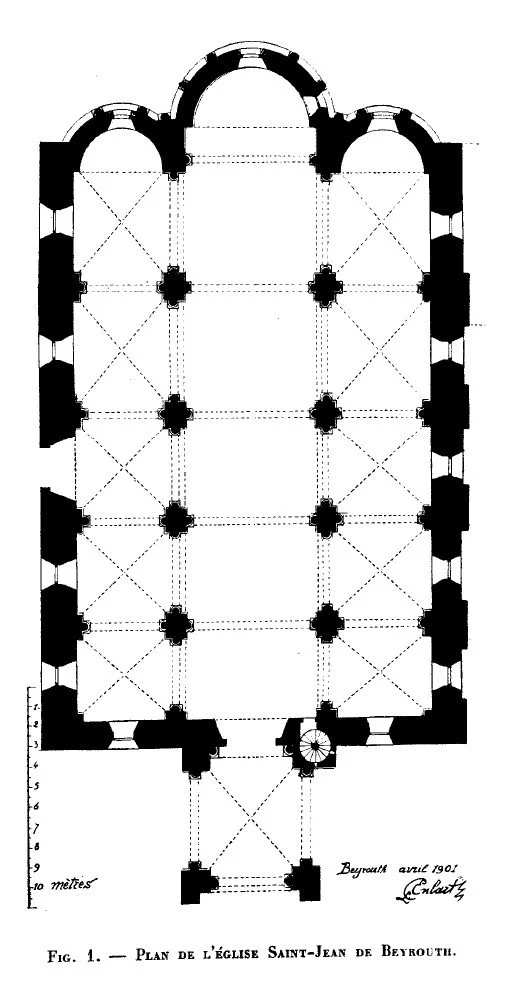
What Does the Building's Plan Reveal About Its Crusader Origins?
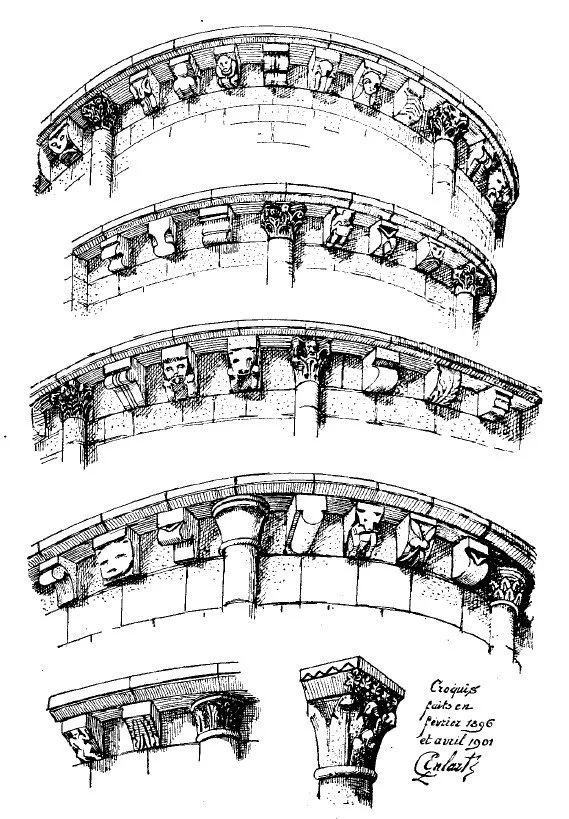
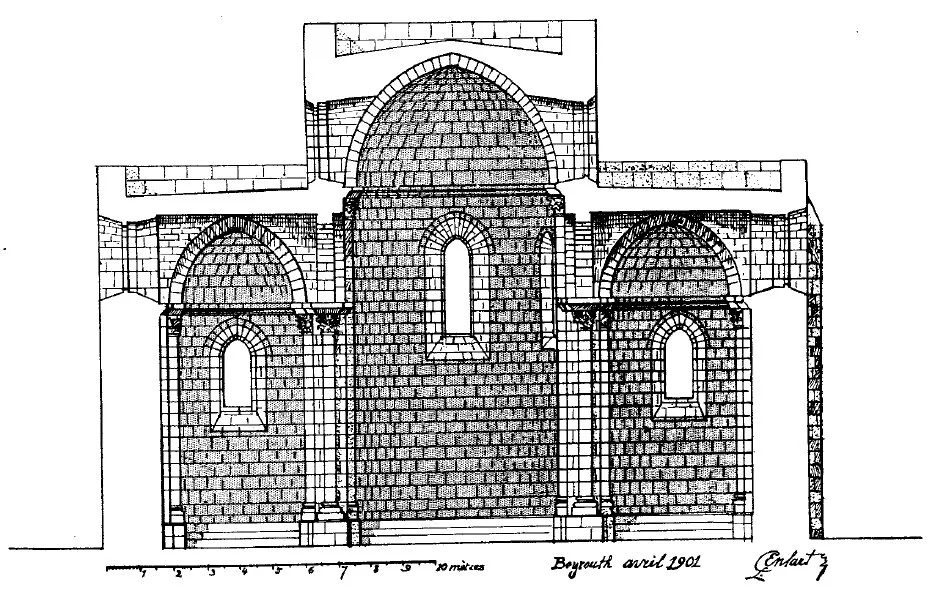
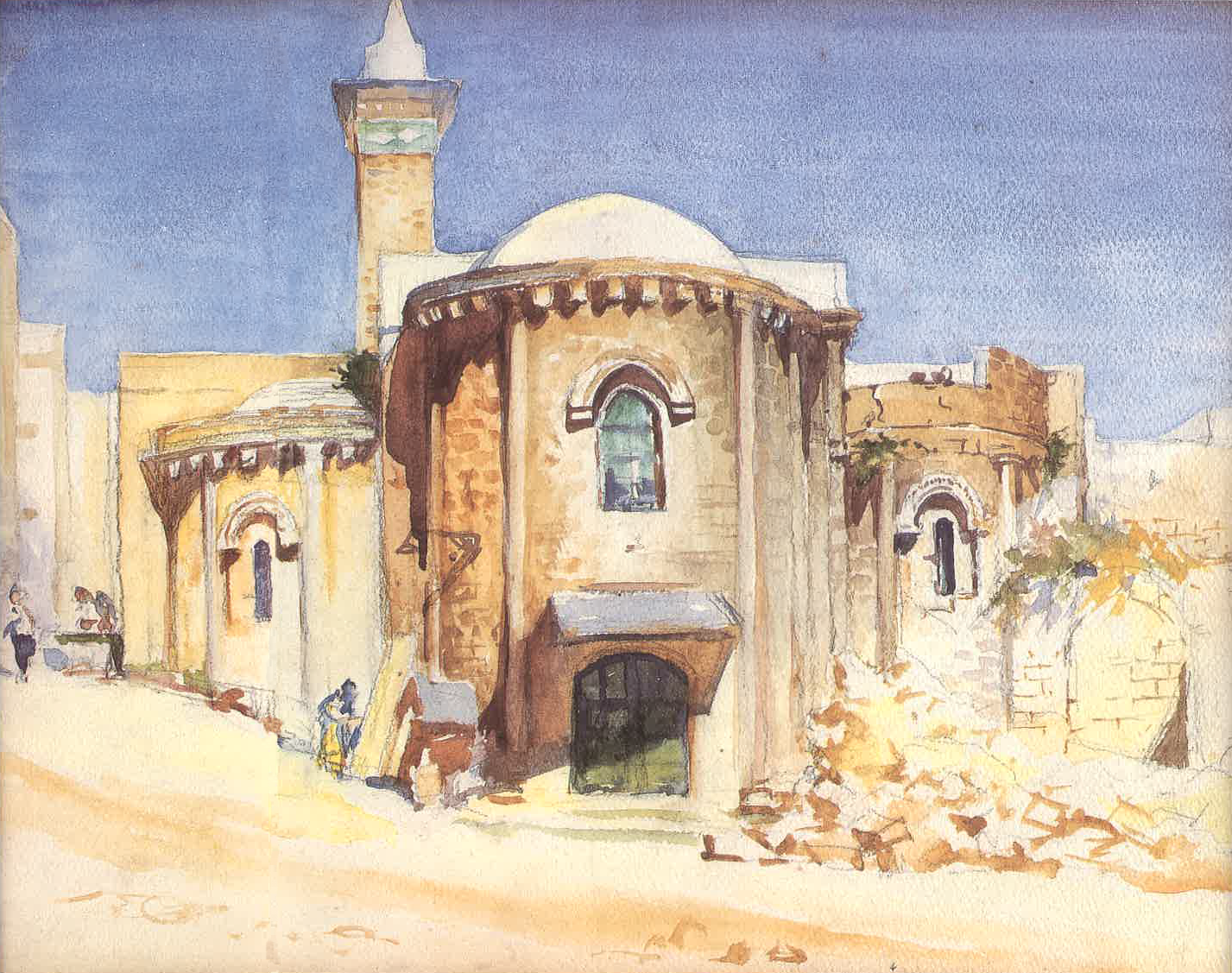
Al-Omari retains spatial characteristics of the Crusader cathedral, making it architecturally unusual among Lebanon's historic mosques. Romanesque arch profiles and carved surface details are visible throughout the building, following conventions distinct from the pointed arches and muqarnas vaulting characteristic of Mamluk construction elsewhere in the region. The building's sandstone exterior, the material preferred in Levantine Crusader construction for its workability and warm color, remains largely intact. The mihrab (prayer niche indicating the direction of Mecca) occupies the position where the church's altar originally stood, placing the focal point of Islamic prayer in direct spatial relationship to the earlier building's ceremonial center. Roman-era column drums and foundation elements remain embedded within the structure, carrying forward physical material from the earliest building phase through every subsequent construction period.
How Did the Mamluks Adapt the Space for Islamic Worship?
The 1291 conversion required inserting Islamic architectural elements into the Romanesque structure without wholesale rebuilding. The Mamluks added a mihrab to mark the qibla direction and installed a minbar (pulpit) for Friday sermons. By 1350, they had constructed a Mamluk-style minaret and a new entrance on the west side. The minaret provided both functional elevation for the call to prayer and a visual signal of the building's Islamic identity within Beirut's streetscape.
Interior sandstone walls received Mamluk and Ottoman calligraphic inscriptions across subsequent centuries. These additions incorporated Quranic verses and dedications into the cathedral's stone surfaces, documenting the building's continued investment under two dynasties without requiring structural alteration. During the Ottoman period, the mosque acquired another name: the Yahya Mosque, reflecting its association with Prophet Yahya (AS), known in the Christian tradition as John the Baptist. Sultan Abdul Hamid II sent a golden steel cage to Beirut, installed within the mosque to enclose a shrine honoring the prophet. A separate Ottoman gift from Sultan Abdul Majid I, three strands of hair attributed to Prophet Muhammad (SAW), was preserved in the southwestern section and made accessible to visitors on the 26th of Ramadan annually. These relics were lost during the Lebanese Civil War.
What Changes Did the French Mandate and Civil War Bring?
During the French Mandate period, the mosque's southern facade was redesigned. A new riwaq (arcaded portico) replaced the earlier entrance zone, and the main access point was realigned with the colonnade of the newly constructed Maarad Street. This intervention connected the mosque to French colonial urban planning in central Beirut while changing the building's approach from street level. The processional sequence shifted from a compressed Crusader portal to a broader colonnaded entry.
The Lebanese Civil War (1975-1990) severely damaged the mosque along with most of the historic city center. Theft and abandonment during the conflict resulted in the loss of the Ottoman-period prophetic relics. Post-war reconstruction of the Beirut Central District provided the context for a 2004 restoration, carried out by architect Youssef Haidar. The renovation added a second minaret at the northwest corner and a new colonnaded courtyard. During excavation for the expansion, workers uncovered an ancient cistern beneath the building, supported by Roman-era columns and stone vaulting, which was preserved in place. Kuwait contributed funding to the restoration effort.
How Does Al-Omari Reflect Adaptive Reuse in Islamic Architecture?
Al-Omari exemplifies a practice common in early Islamic architecture: adapting existing religious structures for congregational worship rather than demolishing and rebuilding from new foundations. The Umayyad Mosque in Damascus, built on the site of the Church of Saint John the Baptist, represents the most prominent regional example. Both conversions involved inserting Islamic spatial and decorative elements into pre-existing buildings associated with the same prophet.
What distinguishes Al-Omari is the degree to which its pre-Islamic spatial organization remains legible within the prayer space. At the Umayyad Mosque, Umayyad builders substantially reconstructed the site. At Al-Omari, Romanesque arch profiles and the cathedral's basic arrangement persist within the current prayer hall. This preservation reflects both practical Mamluk construction decisions and the constraints of a compact urban site within Beirut's dense city center, where expansion required working within the existing footprint.
The mosque's succession of names documents these political and religious transitions directly: Al-Omari (honoring the caliph), Futouh al-Islam (marking the Mamluk victory), Yahya Mosque (Ottoman-era designation), El-Tawba (Mosque of Repentance), and Jami' al-Kabir (the Great Mosque). No single name fully captures the building's accumulated history, and the mosque appears to have used different designations across different periods without any one becoming exclusive.
Al-Omari served as Beirut's primary Sunni congregational mosque for over seven centuries, until the opening of the nearby Muhammad al-Amin Mosque in 2008. It remains an active mosque within the reconstructed Central District, its Romanesque exterior distinguishing it from every other congregational mosque in Lebanon.
Glossary:
Jami': Congregational mosque where Friday prayers are held.
Mihrab: Prayer niche in the qiblawall indicating the direction of Mecca.
Minbar: Elevated pulpit from which the imam delivers the Friday sermon.
Qibla: Direction of prayer toward the Kaaba in Mecca.
Riwaq: Arcaded portico.
