
Auwal Mosque in Cape Town, South Africa
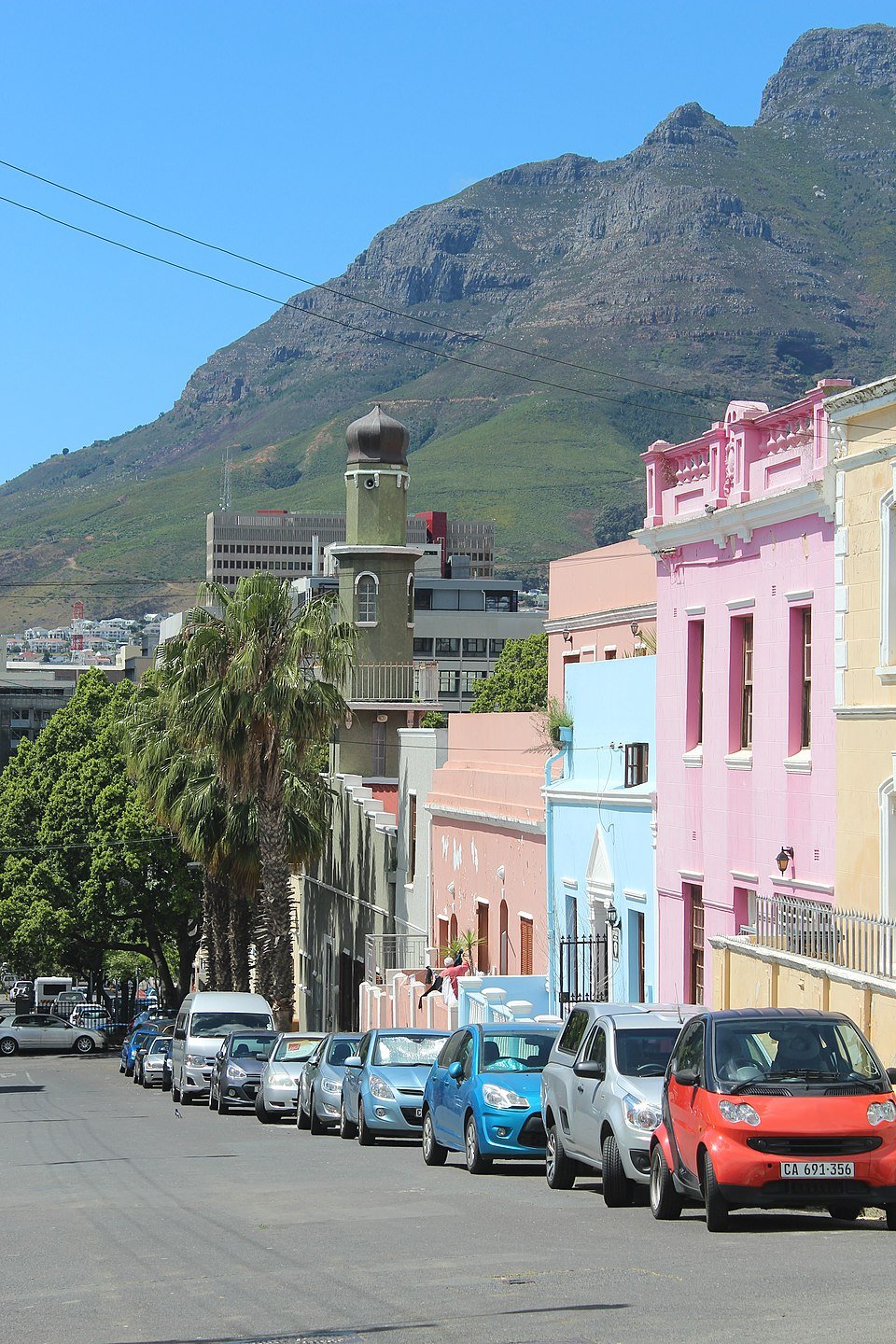
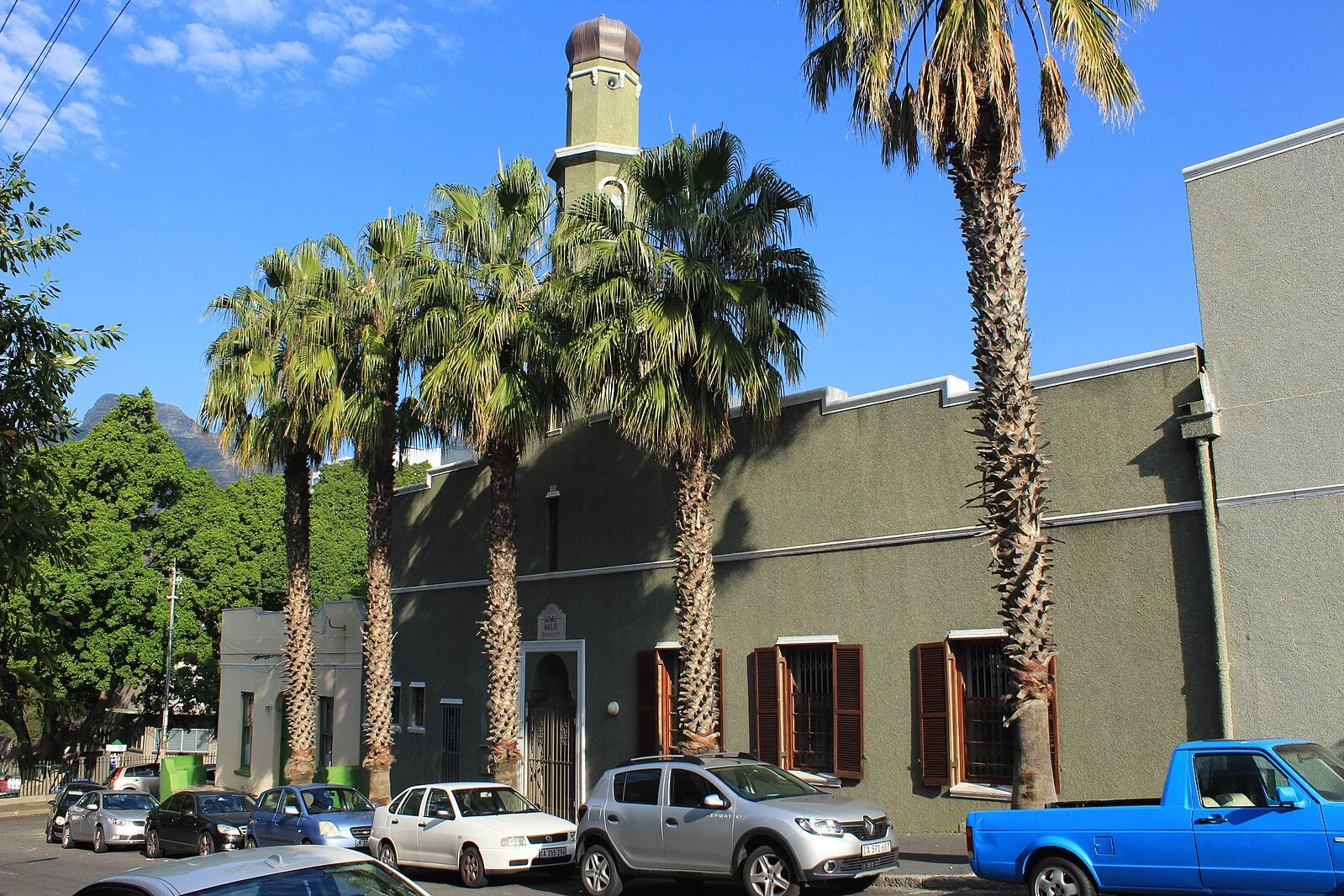
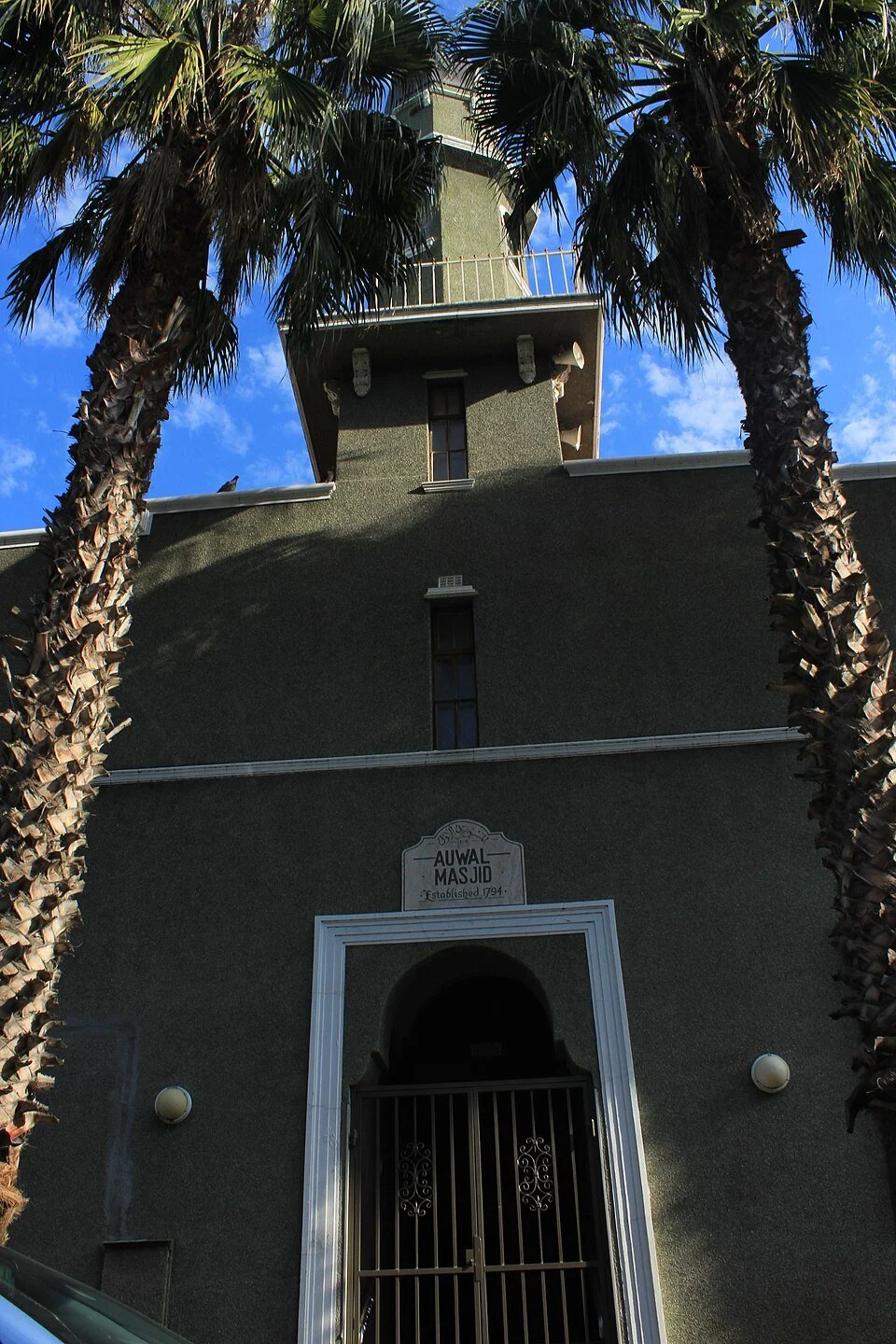
South Africa's first mosque stands in Cape Town's Bo-Kaap neighborhood, where cobblestone streets climb Signal Hill's slopes above the city center. Completed in 1794, Auwal Mosque emerged from a converted warehouse when public Islamic worship remained illegal under Dutch colonial rule. The name "Auwal," Arabic for "first," reflects both historical precedence and the community's determination to establish sacred space despite systematic oppression.
Imam Abdullah ibn Qadi Abdus Salaam, known as Tuan Guru, founded this mosque after thirteen years imprisoned on Robben Island. From this modest structure, he established South Africa's first madrasa (Islamic school) and pioneered Arabic-Afrikaans, a unique written form using the Perso-Arabic script to transcribe the local Afrikaans language. Though only two walls survive from the original building after a 1930s collapse, the mosque continues serving the Bo-Kaap's Muslim community while symbolizing Cape Muslim struggle for recognition and religious freedom.
Who Built Auwal Mosque and Why?
Imam Abdullah ibn Qadi Abdus Salaam was born in 1712 on Tidore, a small island in Indonesia's Maluku archipelago famous for clove production. As a prince from the royal house whose father served as qadi (Islamic judge), he advised Sultan Jamal al-Din until Dutch colonial politics intervened. The Dutch East India Company, fearing Tidore's alliance with English rivals, detained him in Batavia before exiling him to the Cape in 1780 at age 68.
He arrived aboard the Zeepard on April 6, 1780, with three other political prisoners. Colonial "Bandieten Rollen" (Bandit Rolls) records accused them of conspiring politically with the English in the East Indies. Robben Island, the windswept prison where authorities held these men, became central to the imam's legacy.
During thirteen years of imprisonment, Imam Abdullah, a hafiz al-Qur'an (one who has memorized the entire Quran), wrote several copies of the holy book entirely from memory. He also completed a 613-page treatise titled Ma'rifatul Islami wa'l Imani (Manifestations of Islam and Faith) in 1781, covering Islamic jurisprudence and Asharite theology. When later compared to printed Qurans, his handwritten versions contained remarkably few errors.
Upon his release in 1793, he married Kaija van de Kaap and immediately established a madrasa in a warehouse rented from Coridon van Ceylon, a freed slave. Students learned Quranic recitation, Arabic literacy, and Islamic principles. This educational work earned him the title "Tuan Guru," meaning "Master Teacher" in Malay. The school became the birthplace of literary Arabic-Afrikaans, as teachers developed methods to write local Afrikaans using Arabic script, enabling Islamic instruction for students who couldn't read Dutch.
Tuan Guru applied to Cape authorities for mosque land in 1793, but officials rejected the request. Only the Dutch Reformed Church could operate legally. When British forces occupied the Cape in 1795, Governor General Craig granted Muslims permission to pray publicly. On September 26, 1794, Coridon van Ceylon purchased two Dorp Street properties, becoming the first Muslim to own Cape Town land. Following Craig's permission, Tuan Guru converted the warehouse into a functioning mosque by adding a mihrab (prayer niche) indicating the qibla direction toward Mecca.
What Makes Auwal Mosque's Architecture Distinctive?
The original structure deliberately avoided architectural elaboration. Given religious oppression and the recent illegality of public worship, the building maintained a modest exterior. The converted warehouse began as a simple single-story structure with a prayer room, minbar (pulpit), and ablution facilities.
This restraint served practical and political purposes. The building functioned as both madrasa and mosque without challenging colonial authority. Its warehouse origins provided cover, allowing the community to gather while maintaining a low profile.
The mosque followed Shafi'i jurisprudence that Tuan Guru brought from Tidore. Over 90 percent of Bo-Kaap Muslims continue practicing this Sunni legal tradition today. The building underwent minor renovations in 1907. In the 1930s, structural collapse left only two original walls standing. The extensive 1936 renovation essentially rebuilt the mosque. A second story was added in the 1990s.
Today's mosque includes a main prayer hall, women's prayer area, courtyard, library, and modern ablution facilities. The grey facade has become familiar to visitors exploring Bo-Kaap's historic streets. What remains architecturally significant is function and location rather than form. Property title still registers in Saartjie van de Kaap's name from the 1809 sale, creating legal continuity with the freed slave community that founded the mosque.
How Did Arabic-Afrikaans Develop at the Mosque?
The madrasa's most significant intellectual achievement was developing Arabic-Afrikaans writing. Teachers needed to instruct students who spoke Afrikaans but couldn't read Dutch script. By adapting the Perso-Arabic alphabet to write Afrikaans phonetically, they created a linguistic hybrid that made Afrikaans only the second Germanic language ever written in Arabic script.
The writing system used the Persian variant of the Arabic alphabet with 36 letters to accommodate sounds absent in standard Arabic. This enabled accurate phonetic representation of Afrikaans speech while students simultaneously learned Arabic vocabulary and Islamic terminology. Seventy-four Arabic-Afrikaans texts survive today. The most sophisticated example is Uiteensetting van die Godsdiens (Exposition of the Religion), written by Abu Bakr Effendi, an Ottoman qadiwho came from Istanbul to Cape Town in 1862.
This development challenged standard Afrikaans language histories. Conventional narratives frame Afrikaans as developing primarily within white Afrikaner communities. The corpus of Arabic-Afrikaans texts proves enslaved and freed Muslims were writing Afrikaans decades before official recognition, developing sophisticated literary techniques for expressing the language in non-European script.
How Does Auwal Mosque Reflect Bo-Kaap's History?
The mosque anchors Bo-Kaap, Cape Town's oldest surviving residential neighborhood, which contains South Africa's largest concentration of pre-1850 architecture. The area's name, Afrikaans for "above the Cape," describes its location on Signal Hill's slopes. Originally called the Malay Quarter or Waalendorp, the neighborhood evolved from rental housing built in the 1760s.
Jan de Waal purchased land here in 1760, constructing huurhuisjes (rental houses) from 1763, initially leasing them to his slaves. The Dutch East India Company brought enslaved people from Indonesia, Malaysia, and various African regions. Because many spoke Malay as a lingua franca, the community became known as "Cape Malays" despite diverse ethnic origins. Skilled Muslim laborers called Mardijkers brought expertise in tailoring, carpentry, shoemaking, and construction.
After slavery's abolition in 1834, freed slaves moved into the area. The neighborhood's architectural character combines Cape Dutch and Georgian styles, with later Victorian and Edwardian additions. Houses crowd together along cobblestoned streets. The area's famous bright colors appeared after residents gained property ownership. While renting, houses were required to be white. When the community could purchase homes, they painted them in vibrant hues as expressions of freedom, particularly during Eid celebrations.
Auwal became the first of ten mosques serving Bo-Kaap's Muslim population. The Tana Baru Cemetery, established in 1804 when the Batavian administration granted Muslims burial rights, lies nearby. Tuan Guru died in 1807 at age 95 and was buried there alongside two other prominent early Cape Muslim imams: Tuan Nuruman and Tuan Sayeed Alawse.
Nineteen sites received National Heritage status in 2019. However, Bo-Kaap faces gentrification challenges. Property values have risen dramatically, pricing out long-term Muslim residents as wealthy outsiders purchase homes. Only about 56.9 percent of current residents identify as Muslim, down from historical majorities.
What Was Tuan Guru's Legacy?
After Tuan Guru's death in 1807, Saartjie van de Kaap's husband, Achmad of Bengal, assumed the imam position. The imamate remained within this family until the last family imam, Gasan Achmat, died in 1980. In 1807, a dispute over succession led worshippers to split off and establish Cape Town's second mosque, the Palm Tree Mosque on Long Street.
Tuan Guru's handwritten Quran remains on display at Auwal Mosque. His jurisprudence text served as the primary Islamic reference for Cape Muslims throughout the nineteenth century. His political imprisonment on Robben Island carries particular resonance because centuries later, the same prison held Nelson Mandela and other anti-apartheid activists. Mandela himself visited Auwal Mosque, acknowledging this historical connection between seventeenth-century resistance to Dutch imperialism and twentieth-century resistance to apartheid.
What Does Auwal Mosque Reveal About Colonial Resistance?
The mosque's establishment occurred during rigid colonial control over religious expression. Dutch authorities permitted only the Dutch Reformed Church to operate legally. Muslims faced systematic prohibition of public worship aimed at preventing community organization.
Tuan Guru worked within available constraints. By establishing the madrasa first in a rented warehouse, he created an educational institution that could claim secular purpose if challenged. Conversion to mosque only proceeded after British occupation created a political opening through General Craig's permissive stance.
Property ownership proved crucial. Coridon van Ceylon's status as a freed slave enabled him to own land. Once the mosque occupied privately owned space with British permission, suppression became more difficult. The modest architectural approach avoided provocation. By maintaining a simple exterior that blended into the commercial district, the mosque didn't advertise its function to hostile audiences.
The educational mission served multiple resistance functions. Teaching literacy in Arabic created intellectual autonomy. Islamic education provided an alternative to Christianity that colonial authorities promoted. Arabic-Afrikaans writing enabled cultural production independent of colonial linguistic frameworks.
What Is Auwal Mosque's Contemporary Significance?
For South Africa's Muslim community (approximately 2.5 percent of the national population), Auwal Mosque holds symbolic importance beyond congregational function. It represents the beginning of organized Islamic life and demonstrates Muslim presence predating much later colonial settlement.
The mosque documents Indonesian origins of Cape Muslim culture. Tuan Guru brought Shafi'i jurisprudence, Malay linguistic influences, and Southeast Asian Islamic traditions that blended with African contexts to create distinctive Cape Muslim identity. This Indonesian connection challenges narratives positioning Islam as exclusively Arab or Middle Eastern.
The site forces recognition of enslaved Muslims' intellectual and religious life. Tuan Guru's scholarly production while imprisoned, the community's educational institutions, and their preservation of Islamic practice demonstrate active resistance rather than passive victimhood.
For architectural history, Auwal represents adaptive reuse born from necessity. Converting commercial space into sacred architecture under oppression shows how communities create worship spaces despite material constraints. The building's transformations through collapse, renovation, and expansion demonstrate how religious architecture evolves through use rather than preservation. While only two original walls survive, the site's spiritual significance and functional continuity matter more to the community than architectural authenticity.
The mosque continues as an active worship space. Joint imams Moulana Muhammad Carr and Sheikh Ismail Londt lead the congregation. Weekly programs include dhikr (remembrance of God) gatherings, food distribution, and women's classes, maintaining the mosque's role as community center beyond the five daily prayers and Friday service.
